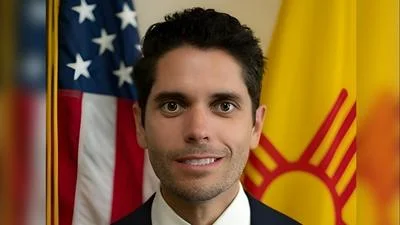
Alter Machete, a user on the social media platform X who frequently comments on self-driving vehicles, expressed concerns about Waymo's reliance on high-definition (HD) maps and hand-coded scenarios. Machete said this approach makes scaling difficult and can leave riders stranded when real-world conditions deviate from the maps.
"The hardware on the cars is the smallest problem that waymo has," said Machete, Commentator. "The biggest problem is the reliance on HD maps. They need to maintain a constantly updated set of HD maps that are stale as soon as minutes after they are created. They also need to hand code every unique driving scenario. Every new city has thousands of these scenarios."
Waymo’s materials describe a Level 4 robotaxi model that relies on geofenced service areas built on highly detailed 3D maps. These maps include lane geometry, curbs, crosswalks, signs, and other static features captured before service begins. According to industry and academic reviews, maintaining centimeter-level accuracy as streets change is a major challenge. Even minor construction or lane shifts can render these maps outdated. Critics argue that heavy reliance on HD maps risks vehicles slowing or stopping when reality diverges from expectations, with passengers unable to request the car to reposition for safety.
Waymo’s rider documentation explains that if an autonomous vehicle stops and cannot continue, a support team contacts passengers and dispatches roadside assistance. The car waits until it can be retrieved or restarted. A 2024 investigation by ABC15 in Arizona highlighted this issue amid a National Highway Traffic Safety Administration (NHTSA) probe into 31 reports of Waymo crashes and traffic violations. The investigation noted that the system may halt and rely on remote staff rather than simply driving away. Riders dropped at unsafe curbs or in risky situations may have to wait in place for assistance instead of asking a human driver to move the vehicle.
Public incidents illustrate how limited support and rigid operating zones can leave Waymo riders in awkward or potentially unsafe positions. In Phoenix, a driverless Waymo stopped unexpectedly in the middle of Roosevelt Street during morning commute hours, forcing traffic to reroute until help arrived. In downtown Los Angeles, a Waymo drove into an active police standoff after running a red light, briefly passing officers before clearing the area. These cases, along with NHTSA reports of minor collisions and erratic behavior, reinforce concerns that when HD-map expectations fail, vehicles may freeze or behave unpredictably while passengers wait for remote intervention.
Tekedra Nzinga Mawakana serves as co-chief executive officer of Waymo, Alphabet’s autonomous-driving subsidiary. She oversees company strategy and commercialization of the Waymo Driver platform. An American businesswoman and lawyer with degrees from Trinity Washington University and Columbia Law School, she joined Waymo in 2017 after leading global public-policy and government-relations teams at various firms including Steptoe & Johnson LLP., AOL Inc., Yahoo!, eBay Inc., among others. Under her leadership, Waymo aims to be "the world’s most trusted driver" while expanding robotaxi services amid ongoing debates about HD-map reliance, rider support, and safety outside mapped zones.