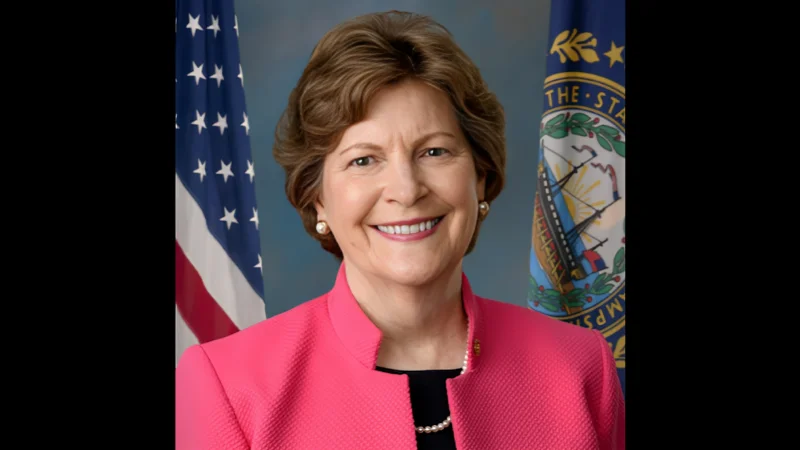
U.S. Senator Jeanne Shaheen, Ranking Member of the Senate Foreign Relations Committee, has published an opinion piece in Fox News expressing concerns about the United States' increasing involvement in Venezuela and its impact on domestic economic issues.
In her op-ed, Shaheen argues that while the U.S. operation to take Nicolás Maduro into custody removed a single leader, it did not change Venezuela’s entrenched power structures or criminal networks. She warns that continued U.S. involvement could lead to a prolonged and costly intervention without a clear strategy or end goal.
Shaheen describes how Maduro’s vice president was sworn in as president with support from longstanding regime officials and international allies such as Russia, China, and Iran. She states: "Despite the successful operation by our military and intelligence community that took Nicolás Maduro into federal custody, control of the Venezuelan state has not meaningfully shifted. The same individuals continue to command the institutions that matter."
She notes that networks involved in drug trafficking and corruption remain embedded within Venezuela's government and that conditions driving migration from Venezuela persist. According to Shaheen, "Changing that reality is far more complex than the removal of a single leader. It would mean reforming Venezuela’s security forces, dismantling criminal enterprises embedded in the state, stabilizing a collapsed economy, and supporting a credible path to democratic elections."
The senator highlights the scale of current U.S. military deployment in the region—about fifteen thousand personnel and 20% of Navy assets—emphasizing how quickly limited operations can become long-term commitments.
Shaheen also points out challenges related to restoring Venezuela’s oil production due to years of mismanagement and degraded infrastructure: "Any expectation that Venezuela could quickly finance its own recovery, or offset the costs of U.S. involvement, is unrealistic." She adds that U.S. refineries are already operating at capacity.
She criticizes recent reductions in U.S. economic and democracy assistance programs for Venezuela while noting China's ongoing investments there: "China...has consistently used infrastructure, financing, and humanitarian support to expand its influence in Venezuela and across the region."
Shaheen emphasizes potential trade-offs between foreign interventions and domestic priorities such as lowering household costs: "Long-term involvement abroad competes with pressing domestic priorities, including lowering household costs, protecting access to health care, and maintaining investments at home in affordability and economic growth."
She recalls constituent concerns about rising living expenses: "More than anything, I hear from my constituents in New Hampshire that they want their elected leaders to focus on their pocketbook economic concerns..."
Criticizing President Trump’s approach on both foreign policy restraint promises and domestic economics, she writes: "President Trump acknowledged those concerns when he campaigned for office...but when it comes to Venezuela...we see him pursuing a very different approach."
Shaheen calls for transparency from the administration regarding costs associated with ongoing involvement: "It is critical that the administration is transparent with the American people and Congress about the costs that involvement will incur..."
The Senate Foreign Relations Committee plays an important role in shaping U.S. foreign policy through examining treaties and legislation (official website). The committee designates its Chairman for majority members while its Ranking Member leads minority members (official website). Since its establishment as one of the original standing committees of the Senate in 1816 (official website), it has influenced key decisions such as supporting post-World War II measures like the Truman Doctrine (1947) and Marshall Plan (1948), as well as rejecting treaties like Versailles after World War I (official website). The committee continues today as a legislative body focused on international relations within government structure (official website).
Senator Shaheen concludes her op-ed by urging careful consideration before further deepening commitments abroad without clear objectives or strategies.