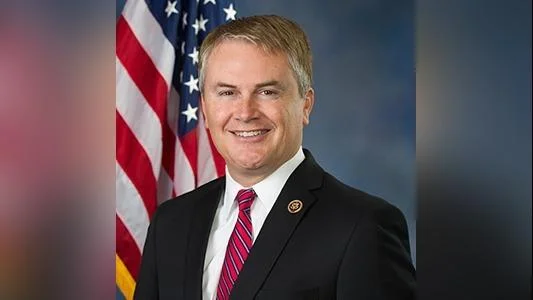
James Comer is Chairman of the House Oversight Committee. | https://oversight.house.gov/chairman-james-comer/
House Committee on Oversight and Government Reform Chairman James Comer questioned witnesses during a recent subcommittee hearing about preventing fraud in federal programs, with particular attention to the theft of funds from Minnesota’s social services system.
The hearing, titled “Curbing Federal Fraud: Examining Innovative Tools to Detect and Prevent Fraud in Federal Programs,” addressed concerns following testimony that an estimated $9 billion was stolen from Minnesota’s social service programs. Witnesses previously warned that state officials, including Governor Tim Walz and Attorney General Ellison, did not act on these warnings and retaliated against whistleblowers.
Chairman Comer stated, “Last week, the House Oversight and Government Reform Committee held a hearing to examine the massive fraud in Minnesota’s social services program that resulted in more than $9 billion being stolen from American taxpayers.
“Much of this fraud occurred because there were not proper safeguards put in place to prevent fraud before the funds were paid. There was also too little oversight of how the money was used once it went out the door to recipients. During the Biden Administration, Democrats rushed out federal funds with virtually no safeguards, resulting in massive theft of taxpayer dollars. Republicans repeatedly warned that the absence of guardrails would invite waste, fraud, and abuse.
“Identifying fraud before money goes out the door is necessary to prevent any further repeat of these failures and protect taxpayer dollars. We need to get ahead of the criminals, continue to help the Department of Justice in arresting, prosecuting, and jailing those responsible, and ensure federal programs serve those who are truly in need.
“This Committee and Congress are ready to assist with these efforts.”
Comer questioned Ken Dieffenbach, Executive Director at the Pandemic Response Accountability Committee (PRAC), about tools for stopping identity-related schemes. Dieffenbach said: “The hallmark of most fraud schemes is that people hide information. So leveraging data analytics allows us to see patterns, trends, anomalies, hidden connections to shine a bright light on what’s actually happening. That is the path forward. So we have to assemble the right data, the right team, the right tools, which we already have at the PRAC... But data is the solution.”
Renata Miskell from Treasury’s Bureau of Fiscal Service explained challenges with verifying payment identities: “We are... implementing a number of payment verification processes... One of the pieces that we are missing is the ability to ping authoritative federal databases to confirm a Pay ID... So there are a number of databases that would help.”
On partnering with states like Minnesota for anti-fraud measures such as ‘Do Not Pay’ systems enabled by legislation since 2019 but underused by states administering federal funds, Miskell added: “‘Do Not Pay’. Thanks to the payment integrity improvement act of 2019 authorizes Treasury to provide do not pay services to states that administer federal funds. However it has been underutilized...”
Sterling Thomas from U.S. Government Accountability Office described how artificial intelligence could support investigators: “So machine learning... all data science algorithms inclusive of machine learning and AI are going produce indicators of fraud... patterns of behavior that don’t fit expected patterns...” He noted their published framework supports governments at all levels in developing such indicators for risk management plans.