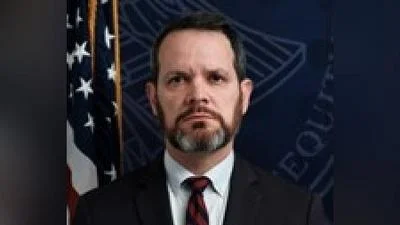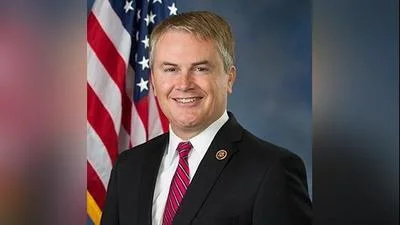
Members of the Subcommittee on Government Operations met to discuss the need for improved methods to detect and prevent fraud in federal programs. The hearing, titled “Curbing Federal Fraud: Examining Innovative Tools to Detect and Prevent Fraud in Federal Programs,” focused on how existing approaches are failing and what new technologies can be used to better protect taxpayer funds.
Testimony from several government officials highlighted shortcomings in current fraud prevention strategies. Ken Dieffenbach, Executive Director of the Pandemic Response Accountability Committee (PRAC), said, “As executive director of the PRAC, an entity Congress created to oversee over $5 trillion in relief funding, [I work] with a phenomenal team that is leveraging artificial intelligence to collect, organize, analyze data to rapidly provide insights into fraud risks. This proactive approach is clearly needed so that fraud is prevented before funds are dispersed. This past summer, the PRAC issued two fraud alerts that identified over $79 billion in potential fraud [in pandemic programs] that could have been prevented with pre-award vetting and cross-agency collaboration.”
Renata Miskell from the U.S. Department of Treasury’s Bureau of Fiscal Service described challenges with the government-wide “Do Not Pay” tool intended to prevent improper payments. She stated, “‘Do Not Pay’ is a government wide tool provided by [U.S. Department of the Treasury] for agencies and states operating federal programs to detect and prevent the leading causes of improper payments…Do Not Pay is a tool that helps these frontline workers detect risk when making awards and certifying payments. Despite its promise, Do Not Pay has faced two challenges. First, the program has been underutilized. In fiscal year [2024], only 4 percent of federal programs could access all available data. Second, Do Not Pay has not had sufficient authority to access key federal databases that could detect the most common drivers of improper payments, namely verifying identity, financial status and death.”
Sterling Thomas from the Government Accountability Office (GAO) explained how payment errors cost taxpayers significant amounts each year: “[GAO] has a large body of work on fraud and improper payments in the federal government. We found the federal government reported an estimated $162 billion in payment errors or improper payments during fiscal year 2024, and that’s almost certainly an underestimate, because it doesn’t include estimates for some federal programs. We’ve outlined numerous ways that Congress and federal agencies can tackle this problem with existing capabilities, such as reducing data silos. For example, Congress could make permanent the social security administration’s authority to share its death list with Treasury’s Do Not Pay system. According to Treasury, just one year of access to this data resulted in total net benefits of $109 million, but Treasury’s access to this data was set to expire in December.”
Dieffenbach added details about future plans: “To address these issues, the PRAC is developing an artificial intelligence enabled fraud prevention engine trained on 5 million pandemic applications and other data. The tool can quickly identify anomalies, trends, patterns and hidden connections in future applications before payments are made... Had our fraud prevention engine been in existence in March of 2020...pre-award vetting would have flagged at least tens of billions of dollars in fraudulent claims for further scrutiny...” He also noted efforts focusing on cross-program risks.
Subcommittee Chairman Pete Sessions asked about agency responsibility for managing large audit datasets: “I’d like for you...to look at inconsistencies that would draw you to those things...” Dr. Thomas replied by describing their use of AI tools within massive datasets like those held by the Federal Audit Clearinghouse (FAC): “The Federal Audit Clearinghouse...houses over $1 trillion of spending every year...We use a combination of AI...to identify...patterns here say that...is in a food support program that then is replicated in another program...These indicators of fraud don’t mean fraud is happening but it means someone should take a look at it.” Dr. Thomas clarified FAC management falls under Office of Management and Budget delegation through General Services Administration.
Further questions addressed progress since widespread pandemic-related payment errors were uncovered—Rep. Gary Palmer cited historic increases during COVID-19 emergency funding disbursement periods.
Dieffenbach responded: “We’ve done a tremendous body of work on identifying what went wrong during the pandemic…we examined recipients ...with Social Security Numbers also used ...to obtain Small Business Administration (SBA) PBP loans…we found 40,000 instances ...the disparity ...was ten times or greater …and impacted $860 million…” He emphasized how overlapping benefits revealed gaps exploited by fraudulent actors.
Rep. Brian Jack questioned what would happen if PRAC's mandate expired; Dieffenbach warned critical anti-fraud insight would be lost until new capacity was rebuilt: “…the ability to provide insights I just spoke ...would be gone…There would be another disaster…”
The discussion concluded with remarks about artificial intelligence's role going forward:
Dr. Thomas said: “Yeah…there’s tremendous opportunity in AI…I think…the foundational components…are critically important…and that is build a solid data collection …so AI can learn…the challenge …is…it doesn’t know…the difference if you don’t tell it…and so if we properly label all these examples …collect …data …represents this is fraud,…then start train[ing] a tool…”
Officials called for Congress to establish permanent structures enabling ongoing detection using advanced analytical techniques across agencies.