The White House has announced new measures to address concerns over the importation of semiconductors, semiconductor manufacturing equipment, and related products into the United States. The action follows a report from the Secretary of Commerce, who found that current import levels pose a threat to national security.
According to the Secretary’s investigation under section 232 of the Trade Expansion Act of 1962, “semiconductors, semiconductor manufacturing equipment, and their derivative products are being imported into the United States in such quantities and under such circumstances as to threaten to impair the national security of the United States.” The report highlighted that domestic production is insufficient to meet demand, leading to heavy reliance on foreign supply chains. This dependency is seen as both an economic and security risk.
The Secretary also emphasized that semiconductors are critical for U.S. defense systems and all 16 critical infrastructure sectors identified by National Security Memorandum 22 issued on April 30, 2024. Sectors including communications, energy, nuclear reactors, and medical technology depend heavily on these components for essential operations.
The United States currently manufactures only about 10 percent of its required chips but consumes roughly one quarter of global output. The Secretary warned that this gap could disrupt industrial and military capabilities if foreign supply chains are interrupted.
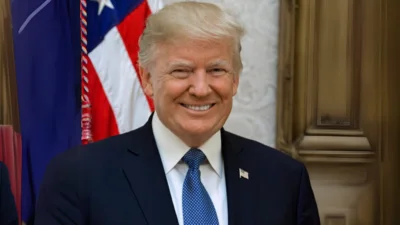
In response to these findings, President Donald J. Trump issued a proclamation outlining a two-phase plan. In phase one, trade negotiations will continue with foreign jurisdictions aimed at strengthening the U.S. semiconductor industry. Additionally, a 25 percent ad valorem tariff will be imposed immediately on certain advanced computing chips deemed vital for artificial intelligence (AI) policies—unless those imports support building out domestic technology supply chains.
“After considering the Secretary’s report... I concur with the Secretary’s finding that semiconductors, semiconductor manufacturing equipment, and their derivative products are being imported into the United States in such quantities and under such circumstances as to threaten to impair the national security of the United States,” said President Trump in his statement.
He further explained: “I have decided to include in the plan of action negotiations to address the threatened impairment of national security with respect to imports... I therefore direct the Secretary and the United States Trade Representative...to jointly pursue negotiation of agreements or continue any current negotiations.”
President Trump also stated: “I have also determined that it is necessary and appropriate to impose an immediate 25 percent ad valorem duty rate on the import of certain advanced computing chips... when such importation does not contribute to the buildout of the United States technology supply chain.” He added that exemptions would apply for imports used in data centers, research and development activities within the U.S., startups, consumer applications outside data centers, civil industrial uses outside data centers, public sector applications or other uses contributing directly to domestic capacity building.
These tariffs take effect January 15, 2026. Covered goods entering after this date will face additional duties unless specifically exempted as outlined above. The administration may consider broader tariffs after ongoing trade talks conclude; companies investing in U.S.-based production could receive preferential treatment through a proposed tariff offset program.
The proclamation authorizes relevant federal agencies—including Customs and Border Protection—to implement administrative changes needed for enforcement. It also directs ongoing monitoring by federal officials regarding market conditions and possible future adjustments based on evolving needs or effectiveness.
President Trump concluded: “In my judgment...the actions in this proclamation are necessary and appropriate to address [the] threat to impair national security posed by imports...” He stated these steps aim both at increasing domestic production capacity while leveraging imports where they accelerate innovation or strengthen supply chains domestically.