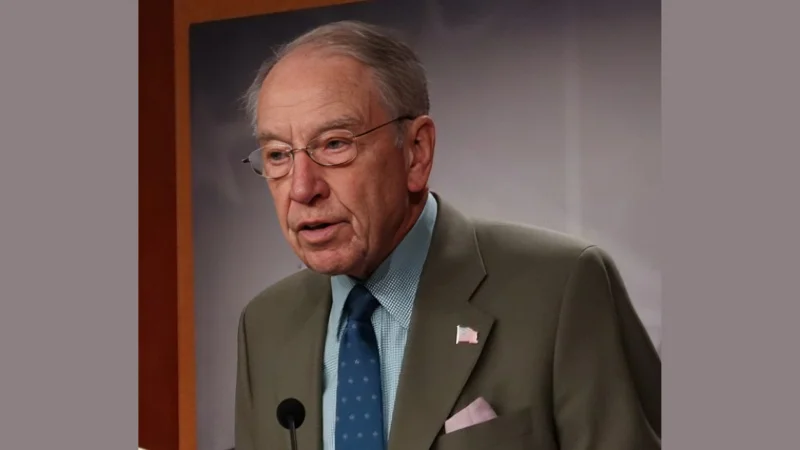
Senator Chuck Grassley, Chairman of the Senate Judiciary Committee, addressed concerns about the vetting process for Afghan parolees during a joint subcommittee hearing. The hearing was prompted by recent incidents involving Afghan nationals, including an attack on two National Guardsmen that resulted in one death and another critical injury.
Grassley acknowledged the leadership of Senators Cornyn and Hawley in organizing the hearing. He referenced a 2024 arrest of an Afghan national affiliated with ISIS who planned a terror attack on Election Day, as well as another recent arrest in Texas involving online threats to bomb and kill Americans.
Grassley criticized both the previous and current administrations for their handling of immigration laws and vetting procedures. He stated: "The last administration failed to enforce our immigration laws and to appropriately vet Afghans that they brought to the United States."
He described Operation Allies Welcome, initiated after the U.S. withdrawal from Afghanistan, as allowing over 76,000 Afghan parolees into the country. Grassley said: "Immigration parole’s intent is careful consideration of an individual on a case-by-case basis." He argued that President Biden and Secretary Mayorkas "failed to enforce our immigration laws and granted parole en masse to a large swath of folks at the border and elsewhere, including Afghan evacuees – many of whom didn’t even serve alongside U.S. Forces in Afghanistan."
Grassley noted congressional efforts by 2022 to create permanent pathways for tens of thousands of Afghans, including those paroled into the U.S., which he believes extend beyond those who supported U.S. troops.
He emphasized his ongoing warnings since 2021 about inadequate vetting: "For years, the Biden administration hid known vetting vulnerabilities from the [American] people." Grassley cited reports from multiple Inspectors General highlighting these failures.
According to Grassley, initial vetting did not use all available Defense Department data before granting parole. He also questioned whether full vetting would ever be possible due to incomplete records from Afghan authorities: "If our government databases don’t possess all known security risks of individuals, running names against the databases won’t do much good."
He mentioned that DHS Secretary Noem informed his office last year that thousands of Operation Allies Welcome parolees were potential national security risks as of August 12, 2025.
Grassley recently wrote to several federal agencies making public new records indicating that "the Biden State Department had recommended a Special Immigrant Visa for the Afghan national charged with shooting the two national guardsmen." According to him: "the terrorist 'poses no threat to national security.'"
He also brought in USCIS and FBI personnel for bipartisan briefings on vetting system failures and called for certain information discussed during these briefings to be declassified.
Grassley expressed concern about proposals asking Congress to approve such practices without adequate review: "Instead of using more proper pathways, like the Refugee Admissions Program, the Biden-Harris administration took drastic shortcuts, and America is less safe as a result."
He announced reintroduction of his Immigration Parole Reform Act this Congress and critiqued recent proposals expanding SIV eligibility without addressing existing vetting issues.
Grassley praised former President Trump’s actions regarding stricter vetting measures: "Thankfully, President Trump’s swift work to protect the American people and vet those coming here or intending to remain is a welcome course correction."
He concluded by expressing hope that this hearing would clarify what went wrong with current processes and how improvements can be made moving forward.
The Senate Judiciary Committee plays an important role in overseeing federal judicial matters such as law enforcement supervision and reviewing judicial nominations. It also affects constitutional protections through its legislative responsibilities (official website). The committee is led by a chairperson—currently Senator Grassley—and includes members from both major parties (official website). Its work influences civil rights policy nationwide (official website).