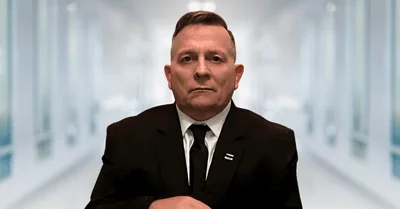
Australia is weighing how to protect social cohesion while navigating rising tensions with China and uncertainty in the Indo-Pacific. Debate over extremist rhetoric, anti-Semitism, and online influence has sharpened after a recent attack in Sydney. Andrew Phelan says Australia needs a tougher posture at home and a clearer strategy abroad.
Phelan is an Australian medtech entrepreneur and writer with a background in international affairs. He previously advised Australia’s Department of Foreign Affairs and Trade through work tied to the China Council. He has lived and worked in China and has an affiliation with the Johns Hopkins Nanjing Center.
Bondi Beach frames his account of the past year. Phelan says Bondi is “Australia’s most famous beach” and “an iconic place in Australian culture.” He traveled to Sydney to reconnect with friends and trained for the Bondi to Bronte ocean swim. He says he returned to Melbourne “the same day as the Bondi massacre,” and the news “still hasn’t really sunk in yet.”
According to Phelan, public anger has grown because “there’s been an environment fermenting where there’s too much oxygen, too much space being given to people saying the most horrible things.” He points to Singapore as a model for enforcement, saying Singapore has “zero tolerance for that sort of stuff,” and he describes a case where an imam “was charged,” “had to publicly confess,” “was fined,” and “was deported.” Phelan says the Bondi attack tore at “the social fabric that binds Australia together.”
Social media is his next focus. Phelan says “recent studies have shown that younger Australians have more anti-Semitic views” than older Australians. People under 30 “don’t read the broadsheets” and “don’t watch legacy news any more,” and many get information “largely from TikTok.” According to him, “ByteDance Beijing or PRC Inc has weaponized TikTok to generate biased views,” and he calls government inaction “negligent or irresponsible.” He says, “We have a duty of care to our young people” to ensure they can access “good information.”
Prime Minister Anthony Albanese has taken the wrong approach to China, according to Phelan. He says Albanese has “shown a culture of appeasement towards the China challenge.” Albanese “shuts down questioning on things like TikTok or the Port of Darwin.” Phelan cites footage from a visit to Beijing and says Albanese told Xi Jinping, “Wonderful to see you,” language he says he would not use with China’s leadership. Australia should be “realistic and hard headed” when dealing with Beijing, according to him.
Phelan also criticizes Australia’s lack of a security review for Chinese-made connected vehicles. Australia is “being flooded by PRC made internet connected vehicles,” he says. Australia has had “no review,” and the energy minister answered “no” when asked about conducting one. Phelan calls the vehicles “smartphones on wheels” and warns they “can be weaponized” and “backdoored.”
Phelan describes 2025 as a turning point in the economic relationship with China. Foreign direct investment “has ground to a halt,” he says, and companies are no longer building new factories in China. China’s overcapacity is pushing exports into other markets, and he predicts Europe will respond more forcefully.
Strategic competition has shifted into technology. Phelan says “we are in a technology Cold War,” and opposes selling advanced chips to China because he says it gives Beijing more computing power and China will “weaponize AI.” He also argues the United States should restrict capital flows that “finance” China’s rise.
Taiwan is his biggest warning for 2026. Phelan says pressure is rising through “record number of sorties” across the Taiwan Strait. Taiwan’s politics matter because “a divided Taiwan is much more vulnerable.” He says U.S. arms support and regional defense cooperation are expanding, and “the likelihood of contingency is growing … Things are getting more, not less risky.”
According to Phelan, a values-based approach should guide policy. “Chinese workers deserve safe working conditions and decent pay,” and governments and consumers should avoid products when audits and standards cannot be verified.