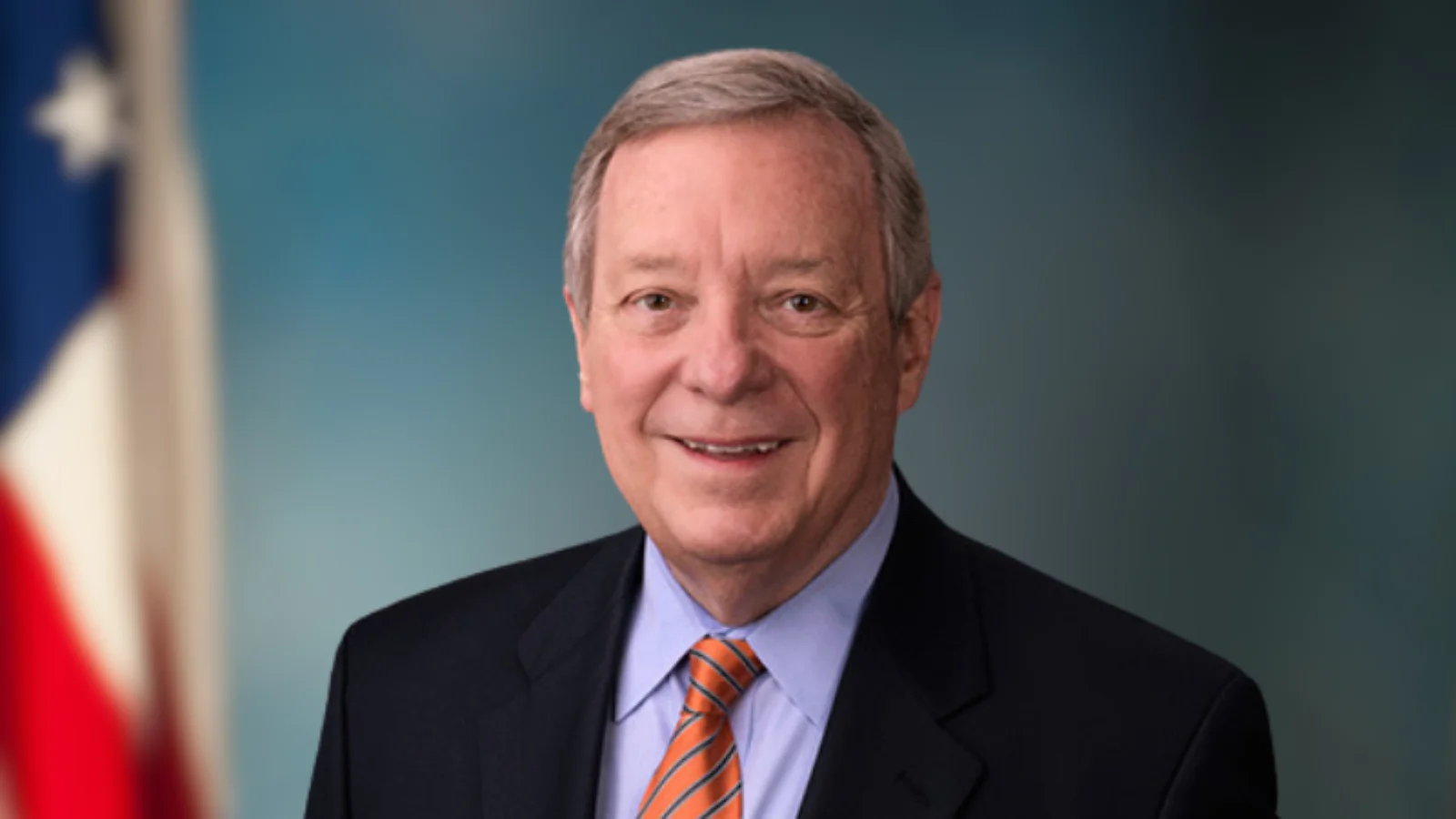
U.S. Senate Democratic Whip Dick Durbin, who serves as the Ranking Member of the Senate Judiciary Committee, delivered opening remarks at a joint subcommittee hearing titled “Biden’s Afghan Parolee Program – A Trojan Horse with Flawed Vetting and Deadly Consequences.” The hearing followed an incident on November 26 in which two National Guard members were killed in Washington, D.C.
“This hearing was scheduled in the aftermath of a horrific tragedy on November 26, when a gunman ambushed two National Guard members here in Washington. I offer my deepest condolences to the family of Specialist Sarah Beckstrom, who lost her life in the attack, and I am keeping Staff Sergeant Andrew Wolfe in my thoughts and prayers,” Durbin said.
Durbin expressed disappointment that representatives from executive branch agencies responsible for immigrant vetting were not present at the hearing. He stated: “At the outset, I want to note my disappointment that there are no witnesses here today representing the executive branch agencies that are responsible for vetting immigrants. There are many questions we could ask them. The lead question is obvious. Why did the Trump Administration’s USCIS grant asylum last year to the National Guard shooter just months before his deadly attack?”
He also raised concerns about oversight following changes within Inspectors General offices: “We do have witnesses from several Inspectors General offices, but President Trump illegally fired the heads of two of these offices, and I’m concerned that these offices may now be reluctant to criticize the Trump Administration.”
Durbin noted policy changes after the shooting: “After the shooting, the Trump Administration announced a flurry of additional measures to crack down on legal immigrants. They halted all asylum decisions, and announced a plan to reexamine green cards for immigrants from 39 countries that the President has deemed ‘countries of concern’—including Afghanistan. The Administration also began cancelling naturalization interviews and ceremonies based on individuals’ countries of origin and they suspended visa and immigration processing for all Afghans.”
Addressing concerns over Afghan allies' treatment by U.S. authorities, Durbin said: “Afghan allies are an extensively vetted population. They were vetted in Afghanistan before they were hired to work [alongside] our troops. They were vetted again when seeking safety in the U.S. and sometimes that vetting went on for months and longer, and again after they arrived through a rigorous and recurring process involved multiple federal agencies. These allies served alongside American service members through two decades of war. They risked their lives and many gave their lives to support our troops. So, what happened to these allies, these friends when they needed our support? Let’s look to our veterans for their perspective.”
Durbin cited findings from a survey by Iraq and Afghanistan Veterans of America: “The Iraq and Afghanistan Veterans of America conducted a survey of their members last fall. More than 70 percent of respondents disagreed with the following statement: ‘Since 2001, the United States Government has done enough to support our Afghan Allies.’”
He continued: “Our service members need to know that when they are in the line of fire and depending on foreign allies to protect their lives, that the United States of America will stand by those allies. Who will put their life on the line for our service members in the next war, after watching our Afghan allies be detained and deported to a country where they could be imprisoned or killed for their work with us?”
“America is better for these service members having returned home. And America is better for their Afghan allies who now call our nation home,” Durbin concluded.
The Senate Judiciary Committee plays an important role within Congress by overseeing federal judicial matters such as reviewing legislation related to criminal justice or civil liberties; evaluating judicial nominations; supervising law enforcement entities; conducting hearings; upholding constitutional rights; affecting public safety across communities; providing public access to its proceedings; influencing both federal lawmaking processes as well as civil rights protections nationwide (official website).
Video footage along with audio recordings from Senator Durbin’s statement are available online.