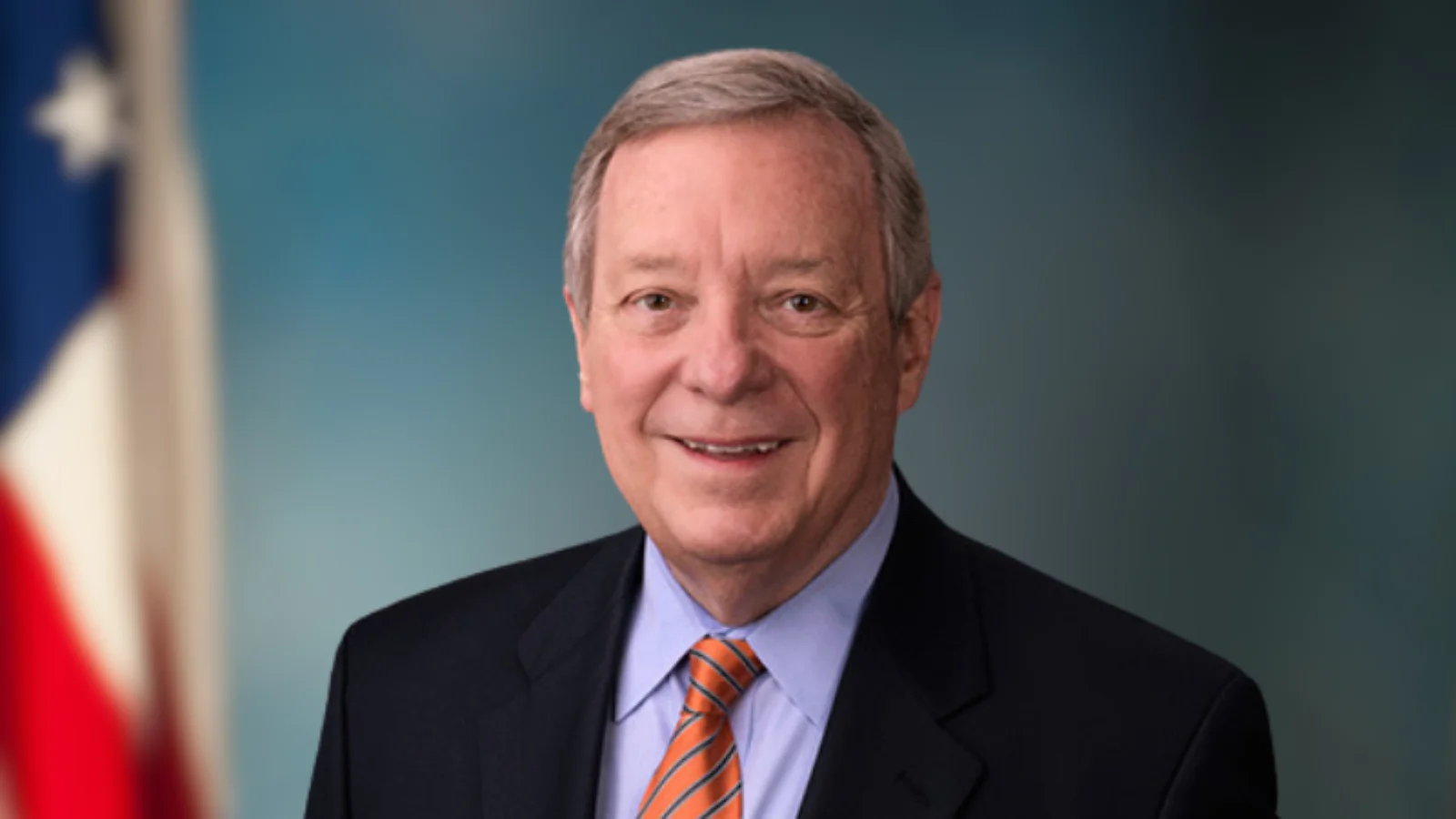
U.S. Senate Democratic Whip Dick Durbin, who serves as the Ranking Member of the Senate Judiciary Committee, questioned officials from the Department of State, Department of Homeland Security (DHS), and Department of Defense (DOD) during a joint subcommittee hearing focused on vetting Afghan nationals. The hearing followed an incident on November 26 in which two National Guard members were killed by a gunman in Washington, DC.
Durbin began by asking whether any of the government witnesses had recommended the current policy that halts processing all immigrant and visa applications for individuals with Afghan passports. “Did any of you make the recommendation for the policy we currently have which stops the processing of all immigrant and visa applications for individuals with Afghan passports?” Durbin asked.
Arne B. Baker, Senior Official Performing the Duties of Inspector General at the State Department, responded: “Our position as Inspectors General, we do not make policy decisions, the agency does.” Craig Adelman, Deputy Inspector General in DHS’s Office of Audits, and Michael J. Roark, Deputy Inspector General of Evaluations Component at DOD agreed with Baker.
Durbin also questioned how Rahmanullah Lakanwal, an Afghan refugee who shot two National Guard members in November and had a pending Special Immigrant Visa application before being granted asylum in April 2025 under the Trump Administration, was vetted. “We had a period of time in the SCIF with classified and secret information trying to get to the bottom of this. It is a serious, serious situation involving the loss of life and serious injury and we are trying to figure out what went wrong. The thing that kept occurring to me was the fact that the shooter [in the National Guard shooting] had been identified as a person with serious problems,” said Durbin.
He continued: “For all three of you, this man accused in the tragic shooting of two National Guard members, we have not seen any indication there was a failure in actual vetting. Instead, there was a failure to respond to urgent requests made by his family members about [his] deteriorating mental health. Isn't this a real gap in the process that you go through and check the boxes… and miss the obvious problem that could have led to saving the life of this National Guardsman and the one who is injured?”
Adelman replied: “Overall I would say that the interview that’s being conducted when someone applies for benefits would be an opportunity to get to know the person and see if there are any challenges there.”
Durbin pressed further: “But these are over a period of time… In this situation, we understand the shooter was deteriorating and he was showing bizarre conduct, driving all over the United States, making statements that worried even his family. How can we miss something like that? That seems to me to be getting to the heart of whether this person is safe to be in this country or safer in others.”
Adelman noted his office found challenges with information sharing among DHS entities regarding when parolees should be referred for enforcement action.
Durbin then addressed Baker: “I might say we are talking about an agency which has diverted massive resources now to a totally unrelated undertaking involving cities like Chicago and Minneapolis and other places. Mr. Baker, what is your impression when you consider this gap and asking very basic questions like ‘what is wrong with this man?’”
Baker stated that while State Department oversees resettlement activities for Afghan nationals during their first 90 days after arrival—an effort complicated by COVID—mental health support posed significant challenges. After 90 days responsibility shifts from State Department to DHS.
Durbin concluded: “But have we learned anything from this horrible experience, this tragedy? There is a lot of finger pointing that goes on [on] Capitol Hill by both political parties. Is this Joe Biden’s fault? Is this Donald Trump's fault? Wouldn't it be better for us to take a lesson from this as to how we can improve this process in future rather than just shutting down any access of asylees into United States from 39 different countries? I would like to see us do something positive and bipartisan and make this a safer system.”
The Senate Judiciary Committee plays an important role within federal judicial oversight by reviewing legislation related to criminal justice issues such as immigration vetting procedures; it also supervises law enforcement agencies across various matters impacting public safety nationwide according to its official website. The committee operates out of Washington D.C., includes senators from both major parties under leadership from its chairperson, reviews candidates for federal judicial appointments,and conducts hearings on topics affecting constitutional rights.
Video footage as well as audio recordings from Durbin’s questioning during committee proceedings are available online.