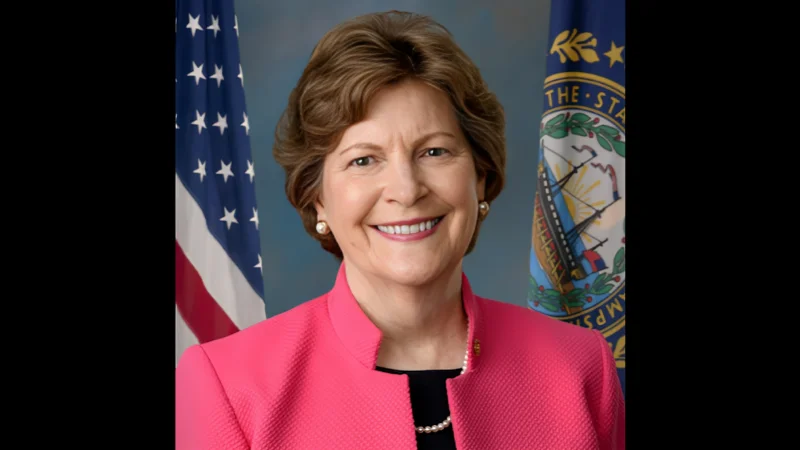
U.S. Senator Jeanne Shaheen, the Ranking Member of the Senate Foreign Relations Committee, was interviewed by Bloomberg’s Mishal Husain this week. The discussion covered American foreign policy, healthcare, and the future of American democracy.
On U.S. relations with Denmark and Greenland, Senator Shaheen stated: “Denmark and Greenland share our values. They’ve been our allies since before World War II. Denmark has always been there in support of the United States.” She also noted ongoing cooperation in Greenland: “What we’ve heard from Danes and Greenlanders [is that] anything the United States is interested in doing in Greenland, they would be happy to partner with us on. We’ve had a treaty with Greenland since 1951 that allows us to have bases there. In fact, we had 17 at the end of the Cold War and we’ve closed 16 of those.” Shaheen emphasized diplomacy in future operations: “That’s the route we should be taking: It should be diplomatic. We should be engaging in conversations if there is an interest on the part of this administration in additional operations there.”
Addressing Venezuela, Shaheen expressed concerns about U.S. involvement: “I think there are a lot of unanswered questions about America’s role in Venezuela going forward — about the need to maintain a flotilla [to] interdict oil. We all have an interest in trying to shut down that shadow fleet, but there are costs involved.” She highlighted domestic priorities: “My constituents in the state of New Hampshire are worried about the cost of living. For any dollars that we’re spending in the Caribbean, the administration [is] not focused on the domestic concerns in the United States.”
Shaheen also discussed military deployment: “We have about 20% of our ships in the Caribbean right now. We have 15,000 men and women in our military. Anytime we have that many people in an area of operation, there’s the potential for escalation.” On governance issues within Venezuela she said: “What the administration has done is replace one repressive dictator with another repressive dictator. While I appreciate the need to try and avoid some of the mistakes made when we went into Iraq, we need to see some goals and objectives, a timeline for what’s going to happen [and] a focus on democratic elections. We haven’t seen any of that yet.”
The full interview can be viewed online.