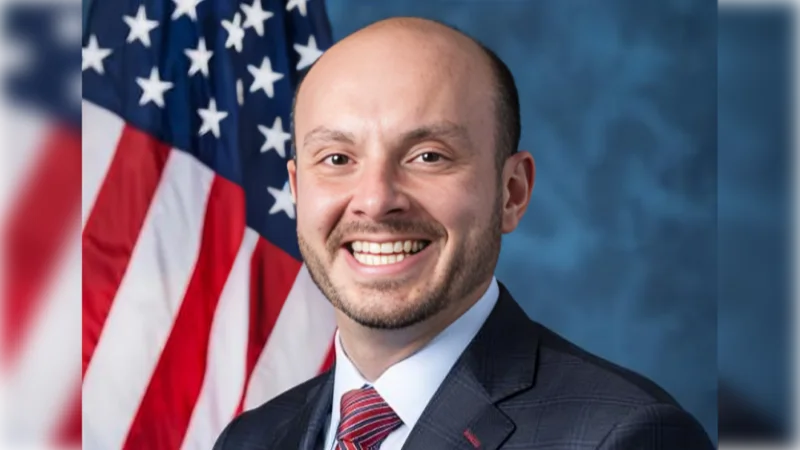
House Committee on Homeland Security Chairman Andrew R. Garbarino (R-NY) opened an oversight hearing focused on the Department of Homeland Security’s Cybersecurity and Infrastructure Security Agency (CISA), Transportation Security Administration (TSA), and Science and Technology Directorate (S&T). The session aimed to evaluate how these agencies are addressing evolving threats to U.S. transportation and critical infrastructure.
In his statement, Garbarino recalled the impact of the September 11, 2001 terrorist attacks, emphasizing how they led to significant changes in national security policy. "Nearly twenty-five years ago, 19 hijackers exploited significant vulnerabilities in our commercial aviation system. The al-Qaeda terrorist attack on September 11th, 2001, killed nearly 3,000 Americans and changed our nation forever. Our transportation system, among other critical systems, demanded accountability and hardened security to ensure such a horrific event would never happen again," he said.
Garbarino highlighted that Congress responded by establishing the TSA through the Aviation and Transportation Security Act and granting DHS broader operational authority. He noted that since then, threats have become more diverse and technologically advanced: "Over the past two decades, threats facing our nation’s aviation, transportation, and critical infrastructure have only risen. Today’s risks are far more diverse, complex, and technologically advanced, and the motivations and methods of our adversaries have shifted rapidly with emerging technologies."
The chairman pointed out increasing dangers from both individuals acting alone or as part of extremist groups as well as transnational criminal organizations exploiting transportation for illegal activities such as human trafficking or smuggling contraband.
He also addressed new forms of terrorism involving digital attacks: "Cybersecurity is now at the forefront of these conversations, with adversaries attempting to take down our transportation systems through digital means." Garbarino cited concerns about coordinated drone attacks disrupting flights or delivering explosives as a growing area for security efforts.
Foreign states like China, Russia, Iran, and North Korea were identified as actively targeting U.S. digital infrastructure with cyber operations intended for strategic disruption. According to Garbarino: "Rapid advances in emerging technologies including AI are further accelerating the scale, speed, and sophistication of these cyber operations."
Congress created CISA to lead civilian cybersecurity defense efforts across federal networks as well as critical private sector infrastructure in areas such as energy or healthcare. Garbarino stressed that CISA's mandate is operational rather than advisory: "This Committee has been clear about CISA expectations: It is not a policy think tank nor a messaging agency. Its mandate is operational."
He acknowledged recent operational challenges faced by CISA amid a changing threat landscape but underscored the importance of workforce continuity for effective defense capabilities.
Garbarino expressed support for President Biden's decision to renominate Sean Plankey as Director of CISA: "Mr. Plankey is a respected national security professional with decades of experience. His confirmation would provide long-needed stability and strategic direction at CISA."
With major upcoming events like the 2026 FIFA World Cup and 2028 LA Olympics expected to raise threat levels nationwide—requiring strong preparedness from DHS—Garbarino called for continued modernization supported by Congress.
"This hearing provides an important opportunity to assess how TSA, CISA, and S&T are carrying out their missions," he stated while thanking DHS personnel for their service during challenging periods such as last year’s government shutdown.
"I am confident that by working together we can break through the challenges of today and prepare for the threats of tomorrow: the stakes for the American people could not be higher," Garbarino concluded.