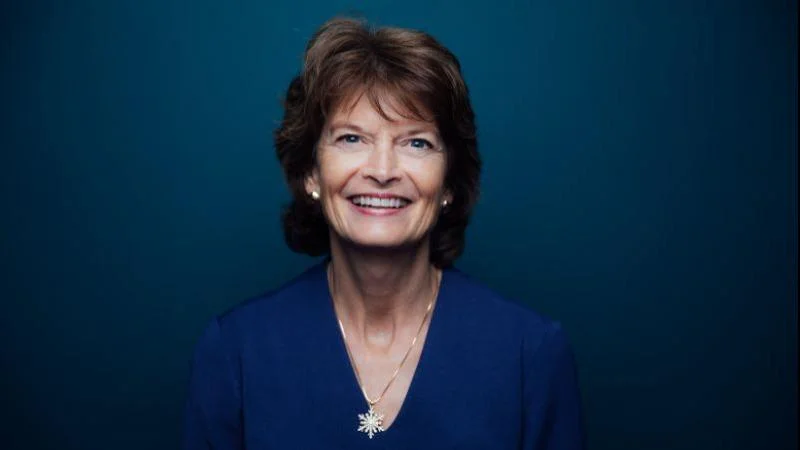
U.S. Senator Lisa Murkowski (R-Alaska), who chairs the Senate Committee on Indian Affairs, led a legislative hearing focused on Title II of her draft Native Children’s Commission Implementation Act. The proposed legislation is designed to improve justice and safety for Native children and families by establishing a Tribal Advisory Committee on juvenile justice, requiring studies by the Department of Justice (DOJ) and Bureau of Indian Affairs (BIA) on missing Native children, codifying programs such as the Alaska Native Victim Services Program, and enhancing services related to domestic violence prevention and family interventions.
The hearing included testimony from several witnesses: Lonna Jackson-Street, Chairwoman of the Spirit Lake Tribal Council in North Dakota; Joan Johnson, Council Member representing Gros Ventre At Large from Fort Belknap Indian Community in Montana; Anita Fineday, former Commissioner of the Native Children’s Commission in Minnesota; Lori Jump, Executive Director of StrongHearts Native Helpline in Michigan; and Mark Patterson, Chair of Hawaii Correctional System Oversight Commission.
Chairman Murkowski highlighted the Tiwahe program’s effect on the Association of Village Council Presidents (AVCP), which consolidated 26 departments into six divisions with dedicated service centers. “It allowed AVCP to consolidate 26 separate departments into six divisions, along with two dedicated centers: a Family Service Center and a Tribal Resource Center. These changes have made a real difference. They’ve improved collaboration and strengthened service delivery for the 56 federally recognized tribes that AVCP represents,” said Murkowski.
She further emphasized culturally integrated approaches through Tiwahe: “With Tiwahe, we have greater coordination across services, integrating the culture, the language, and the traditional practices. We’ve seen the benefits of this model, and we want others to follow it.”
Joan Johnson explained why Tiwahe works better than traditional federal programs: “We’re able to work with flexibility; we’re able to work with children the way we know will heal them, and that’s our culture, our spirituality,” she said. “I know I’m living proof that it was the holistic healing in our traditional ceremonies that have saved me, and I believe strongly in what we do to heal our children.”
Murkowski noted Spirit Lake’s investment in staff qualifications: “all of Spirit Lake’s Social Service program staff have either a bachelor’s or a master’s degree in social work. And that Tiwahe has helped make that possible.” Chairwoman Street described how their workforce expanded to 16 full-time community members serving over 2,400 children through foster care and prevention services while supporting professional development for staff.
“This represents a significant transformation in workforce qualifications, and it reflects the Tribe’s commitment to build a highly trained, credentialed tribal welfare workforce rooted in the Spirit Lake community,” said Street.
Regarding domestic violence support under FVPSA (Family Violence Prevention & Services Act), Murkowski questioned Lori Jump about its reauthorization. Jump responded: “What’s really important about reauthorization is that it reflects a commitment, right? – To survivors. It reflects a commitment to survivors that they are seen, that they are heard, and that they matter.”
The discussion also addressed missing child cases among Native communities. Murkowski asked Joan Johnson about including non-custodial family abductions within legislative definitions for missing children. Johnson stated these cases often get overlooked as family disputes but involve serious risks like trafficking or neglect.
“This isn’t about criminalizing families; it’s about understanding the specific dangers, like trafficking or neglect, that our children face so we can intervene faster,” said Johnson.
Johnson also pointed out gaps due to scattered information among agencies: “Currently information is often scattered. A unified study that coordinates with the National Center for Missing and Exploited Children means we aren’t starting from scratch every time a child goes missing. For a rural family like Fort Belknap seconds matter,” she said.
The Senate Committee on Indian Affairs plays an ongoing role in shaping policy for self-determination among Native American communities through oversight responsibilities related to education, health care, economic development as well as tribal sovereignty issues (official website). The committee operates as one of several standing committees within the U.S. Senate dedicated specifically to matters affecting Native Americans (official website). Its jurisdiction includes oversight for regions such as Alaska (official website).
The committee's work continues longstanding efforts since its establishment as a permanent body in 1984 (official website), addressing key priorities such as tribal sovereignty while encouraging self-governance among Native communities (official website).