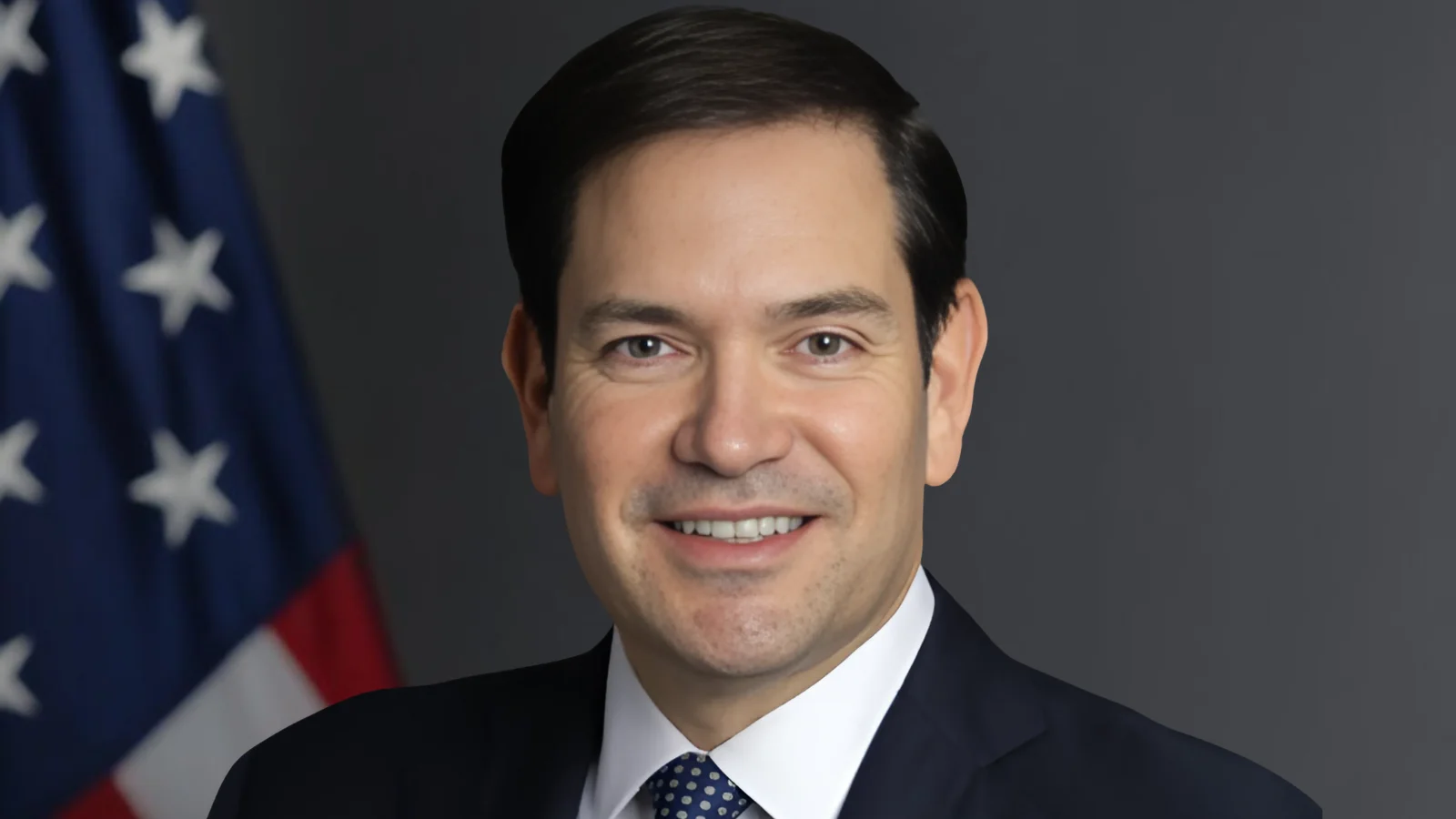
Secretary of State Marco Rubio delivered a speech at the Munich Security Conference, emphasizing the importance of the relationship between the United States and Europe. He described this connection as more than just a partnership based on shared interests, but as a bond rooted in a common history, culture, and heritage.
Rubio urged European leaders to renew their nations and join the United States in a strong transatlantic alliance. He stated, “Together we can reindustrialize our economies and rebuild our capacity to defend our people. But the work of this new alliance should not be focused just on military cooperation and reclaiming the industries of the past. It should also be focused on, together, advancing our mutual interests and new frontiers, unshackling our ingenuity, our creativity, and the dynamic spirit to build a new Western century.”
He continued by highlighting the need for collaboration in areas such as commercial space travel, artificial intelligence, industrial automation, supply chain security for critical minerals, and competition in emerging markets.
Rubio addressed national security concerns by stating that it is not simply about technical issues or defense spending: “The fundamental question we must answer at the outset is: what exactly are we defending? Because armies do not fight for abstractions. Armies fight for a people; armies fight for a nation. Armies fight for a way of life. And that is what we are defending: a great civilization that has every reason to be proud of its history, confident of its future, and aims to always be the master of its own economic and political destiny.”
He described Western civilization as unified by deep bonds formed over centuries through shared history, faith, culture, language, ancestry, and sacrifice.
Rubio also discussed migration issues: “Mass migration is not, was not, isn’t some fringe concern of little consequence. It was and continues to be a crisis which is transforming and destabilizing societies all across the West.”
Looking ahead to future policy under President Trump’s administration, Rubio said: “Under President Trump, the United States of America will once again take on the task of renewal and restoration... And while we are prepared, if necessary, to do this alone, it is our preference and it is our hope to do this together with you, our friends here in Europe.”
He noted historical moments when transatlantic partners refused decline: “Our predecessors recognized that decline was a choice, and it was a choice they refused to make... This is what we did together once before...”
Rubio stressed that America does not wish to oversee Western decline but seeks revitalization with proud allies willing to defend shared values: “We want allies who can defend themselves so that no adversary will ever be tempted to test our collective strength. This is why we do not want our allies to be shackled by guilt and shame.”
He also called for an alliance ready to safeguard freedom rather than maintain what he called "a global welfare state": “The only fear we have is the fear of the shame of not leaving our nations prouder... An alliance ready to defend our people...”
Drawing from his personal background with roots in Italy and Spain dating back 250 years ago—when his ancestors lived there—Rubio reflected on how American-European destinies remain connected.
Reviewing past achievements after two world wars and during struggles against communism in Eastern Europe he remarked: “We have fought against each other then reconciled then fought then reconciled again. And we have bled and died side by side on battlefields from Kapyong to Kandahar.”
He closed by urging Europe toward future opportunities alongside America: “America is charting the path for a new century of prosperity... yesterday is over; the future is inevitable; our destiny awaits together.”
Reflecting on European contributions such as legal systems or artistic achievement—from lawmaking institutions like universities through figures including Mozart or Shakespeare—he said these accomplishments foreshadow possible future successes if both continents remain unapologetic about their heritage.
On international challenges Rubio argued that diplomacy alone cannot resolve current threats: “In a perfect world all these problems would be solved by diplomats... But we do not live in a perfect world...” He criticized international organizations like the United Nations for limited effectiveness on major crises such as conflicts in Gaza or Ukraine.
He affirmed border control as an act of sovereignty rather than xenophobia: “Controlling who and how many people enter our countries…is not hate. It is a fundamental act of national sovereignty…”
Finally Rubio explained why U.S.-European relations sometimes seem tense: “This is why President Trump demands seriousness and reciprocity from them…because we care deeply about your future...” He concluded that Europe’s fate will never be irrelevant to America’s own.