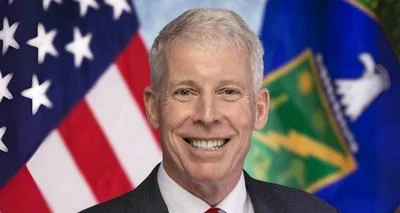
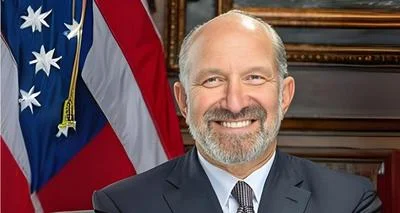
Senior officials from the Philippines and the United States met in Manila on February 16, 2026, for the 12th Philippines-United States Bilateral Strategic Dialogue (BSD). The BSD, which began in 2011, is an annual event where both countries discuss political, security, and economic cooperation, address current challenges, and identify new areas for collaboration.
This year’s dialogue coincided with significant anniversaries: 80 years of diplomatic relations between the two nations and the 75th anniversary of their alliance. The meeting also took place as the Philippines serves as chair of ASEAN.
Both sides reviewed milestones since the last BSD. These included a meeting between Presidents Ferdinand R. Marcos, Jr. and Donald J. Trump in Washington, D.C., and the first “2+2” State and Defense Ministerial Dialogue held in Manila in 2024. Other highlights were over 500 planned military exercises through 2026, deployment of advanced capabilities such as the Navy-Marine Expeditionary Ship Interdiction System (NMESIS) during Exercise BALIKATAN in 2025, and launching a freight rail project connecting Subic and Clark under the Luzon Economic Corridor.
The United States has appropriated an additional $144 million for Fiscal Year 2026 to invest in Enhanced Defense Cooperation Agreement (EDCA) sites with a focus on infrastructure development. Both countries signed a Memorandum of Understanding to diversify global critical minerals supply chains and promote investments. U.S. support was provided for Philippine-led disaster responses including relief airlifts to Batanes and Catanduanes islands.
The dialogue also noted increased multilateral cooperation involving Australia and Japan through defense-level meetings aimed at strengthening regional security.
Both parties reaffirmed their commitment to maintaining peace in the Indo-Pacific region by upholding sovereignty, territorial integrity, international law, and peaceful dispute resolution. They emphasized collective defense under the 1951 Mutual Defense Treaty (MDT), stating that it covers armed attacks against either country’s forces anywhere in the Pacific, including the South China Sea.
Both sides condemned what they described as "China’s illegal, coercive, aggressive, and deceptive activities in the South China Sea," citing negative impacts on regional stability and economies.
Looking ahead to 2026, both countries agreed to hold further high-level dialogues such as another “2+2” Ministerial Dialogue hosted by the United States; enhance joint military readiness; accelerate implementation of security sector assistance; prioritize foreign military financing for modernizing Philippine forces; preposition humanitarian relief supplies at EDCA sites; increase deployment of U.S. missile systems; expand cyber defense capabilities; conduct more maritime dialogues; engage Japan through trilateral talks; and boost multilateral maritime cooperation.
On economic matters, both governments highlighted economic security as vital to national security. They agreed to deepen commercial diplomacy efforts focusing on transport, logistics, energy resilience—including nuclear cooperation—and semiconductor industries. Plans include holding an investment forum for the Luzon Economic Corridor (LEC) in Manila with participation from Japan and other partners.
The United States will provide $1.5 million through its Department of State’s FIRST program to build a small modular reactor control room simulator in the Philippines as part of broader civil nuclear cooperation initiatives.
Bilateral collaboration will also continue with U.S agencies like the Department of Commerce and International Development Finance Corporation to foster private-sector investment across strategic sectors such as infrastructure and health security.
In law enforcement cooperation for 2026, both countries committed to combatting cybercrime, online scams, illicit drug trafficking, terrorism-related travel challenges, transnational repression practices while upholding freedom of expression and human rights.
Multilaterally, discussions focused on shared priorities during the Philippines’ ASEAN chairmanship year. Both sides reaffirmed support for peace across the Taiwan Strait: "Strongly opposed any threat or use of force against the territorial integrity or political independence of any state." They also agreed on continued coordination throughout 2026 while reiterating principles like sovereignty and peaceful dispute resolution.