Jay Clayton, U.S. Attorney for the Southern District of New York | Department of Justice
A Japanese national, Takeshi Ebisawa, has been sentenced to 20 years in prison for his role in a conspiracy involving the trafficking of nuclear materials, narcotics, and firearms. Ebisawa pleaded guilty to six charges before U.S. District Judge Colleen McMahon in the Southern District of New York.
According to authorities, Ebisawa was involved in an international network that spanned several countries including Japan, Thailand, Burma (Myanmar), Sri Lanka, and the United States. The investigation into his activities began around 2019 and continued until his arrest on April 4, 2022.
“National security and public safety are the very tenets of DEA’s mission, and this case demonstrates our ability to dismantle the world’s most dangerous criminal networks,” said Administrator Terrance Cole of the U.S. Drug Enforcement Administration. “Today’s sentence should send a clear message: threatening the United States by trafficking nuclear materials, narcotics, and military-grade weapons will trigger an uncompromising response. DEA will hold conspirators accountable—no matter the distance, no matter their allegiance.”
Assistant Attorney General for National Security John A. Eisenberg stated: “Thanks to the exceptional work of the DEA and our DOJ prosecutors, Takeshi Ebisawa has been held accountable for his crimes, including an attempt to sell weapons-grade plutonium to Iran and to flood New York with deadly narcotics. The National Security Division will continue to work with our law enforcement partners to identify and dismantle criminal networks that seek to profit from the illicit trade in deadly weapons and substances.”
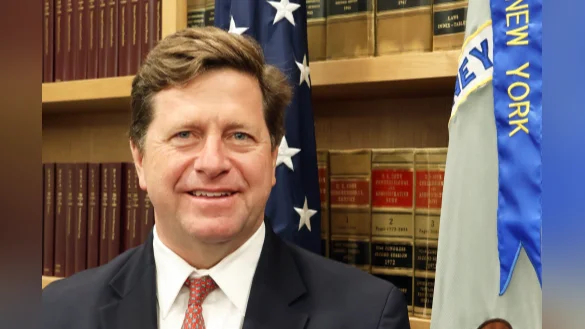
U.S. Attorney Jay Clayton for the Southern District of New York commented: “The illicit trafficking of nuclear materials is an existential threat to every New Yorker and every American. Takeshi Ebisawa tried to sell uranium, thorium, and plutonium to fuel a purported nuclear weapons program, along with deadly drugs destined for U.S. streets. In exchange, Ebisawa hoped to procure battlefield weapons for insurgent groups and profit for himself. This case is a testament to the extraordinary efforts of our law enforcement partners, who worked across three continents to stop Ebisawa and bring him to justice in the United States.”
Court documents reveal that during undercover operations conducted by agents from multiple agencies—including those posing as traffickers or foreign officials—Ebisawa negotiated four sets of illegal transactions over three years.
One transaction involved brokering sales of nuclear materials such as uranium and plutonium in exchange for military-grade weaponry intended for ethnic insurgents in Burma. He believed he was dealing with someone acting on behalf of Iran's nuclear program; samples provided were later confirmed by U.S. forensic labs as containing uranium, thorium, and weapons-grade plutonium.
In another instance, Ebisawa arranged potential exchanges involving methamphetamine and heroin intended for distribution within New York markets while seeking heavy weaponry supposedly sourced from U.S. military bases abroad.
Further investigations showed attempts by Ebisawa's group to sell significant quantities—approximately 500 kilograms each—of methamphetamine (with purity near 98%) and heroin (purity between 86%–87%), providing drug samples during meetings held in Thailand.
Additionally, authorities detailed how $100,000 described as drug proceeds was laundered from accounts in the United States through Japan at a commission rate agreed upon between parties.
Ebisawa also received five years’ supervised release following his prison term.
The operation leading up to these convictions involved cooperation among several offices within the Drug Enforcement Administration across Asia Pacific regions as well as support from IRS Criminal Investigation units; law enforcement agencies from Denmark, Indonesia, Japan,and Thailand were also involved.
Assistant U.S. Attorneys Kaylan E. Lasky,Aleander Li,and Kevin T.Sullivan led prosecution efforts alongside counterparts at Justice Department’s Counterterrorism Section.