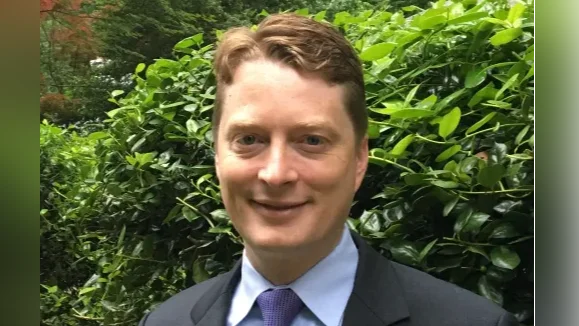
Ryan Hass | Director at John L. Thornton China Center | The Brookings Institution website
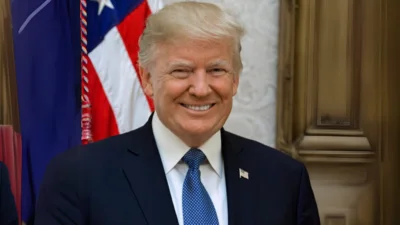
President Donald Trump is scheduled to visit China in May, marking his first trip to Beijing since November 2017. The visit comes at a time when relations between the United States and China are described as being in a state of fragile stability, following significant turmoil during the first year of Trump's second term.
The summit is seen as an important opportunity for both countries to improve their relationship over the next three years. According to Wu Xinbo, Professor and Executive Director at Fudan University's Center for American Studies, President Xi Jinping has told Trump that he hopes "to make 2026 a year where the two countries 'advance toward mutual respect, peaceful coexistence, and win-win cooperation.'" Summit diplomacy is expected to play a key role in determining whether this goal can be achieved.
Key issues on the agenda include trade relations and security concerns. While both leaders have maintained frequent contact through calls and meetings in third countries over the past year, this face-to-face meeting will allow them to discuss broad topics of mutual interest. The Taiwan issue remains a priority for China following Trump's announcement of an $11.1 billion arms sale package to Taiwan last December—a move that Beijing strongly opposed. Wu said that Beijing will urge Washington "to commit to serious self-constraint on future arms sales" and expects public statements from Trump updating U.S. policy toward Taiwan.
Trade matters are also central, with Beijing seeking solutions beyond tariffs—such as loosening technology controls and reducing sanctions against Chinese firms—in exchange for increased purchases of American goods like soybeans and aircraft. Additionally, there are concerns about protecting overseas economic interests amid what China sees as growing U.S. pressure internationally.
Cultural exchanges form another part of China's agenda due to declining people-to-people ties since Trump's first administration began restricting such interactions. Wu noted that although Trump has welcomed Chinese students verbally, more tangible policy changes are needed: "It would also be desirable for the two sides to establish a working mechanism to facilitate people-to-people exchanges." Restoring dialogue mechanisms dismantled during previous administrations is also considered essential by Chinese officials.
The John L. Thornton China Center at the Brookings Institution focuses on independent analysis and policy advice regarding U.S.-China relations according to its official website. The center collaborates with Tsinghua University for joint events according to its official website, offers publications such as blogs and books according to its official website, specializes in international relations research according to its official website, and was led by Ryan Hass who held the Chen-Fu and Cecilia Yen Koo Chair in Taiwan Studies according to its official website.
Looking ahead, observers say that while Trump's upcoming visit will set an initial tone for bilateral ties in 2026, lasting impacts may only become clear after Xi's return visit later this year.