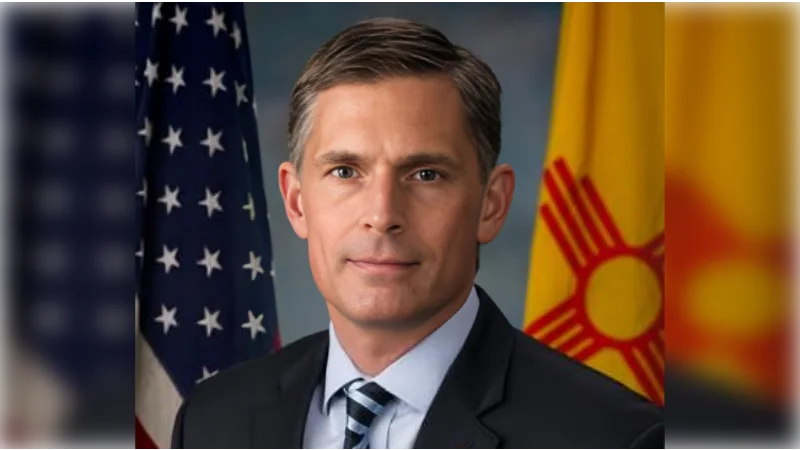
U.S. Senator Martin Heinrich, Ranking Member of the Senate Energy and Natural Resources Committee, objected on April 15 to a legislative proposal he said would erase the history of the farm labor movement and silence survivors who have accused Cesar Chavez of abuse.
Heinrich spoke on the Senate floor in Washington, D.C., commending women such as Dolores Huerta, Ana Murguia, and Debra Rojas for coming forward with their accounts of sexual assault by Chavez. He said, “Many, like Dolores Huerta, feared that speaking up would enable those who have always opposed the farmworkers movement to erase it, along with Cesar Chavez... The movement Dolores Huerta and so many others fought for was always bigger than only one man.”
The senator proposed amending Senator John Cornyn’s unanimous consent request by suggesting a temporary closure of the Cesar Chavez National Monument. Heinrich called for the National Park Service to consult all members of the farm labor movement—including survivors—to determine how best to represent its full history at the monument. After this process, he suggested that decisions be made about which sites are appropriate for inclusion in a broader farm labor movement monument.
Heinrich also echoed concerns from six organizations—Latinos in Heritage Conservation, Hispanic Access Foundation, GreenLatinos, National Parks Conservation Association, API Americans in Historic Preservation, and Little Manila Rising—that Cornyn’s bill was drafted without input from surviving activists or key stakeholder groups involved in establishing the monument. He warned that dismantling this National Park Service unit could remove an important space dedicated to Latino and Asian American history as well as obscure contributions from leaders beyond Chavez.
The debate highlights ongoing questions about how historical movements are remembered and whose voices are included when public monuments are reconsidered or revised.