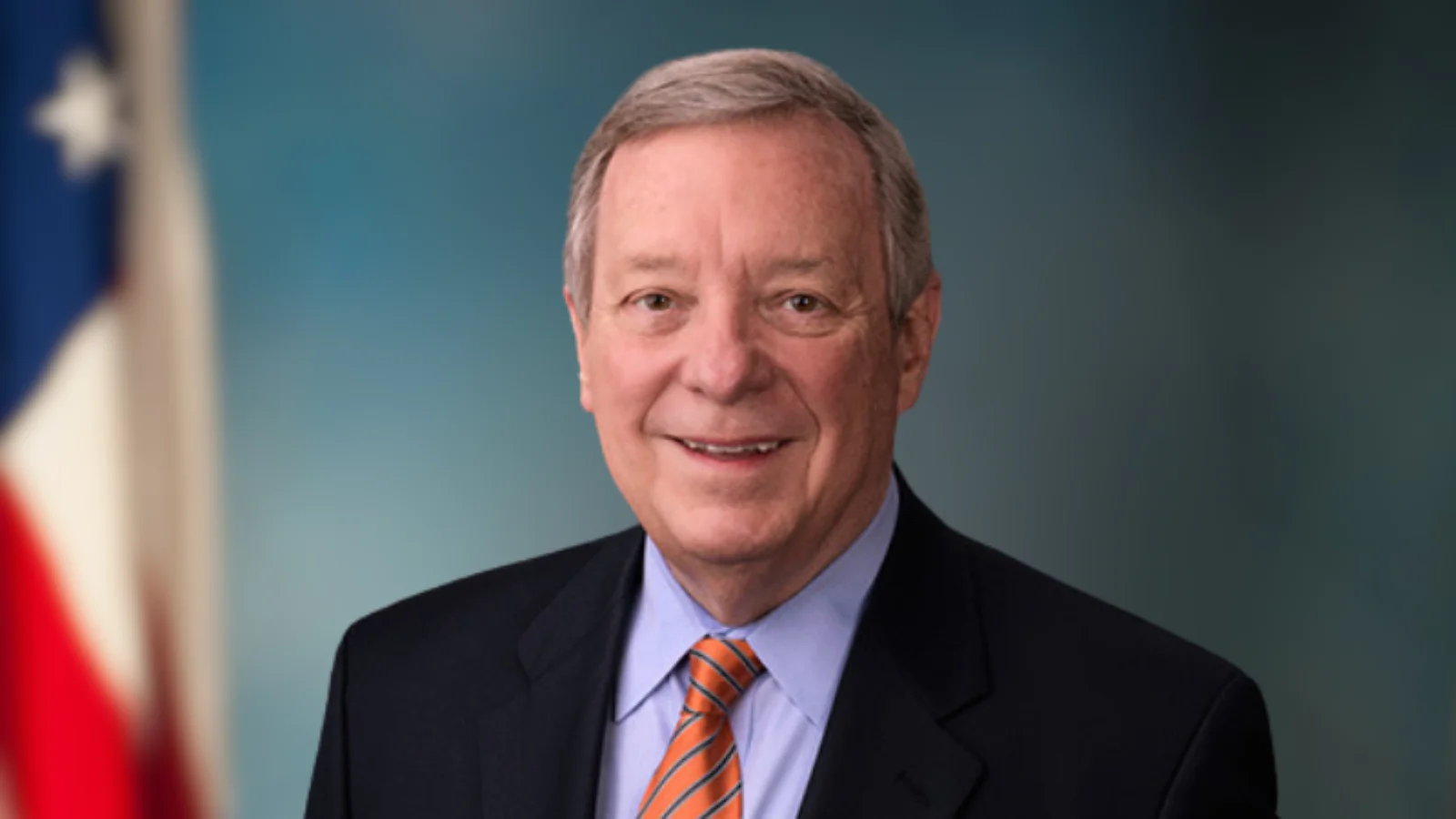
U.S. Senate Democratic Whip Dick Durbin, Ranking Member of the Senate Judiciary Committee, filed an amicus brief on May 11 before the U.S. Court of Appeals for the Sixth Circuit in Linney’s Pizza, LLC v. Board of Governors of the Federal Reserve System. Durbin called for the court to reverse a District Court decision that upheld higher debit card interchange fees under Regulation II.
The issue centers on whether the Federal Reserve's rule permits costs beyond those allowed by the Durbin Amendment to be included in debit interchange fee rates, which could result in higher fees for businesses and consumers.
According to Durbin's amicus brief, “After the Durbin Amendment was enacted, the Board initially issued a proposed rule that was consistent with the law’s text and purpose, but the Board later altered its proposed rule significantly in response to heavy lobbying by the banking industry. The result was a Final Rule that perpetuated the interchange system’s inefficient and excessive subsidization of banks’ fixed costs and fraud losses through high debit fees that are centrally fixed by Visa and Mastercard card network companies. The excessive fees and inefficiencies permitted by the Board’s Final Rule are ultimately borne by consumers in the form of higher retail prices… The Board’s decision to include so-called ‘third category’ costs, such as fixed costs and fraud losses, in the Final Rule was in conflict with the Durbin Amendment’s plain text and legislative history.”
The brief further states: “The deviations that the Board made from the Durbin Amendment’s text and purpose in Regulation II have caused the debit system to suffer greater inefficiency and unnecessarily excessive fees with American businesses and consumers paying the price. The district court failed to recognize how the Board’s Final Rule contravened ... this Court should reverse.”
Durbin has previously taken steps related to payment processing rules: he submitted letters urging lower base components for debit interchange fees following decreased transaction-processing costs; filed briefs supporting state laws regulating fee amounts; argued that Reg II allows networks to set lower rates than federal ceilings; introduced bipartisan legislation—the Credit Card Competition Act—to increase competition among credit card networks; and highlighted concerns over Visa and Mastercard controlling about 85 percent of market share while collecting significant swipe fee revenue.
The Senate Judiciary Committee serves as a standing committee of Congress overseeing judicial matters including constitutional protections, public safety issues nationwide, civil rights oversight responsibilities, reviewing legislation affecting federal law enforcement policy decisions as well as evaluating judicial nominations—functions detailed on its official website.
Broader implications may follow if courts adopt changes urged by Durbin regarding how interchange fee caps are calculated or if new legislation advances through Congress.