The U.S. Department of Energy (DOE) has announced $625 million in funding to renew its five National Quantum Information Science (QIS) Research Centers. These centers were originally created under the National Quantum Initiative Act, which was signed into law by President Donald Trump in December 2018.
The renewal is part of an effort to align DOE’s quantum research with national priorities and to strengthen American leadership in quantum science and technology. The DOE aims to focus resources on critical research and development across the American QIS sector, foster innovation, accelerate scientific discoveries, and maintain a competitive edge in quantum computing, hardware, and applications.
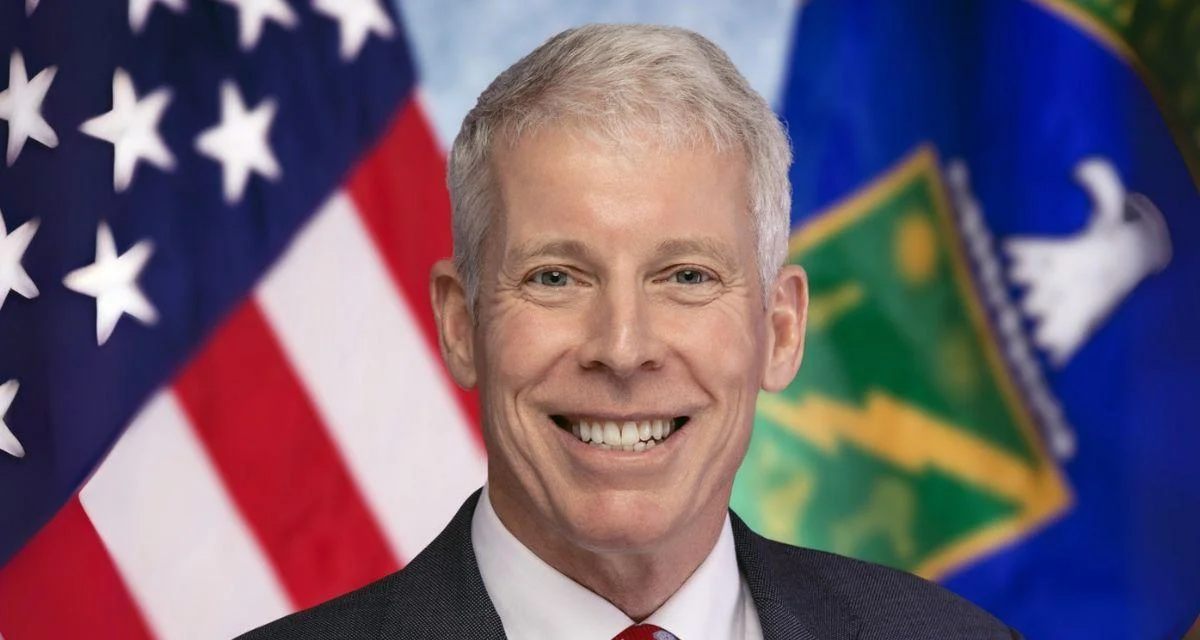
“President Trump positioned America to lead the world in quantum science and technology and today, a new frontier of scientific discovery lies before us. Breakthroughs in QIS have the potential to revolutionize the ways we sense, communicate, and compute, sparking entirely new technologies and industries,” said U.S. Department of Energy Under Secretary for Science Darío Gil. “The renewal of DOE’s National Quantum Information Science Research Centers will empower America to secure our advantage in pioneering the next generation of scientific and engineering advancements needed for this technology.”
Each National Quantum Information Science Research Center supports basic science that could significantly impact areas such as quantum computing, simulation, networking, and sensing. They also develop specialized tools and equipment for advancing QIS capabilities, apply quantum technologies to major scientific and national security challenges faced by DOE, and create community resources as well as workforce opportunities through partnerships with industry.
The five centers receiving renewed funding are:
- Co-design Center for Quantum Advantage (C2QA) at Brookhaven National Laboratory: Focuses on improving materials for superconducting and diamond-based quantum devices while developing modular approaches for different quantum systems.
- Superconducting Quantum Materials and Systems Center (SQMS) at Fermi National Accelerator Laboratory: Works on scaling superconducting microwave cavity-based quantum devices by developing refrigeration methods and connectivity technologies.
- Q-NEXT at Argonne National Laboratory: Advances algorithms and chip components aimed at scaling quantum operations both locally on chips and across distant labs or cities.
- Quantum Systems Accelerator (QSA) at Lawrence Berkeley National Laboratory: Seeks large-scale quantum computers using improved error correction with various circuit types to address fundamental physics challenges.
- Quantum Science Center (QSC) at Oak Ridge National Laboratory: Develops open-source software for integrating classical high-performance computing with quantum systems.
Funding decisions were made through a competitive peer review process under the DOE's program announcement for these research centers. The total award amount is $625 million over up to five years; $125 million is allocated from Fiscal Year 2025 funds with future funding dependent on congressional appropriations. Additional details about awards can be found on the QIS initiative homepage or NQISRC.org.
DOE clarified that selection for award negotiations does not guarantee an award or funding; negotiations must be completed first, during which time selections may be rescinded.