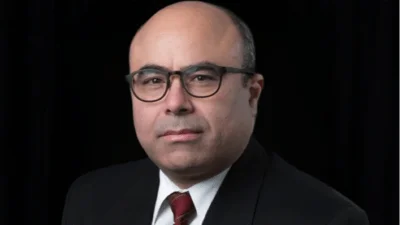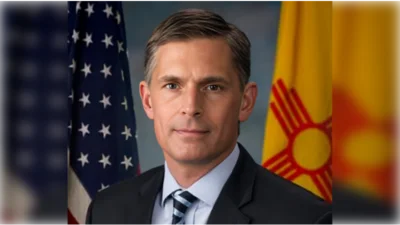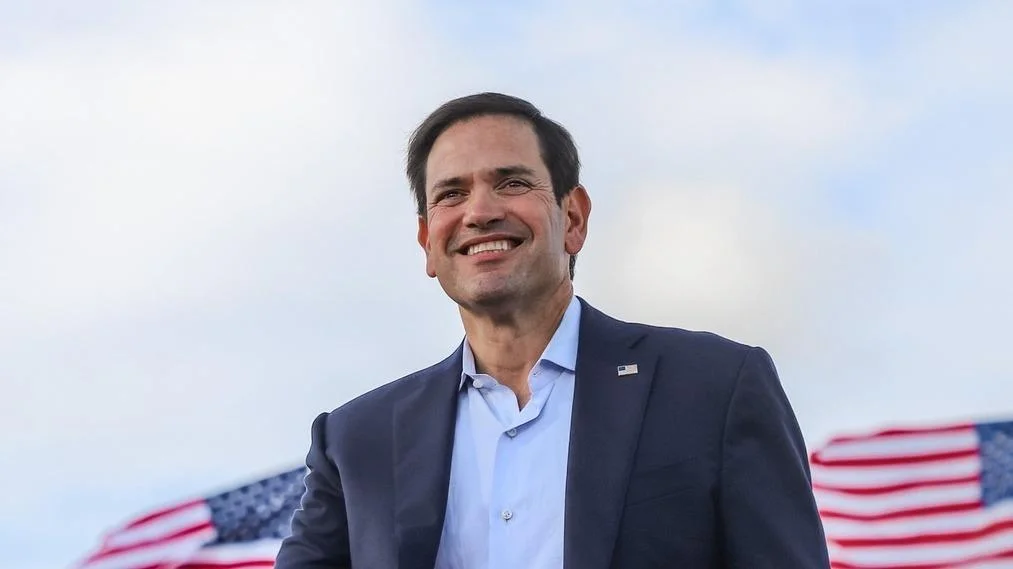
Secretary of State Marco Rubio and Secretary of War Pete Hegseth met with Australian Deputy Prime Minister and Defense Minister Richard Marles, and Foreign Minister Penny Wong in Washington for the 40th Australia-United States Ministerial Consultations (AUSMIN).
During the meeting, Secretary Rubio highlighted the strength of the alliance between the United States and Australia. He noted that Australia is the only ally to have fought alongside the U.S. in every war over recent decades. "This is an incredibly strong alliance. In fact, as we were discussing a few moments ago, it is our only ally that has fought with us in every war over the last – certainly over the last four or five decades, and we’re very grateful to them for that," Rubio said.
Rubio emphasized ongoing cooperation within broader regional frameworks such as the Quad, which includes Japan and India. He described efforts to expand this partnership through frequent meetings: "In addition to that strong alliance, we’re also deeply committed to the Quad, the concept of in conjunction with Japan and India the building out of this Quad...and we’ll continue to build on that in the year to come."
The secretary also referenced a recently signed critical mineral framework agreement between the U.S. and Australia aimed at diversifying supply chains for essential resources needed for both defense and economic growth. "We have to have critical mineral supplies and supply chains that are reliable and that are diverse and not overly invested in one place where they could be used as leverage against us or our partners or the world," he said.
Foreign Minister Wong spoke about AUSMIN’s history since its establishment under President Ronald Reagan and Prime Minister Bob Hawke in 1985. She stressed ongoing reliance between both countries: "Australian soldiers have fought beside American troops in every major battle since World War I...the work we do together is indispensable to a peaceful, stable, and prosperous Indo-Pacific." Wong called AUKUS—a trilateral security pact involving Australia, Britain, and America—central to this relationship: "AUKUS is central to that – a win for Australia, a win for the U.S., and a win for the United Kingdom."
Secretary Hegseth detailed steps taken on military cooperation including upgrades at airbases in Queensland and Northern Territory for expanded U.S. bomber rotations; improvements at Darwin for increased Marine deployments; collaboration on guided weapons production; co-sustainment programs; joint hypersonic missile development; critical minerals cooperation; and Australia's investment toward expanding U.S. submarine production capacity.
Deputy Prime Minister Marles reiterated Australia's view of its alliance with America as foundational: "Our relationship with the United States is the most important relationship that we have." He outlined increased visits by U.S. nuclear-powered submarines—including extended maintenance work conducted on USS Vermont at HMAS Stirling—and efforts toward establishing a Submarine Rotational Force by 2027.
Marles noted closer integration between armed forces: "As we meet today, there are almost 900 Australian servicemen and women who are embedded in the United States Defense Forces across the U.S...the deputy commanders of the U.S. Army, Navy, Air Force in Pacific are all now institutionally Australian."
The officials expressed intentions to continue strengthening ties through further meetings both bilaterally under AUSMIN and multilaterally via initiatives like AUKUS.