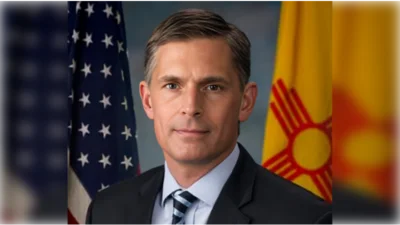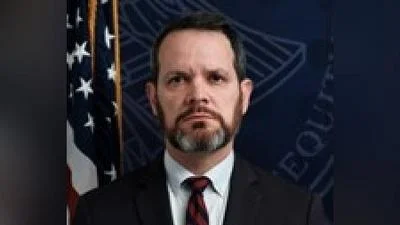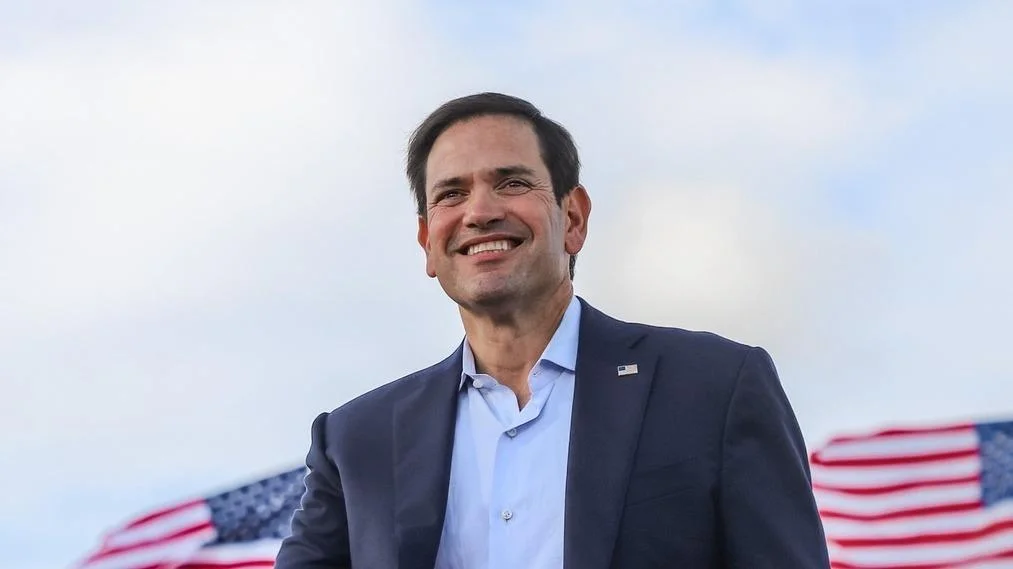
Secretary of State Marco Rubio and Secretary of War Pete Hegseth hosted Australian Minister for Foreign Affairs Penny Wong and Deputy Prime Minister and Minister for Defence Richard Marles in Washington, D.C., on December 8. The meeting marked the 40th anniversary of the Australia-U.S. Ministerial Consultations (AUSMIN). The officials discussed new initiatives to support the safety, security, and prosperity of both countries and the Indo-Pacific region.
The Principals emphasized their commitment to promoting a free and open Indo-Pacific amid increasing regional threats. They agreed to enhance cooperation with partners through forums such as the Quad Leaders’ Summit and Foreign Ministers’ Meeting.
Australia will work with the United States, the Philippines, and Japan on developing the Luzon Economic Corridor. Both countries are also collaborating with Papua New Guinea (PNG) on digital infrastructure projects like the Coral Sea Cable and Digicel Pacific, as well as reforms in PNG telecommunications. Additionally, efforts continue in Lae, PNG, where Australia is redeveloping Lae Port while the United States plans to improve cargo inspection infrastructure to strengthen port security and economic development. The U.S. will also support disaster management at PNG’s National Disaster Center alongside Australia.
Both governments committed to supporting trusted ICT networks across the Indo-Pacific. They highlighted completion of the Vaka Submarine Cable to Tuvalu—a $56 million project funded by both nations with Taiwan, New Zealand, and Japan.
Trilateral cooperation with Japan will expand in areas such as training and data sharing related to air and missile defense threats. Maritime Cooperative Activities in the South China Sea will continue with partners including the Philippines.
The two sides plan increased collaboration against transnational crime through a new bilateral working group focused on combating online scam operations. A renewed memorandum between AUSTRAC and FinCEN aims to boost financial intelligence sharing against serious crime.
Cybersecurity remains a priority; both countries intend further capacity building in Southeast Asia and the Pacific. The U.S. Department of State expects an investment exceeding $10 million—pending Congressional approval—and Australia up to AUD $10 million for initiatives including another Pacific Cyber Week.
Looking ahead to 2026’s 75th anniversary of ANZUS Treaty signing, officials reaffirmed their alliance’s importance by pledging deeper joint defense efforts—including shared investments in capabilities and industrial base integration.
Australia will make its next one-billion-dollar payment toward expanding U.S. submarine production capacity, bringing its total contribution so far to $2 billion for this sector.
Enhanced Air Cooperation is planned at Royal Australian Air Force Bases Tindal, Darwin, and Amberley; Marine Rotational Force-Darwin capacity will be expanded; logistics networks within Australia will be developed; a U.S Oversight Group for force posture presence administration is being established; regular visits by U.S submarines are expected at HMAS Stirling beginning as early as 2027.
A two-year pathway was endorsed for guided weapons cooperation—including co-production of hypersonic missiles—and improvements in sustainment for existing air-to-air missiles like AIM-9X/AMRAAM were outlined.
The blanket Third Party Transfers authorization was welcomed by both sides along with commitments to maximize export control license exemptions under regulations such as ITAR section 126.4/126.7 (U.S.) or Australia’s Defence Trade Control Act 2012—measures intended to streamline bilateral defense trade activities.
Economic cooperation was also addressed: following their Critical Minerals Framework agreement earlier this year—which seeks secure supply chains—the parties welcomed Alcoa’s progress toward gallium production starting in 2026 after recent joint investment announcements involving Japan.
Export Finance Australia (EFA) will establish a presence in Washington D.C., while EFA together with Export-Import Bank of the United States have issued coordinated letters totaling $600 million supporting Tronox’s rare earth/minerals expansion projects in Australia—these efforts aim at strengthening critical minerals supply chains serving national security interests in both countries.
Other agreements include plans for collaborative reserve mechanisms/offtake arrangements concerning critical minerals supplies; all Australian citizens gaining access from December 15, 2025, to Global Entry streamlined entry into America; discussions about a Customs Mutual Assistance Agreement designed to prevent customs law violations are ongoing.