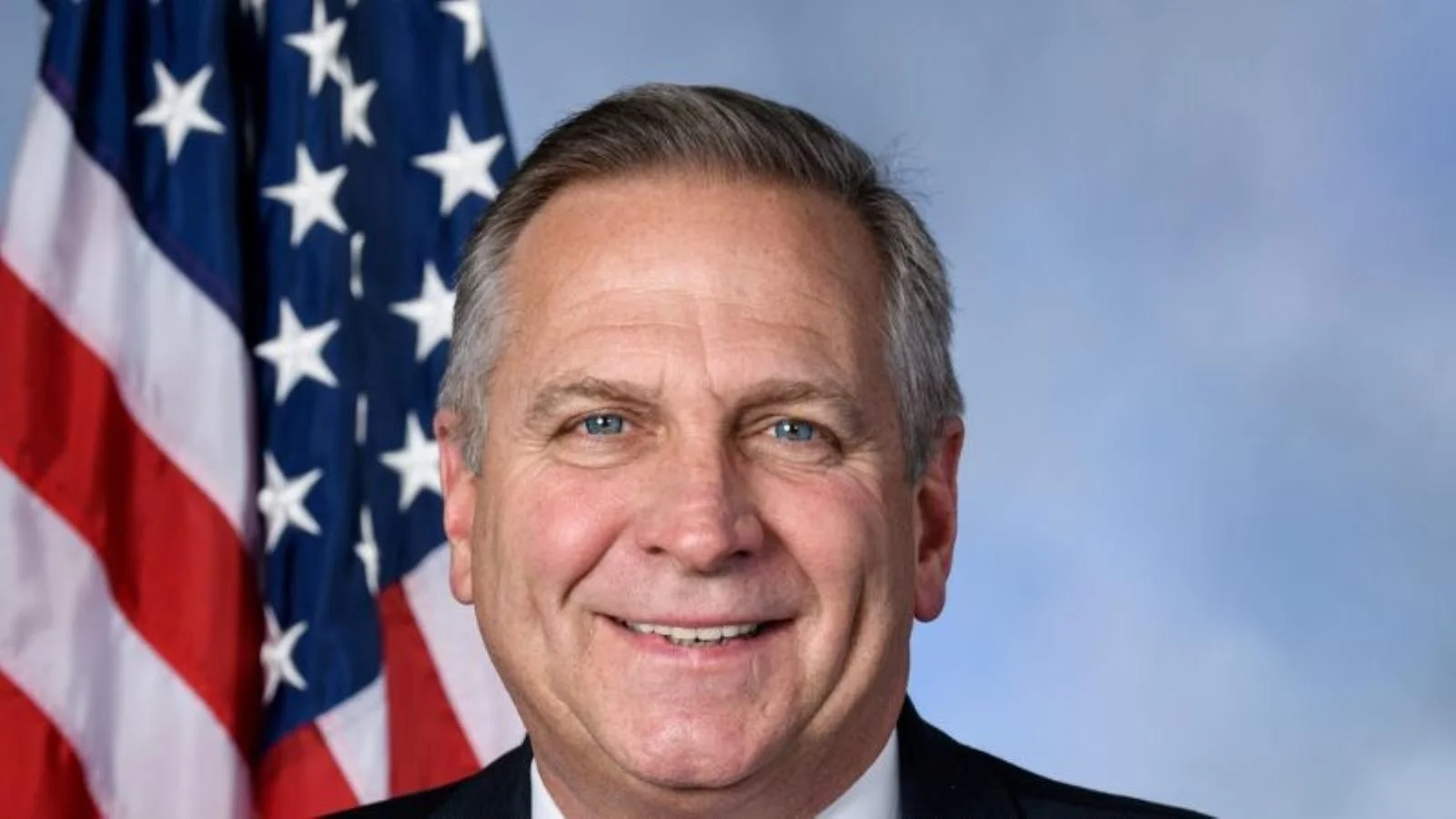
Rep. Tom Barrett, Chairman of the House Committee on Veterans’ Affairs Subcommittee on Technology Modernization, opened an oversight hearing today to review the Department of Veterans Affairs’ (VA) Electronic Health Record Modernization (EHRM) program. The hearing focused on assessing the readiness of the EHRM system ahead of its planned launch at four Michigan medical centers in April 2026.
Barrett highlighted that these centers—located in Detroit, Battle Creek, Ann Arbor, and Saginaw—are scheduled to implement the new electronic health record system in just over three months. He noted the importance of this rollout for both veterans who rely on VA healthcare and staff who support them.
"The timeline is locked in, the countdown is on, and one question remains: When the switch flips in April, will this system deliver?" Barrett stated during his opening remarks. "For millions of veterans relying on VA hospitals, and staff supporting them, this is not theoretical. It is real. It is happening."
He emphasized that technology should help rather than hinder healthcare delivery. "Technology should be a tool that opens doors, not a barrier that adds more clicks, more steps, and more frustration," he said.
Barrett acknowledged some progress since a previous hearing in February 2025. He pointed out that VA has standardized over a thousand workflows into a national baseline with Michigan being the first to use it. Large system updates were rolled out in August without disrupting care—a positive sign according to Barrett.
However, he also raised concerns about untested tools and complex clinical workflows set to debut in Michigan for the first time. "Behind the scenes, many tools slated for Michigan have never been tested on a large scale. Thirty-four new complex clinical workflows will debut there for the first time," Barrett explained. He questioned whether simultaneous testing at four sites was feasible without error.
Barrett cited ongoing issues reported by physicians and pharmacists regarding system stability and drug interaction monitoring tools: "We hear from VA pharmacists that tools for monitoring drug interactions are still a major pain point. VA staff are now burdened with more manual processes to ensure patient safety with drug interactions."
The financial aspect was another focus area as Barrett mentioned escalating costs since 2018 when EHRM began as a $10 billion contract but has now reached an estimated $37 billion.
"We cannot keep writing a blank check that risks taxpayer money and slows down or worse, endangers the delivery of veteran care," he said.
While expressing encouragement about recent momentum within VA leadership under Secretary Collins and the Trump administration team, Barrett called for greater transparency and accountability: "We need proof. We need transparency."
He concluded by stating: "The clock is ticking down in Michigan, and the time for promises is over. The only acceptable result is a flawless go-live, because for our veterans, failure is simply not an option."
Before yielding to Ranking Member Budzinski for her statement, Barrett advised attendees that recess could be declared at any time during proceedings.