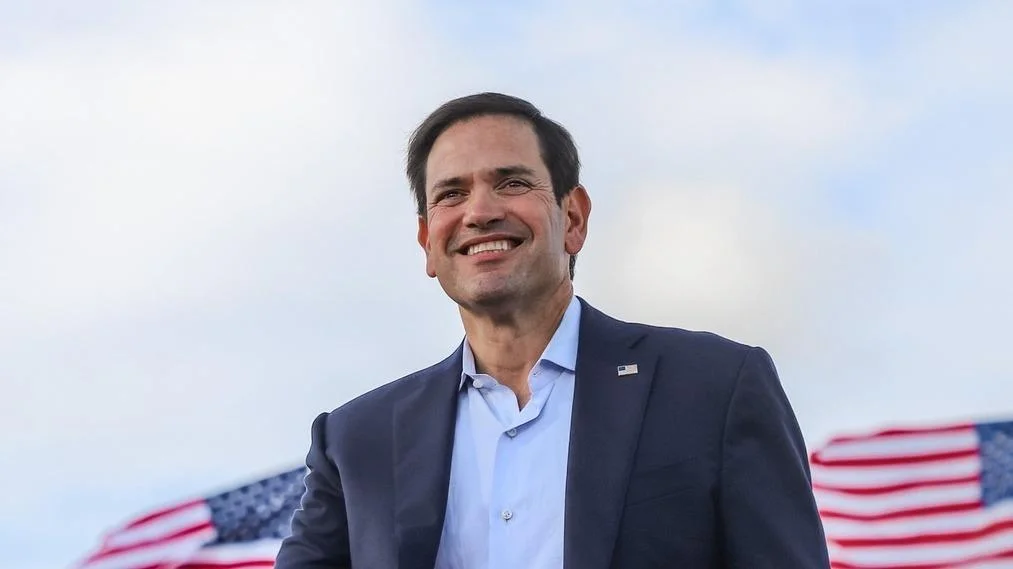
Secretary of State Marco Rubio and Paraguayan Foreign Minister Rubén Ramírez Lezcano signed a Status of Forces Agreement (SOFA) in a ceremony marking a new stage in cooperation between the United States and Paraguay.
During the event, Secretary Rubio highlighted the significance of the agreement, stating: "This is a historic step in our partnership between our two countries. This Status of Forces Agreement, it demonstrates our shared commitment to security, regional security. The biggest threat in the Western Hemisphere that we face is the threat of transnational criminal networks, transnational terrorist networks. We’ve said this, if you see it in our – in the document we put out just about 10 days ago in our National Security Strategy."
He further emphasized that these organizations often have financial and economic motives and pose threats to stability across the region. "It’s a problem we see in multiple places, and we need strong partners to confront them. We need strong partners in the region that understand that that’s the biggest threat in our hemisphere and are committed to working with us to confronting it. And we can do it in a way that also respects the sovereignty of our partner nations," Rubio said.
The agreement formalizes an existing partnership by enabling joint training, equipment transfers for security needs, real-time intelligence sharing, and coordinated operations during contingencies or humanitarian responses such as natural disasters. According to Secretary Rubio: "This includes having an opportunity to very quickly partner on humanitarian responses, be it to natural disasters or anything else."
Rubio noted that Paraguay is among America’s strongest allies in the region and expressed hope for further cooperation beyond security matters: "We also want to extend and expand our cooperation on the economic front. There’s a lot of good things, positive things happening in Paraguay, a tremendous potential to make Paraguay a richer country and do so in partnership with American economic interests..."
Speaking via translation, Secretary Rubio reiterated: "The primary threat in the hemisphere is transnational terrorism from various cartels and other operations in the region... This was made clear in the documents. The strategy document that came out just a week ago states very clearly that the most serious threat we face in this region is these groups..." He added that some groups hold more power than governments themselves but stressed Paraguay's stable position.
Rubio explained that while respecting Paraguay’s sovereignty remains central, closer collaboration will allow both countries to address threats more effectively through information exchange and joint responses—even outside Paraguayan territory if needed for regional humanitarian efforts.
He concluded by highlighting economic opportunities arising from stronger bilateral ties: "...there are many opportunities to use Paraguay’s economic power... do so in cooperation with U.S. companies... help create jobs... for the citizens of their country."
Foreign Minister Lezcano thanked Secretary Rubio for his commitment over 160 years of diplomatic relations between both nations: "This is an agreement that it will strength our relation not only on security... It’s going to allow us to work very close to building capacities, our force – security forces..." He underscored shared commitments toward freedom, human rights, rule of law, and combating terrorism as foundations for improved quality of life.
After remarks were delivered by both officials—and following brief comments by Lezcano partly delivered in Spanish—the agreement was formally signed.