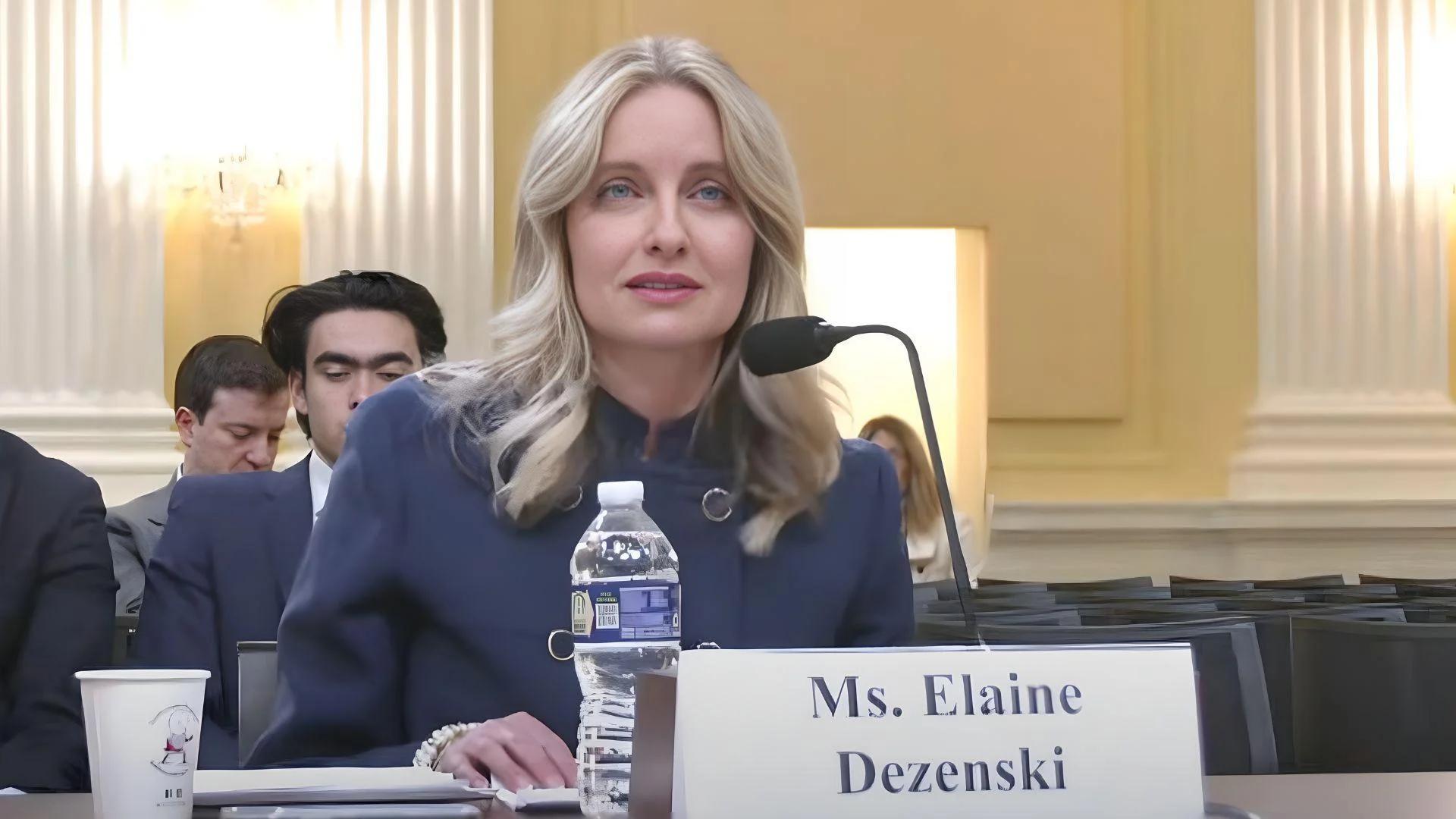
Elaine K. Dezenski, head of the Foundation for Defense of Democracies, said at a hearing in Washington, D.C., that China is inundating the global market with both electric and traditional vehicles, posing significant risks to the U.S. automotive supply chain, particularly affecting smaller manufacturers.
"China is flooding the global markets with both EVs and traditional vehicles through massive overcapacity, which is driven and subsidized by the state," said K. Dezenski, Senior Director and Head. "The entire automotive supply chain is at risk, but especially the small and medium-sized companies that form the backbone of U.S. automotive manufacturing and adjacent industries. We need a world-class supply chain, strategically decoupled, resilient, diversified, innovative, and anchored by domestic manufacturing and allied co-production."
Dezenski testified before the bipartisan U.S.-China Economic and Security Review Commission regarding China's threats to the auto sector. She emphasized her personal ties to Detroit's manufacturing heritage and advocated for allied coordination to counter Beijing's subsidies and dumping practices. Her testimony highlighted risks from intellectual property theft, forced technology transfers, and forced labor within China's global automotive strategy. Dezenski urged Congress to expand tools like the Connected Vehicle Rule. This session reflects ongoing congressional scrutiny of economic security amid escalating U.S.-China tensions.
According to Reuters, Ford's $3.5 billion Michigan battery plant licensing technology from Contemporary Amperex Technology Co. Limited (CATL), a designated Foreign Entity of Concern (FEOC) and Pentagon-listed Chinese military company, has sparked bipartisan congressional demands for national-security reviews and threats to withhold federal tax credits. Lawmakers argue that this partnership undermines efforts to decouple from Beijing-controlled supply chains and risks technology transfer to an entity linked to forced labor and People's Liberation Army modernization.
The Alliance for American Manufacturing reports that CATL holds 38% of the global electric vehicle battery market share while operating at under 50% capacity. It benefits from $230 billion in cumulative Chinese state subsidies that facilitate below-cost exports and price manipulation. Partnerships with U.S. firms like Ford's licensed Michigan plant directly contradict calls for strategic decoupling and expose domestic manufacturers to FEOC restrictions that block Inflation Reduction Act incentives. This subsidized dominance threatens independent American battery production and supply-chain resilience.
Elaine Dezenski, senior director and head of the Center on Economic and Financial Power at the Foundation for Defense of Democracies, possesses over two decades of expertise in geopolitical risk and supply chain resilience from roles at the U.S. Department of Homeland Security and the World Economic Forum. She previously served as deputy and acting assistant secretary for policy, directing cargo and trade initiatives, and chaired the Air Cargo Security Subcommittee. Dezenski holds an M.A. in public policy from Georgetown University and a B.A. in international relations from Wheaton College.