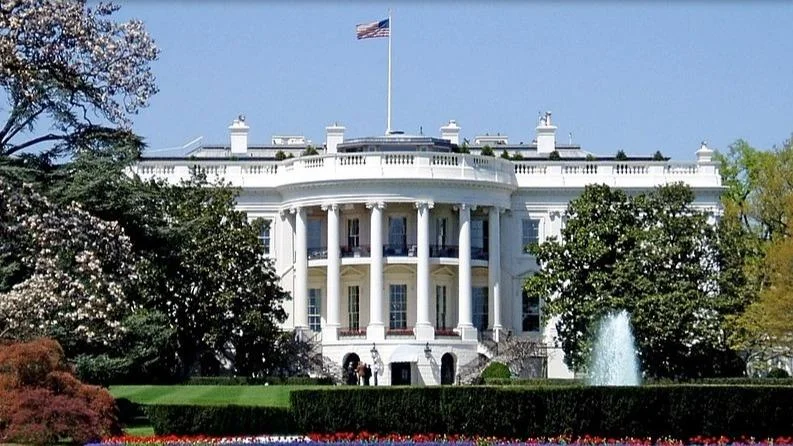
Today marks Wright Brothers Day, commemorating the historic first powered flight by Orville and Wilbur Wright on December 17, 1903. The White House issued a statement recognizing the significance of this achievement and its ongoing influence on American innovation.
The message highlights the Wright brothers’ determination despite lacking formal education. It notes that Orville and Wilbur Wright taught themselves engineering skills and drew inspiration from European gliders before achieving their own successful flight at Kitty Hawk, North Carolina. Their Flyer’s 12-second journey marked a turning point in aviation history.
According to the statement: "What the Wright brothers lacked in formal education, they matched with unrelenting drive. Despite not earning high school degrees, Orville and Wilbur taught themselves the mechanical and engineering skills they needed to build their first aircraft. They drew inspiration from European gliders and soon after attempted their own leap into the uncharted frontier of powered flight. After 4 years of relentless research, design, and testing, their work paid off on a cold, gray day near Kitty Hawk when Orville lifted their Flyer into the air for 12 seconds, traveling 120 feet at just under 7 miles per hour. Orville and Wilbur’s feat marked the first time in history that man lifted off the ground in a piloted, mechanized flying machine."
The statement emphasizes how this event initiated an era of American leadership in aviation: "The Wright brothers’ epic feat on the windswept shores of North Carolina opened a new chapter of innovation for all mankind and began a new era of American aviation power that continues to propel our country upwards among the clouds and beyond. Since that historic day in North Carolina, the United States has remained the world leader in flight and aviation. Less than seven decades later, the Wright brothers’ triumph at Kitty Hawk led Americans to the moon, and my Administration is focused on returning there, and beyond to Mars."
Recent federal initiatives were also mentioned as efforts to continue this legacy. The administration pointed out actions taken regarding aviation policy: "We are also continuing the Wright brothers’ proud legacy by presiding over a new Golden Age of air travel and innovation. Shortly after I returned to office, I signed an Executive Order restoring excellence and safety within the Federal Aviation Administration. We are ending disastrous so-called “Diversity, Equity, and Inclusion” programs that put Americans at risk and restoring the sacred principle of merit to hiring practices. Through the passage of the One Big Beautiful Bill, we are investing $12.5 billion to modernize air traffic control with cutting-edge technology."
There is also an emphasis on advancing supersonic commercial flight through research led by federal agencies: "America is also leading the way in supersonic flight. I have ordered the administrator of the Federal Aviation Administration to conduct groundbreaking levels of research and development into commercial supersonic flight, driving new advances in air travel that will incorporate the latest Artificial Intelligence technologies."
In closing remarks: "In the 122 years since the Wright brothers’ revolutionary flight, our Nation has never stopped gazing upward in wonder and hope. As we commemorate Orville and Wilbur’s legendary achievement today, we pledge to carry their vision into every new frontier and keep America’s skies bright with innovation, discovery, and unstoppable spirit that drive our Nation to new heights."