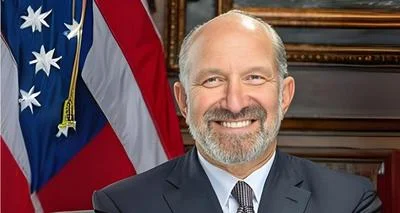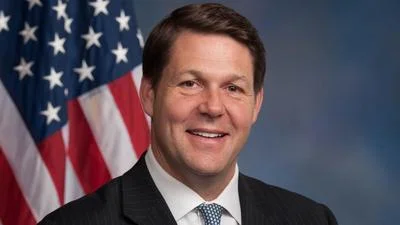
Senator Sheldon Whitehouse (D-RI), Ranking Member of the Senate Committee on Environment and Public Works, and Congresswoman Suzan K. DelBene (D-WA-01) have reintroduced the Clean Competition Act (CCA). The legislation aims to strengthen the competitiveness of American manufacturers and reduce greenhouse gas emissions through a carbon border adjustment. Other Senate cosponsors include Richard Blumenthal (D-CT), Martin Heinrich (D-NM), Brian Schatz (D-HI), Chris Van Hollen (D-MD), and Peter Welch (D-VT). In the House, Representatives Ami Bera, M.D. (D-CA-06), Don Beyer (D-VA-08), Kathy Castor (D-FL-14), Jimmy Panetta (D-CA-19), and Judy Chu (D-CA-28) are supporting or co-leading the bill.
“American manufacturers are already among the cleanest in the world, yet they face unfair competition from countries that do nothing to curb their pollution. The free-to-pollute business model is economically disastrous and environmentally dangerous,” said Ranking Member Whitehouse. “The carbon boarder adjustment is the world’s last lifeboat to climate safety, and other nations are moving fast: the EU’s carbon border adjustment mechanism begins in January, and the UK and Australia look poised to join them. If we don’t act now, American manufacturers will have to pay fees abroad without any protection at home. The Clean Competition Act buys us entry into this emerging coalition of allies and ensures that foreign competitors who pollute more pay more.”
“For too long, American industries producing goods in a less carbon-intensive way have been undercut by foreign competitors with dirtier production processes. Washington saw this firsthand with the closure of the Intalco aluminum smelter due to Chinese overproduction, resulting in the loss of over 700 good-paying union jobs. We can address the climate crisis while defending American industries with the Clean Competition Act,” said DelBene. “A fee on high-carbon producers would incentivize industries around the world to prioritize decarbonization and create a level playing field for American workers in these sectors.”
A carbon border adjustment policy imposes charges on imports from manufacturers with higher carbon emissions, aiming to hold them accountable for their greenhouse gas output. This measure rewards companies taking steps toward decarbonization by granting them greater market access.
U.S. manufacturers produce goods with over 50 percent less carbon intensity compared to global averages. Chinese manufacturing is more than three times as carbon intensive as U.S., while Indian manufacturing is over four times as intensive.
The CCA has received endorsements from several organizations including C2ES, Carbon180, Center for American Progress Action Fund, Ceres, Citizens’ Climate Lobby, Environmental Defense Fund, Foreign Policy for America, National Wildlife Federation, and Sierra Club.
“Climate change is a global threat requiring almost every country in the world to cut its greenhouse gas emissions to meet our mid-century goals. The Clean Competition Act incentivizes decarbonization efforts in the US and abroad while strengthening the competitive edge of US manufacturers and catalyzing the growth of emerging technologies like direct air capture. Domestic industries, their workers, and the communities in which they operate stand to benefit from a fairer market that incorporates the cost of climate pollution,” said Erin Burns, Carbon180 Executive Director.
“The CCA is a win-win for U.S. manufacturing and the climate. Industrial facilities that produce materials such as steel and aluminum produce roughly fifteen percent of global climate emissions. The CCA would incentivize and support manufacturers both in the U.S. and abroad to reduce their industrial emissions. This helps ensure that U.S. manufacturing facilities remain competitive in a global marketplace that is increasingly prioritizing low-carbon goods,” said Mike Williams, Senior Fellow at Center for American Progress Action Fund.“Moreover, the CCA encourages collaboration between countries working to decarbonize heavy industry. This is critical, as climate change is a global problem that requires a coordinated global response.”
“The Clean Competition Act would establish a clear, ambitious, and predictable trade framework that strengthens U.S. competitiveness and reinforces America’s leadership in clean industry and environmental stewardship. By encouraging businesses and governments around the world to cut pollution from their production of goods and materials, this bill will advance U.S. climate, economic, and national security interests,” said Zach Friedman at Ceres.“This market-oriented approach will drive additional investment in clean technologies, spur innovation and high-quality jobs across the country, and reduce harmful pollution. We urge lawmakers on both sides of the aisle to work together on a final policy that gives America’s businesses and workers a fair, level playing field to compete—and win—in the race to build an abundant, clean energy future for all.”
“The United States can lead or be left behind as international purchasers increasingly demand cleaner products,” said Joanna Slaney at Environmental Defense Fund.“This proposal will help put U.S. manufacturers in position to compete globally while creating jobs and reducing harmful pollution.”
“I applaud Sen. Whitehouse and Rep. DelBene’s efforts to encourage investment in American companies, level the playing field for American manufacturers and workers, and strengthen incentives for other major economies to follow our lead. This approach offers a forward-looking pathway to cleaner growth and more resilient supply chains,” said Sahar Hafeez at Foreign Policy for America.
“The Clean Competition Act rewards innovative American manufacturing by encouraging clean practices that promote health and efficiency. Remarkably,the bill’s thoughtful design conditions expansion of United States’ competitive edge in global markets on decarbonization of industry.Meanwhile,the Trump administration only pays lip service... giving pass polluters.The Clean Competition Act takes opposite approach... rewarding companies who do right thing... levels global playing field by raising standards around world,instead exacerbating race bottom increases pollution decreases wages,” said Harry Manin at Sierra Club.“We are grateful... urge all champions American manufacturing,support bill.”
“The Clean Competition Act of 2025 provides clear framework aligning U.S industrial competitiveness with measurable emissions performance,” said Liza Reed at Niskanen Center.“I commend sponsors advancing legislation strengthens transparency,reduces leakage,rewards efficient producers.”
Under this legislation,a domestic industrial performance standard would be set based on average carbon intensity within each industry.Importers or domestic firms exceeding this standard would pay charges proportional excess emissions.Direct air capture projects could receive credits up bottom quartile intensity levels.
Industries initially covered include fossil fuels,petrchemicals,fertilizer,hyrdogen,cements metals glass pulp paper ethanol; coverage expands downstream products starting 2028.Baselines tighten annually; levy starts $60/ton rising above inflation.Certain least developed countries exempt unless dominant exporters; refunds issued exports.All revenues reinvested:75% domestically via Department Energy grants loans contracts;25% foreign assistance via State Department.A $100 billion fund would jumpstart emission reductions.
The President may negotiate international agreements (“carbon clubs”) offering reduced fees/preferential aid tied emission cuts.Texts explaining full details available online.
According to official information,the Senate Environment & Public Works Committee—where Senator Whitehouse serves—oversees federal programs related environmental quality,natural resources,and infrastructure balancing conservation/national needs.It handles legislative review nationwide effects environment/infrastructure,operates from Dirksen Office Building,and influences policy on regulations,wildlife protection,and public works projects.Shelley Moore Capito chairs this standing committee.