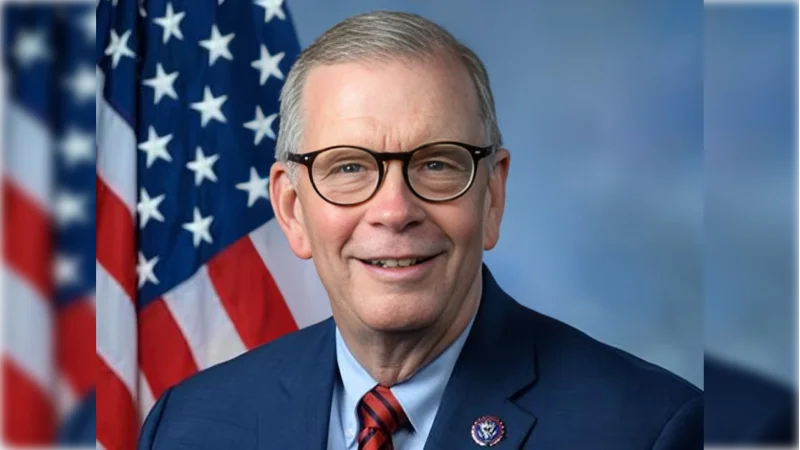
Education and Workforce Committee Chairman Tim Walberg (R-MI) has expressed concerns regarding the National Collegiate Athletic Association’s (NCAA) recent actions related to student-athlete gambling. In a letter addressed to NCAA President Charlie Baker, Walberg commended Division I schools for rejecting a proposed rule change that would have allowed student-athletes to bet on professional sports. He also raised issues with the NCAA's initial support for the proposal and warned about the possible misuse of federal student aid for gambling purposes.
Walberg wrote, “The recent decision by more than two-thirds of Division I schools to reject a proposed National Collegiate Athletic Association (NCAA) rule change that would have permitted student-athletes to bet on professional sports is a positive development… However, I remain concerned that the Division I Administrative Committee, the Division II Management Council, and the Division III Management Council initially supported allowing student-athletes to bet on professional sports.”
He continued, “...[S]urvey data from the last few years shows that 21 percent of college students ‘have used financial aid and/or student loan money to gamble,’ and 61 percent of student gamblers who receive financial aid agree with the statement, ‘Receiving financial aid allows me to spend more on gambling.’.…Gambling debt, including sports gambling debt incurred by student-athletes, can impair borrowers’ ability to pay student loan obligations.”
Walberg further stated: “Beyond concerns about federal funds, efforts to make it easier for students to bet on sports, such as those proposed by the rejected NCAA rule, raise broader risks about the integrity of intercollegiate athletics. Recent incidents illustrate these dangers. For example, in January 2025, the actions of three Eastern Michigan University basketball student-athletes triggered an NCAA investigation. Cell phones of the players were imaged by an NCAA enforcement vendor after monitoring had revealed suspicious betting activity in three of Eastern Michigan’s games earlier in the season… Given these players’ transgressions while under the NCAA’s oversight, any efforts to move to relax NCAA gambling restrictions in the future would be imprudent… Whether implicit or direct, the encouragement of gambling debt—either through the endorsement of proposed NCAA rules or through the actual or potential use of federal funds for gambling—is a serious concern.”
The full letter can be accessed online.