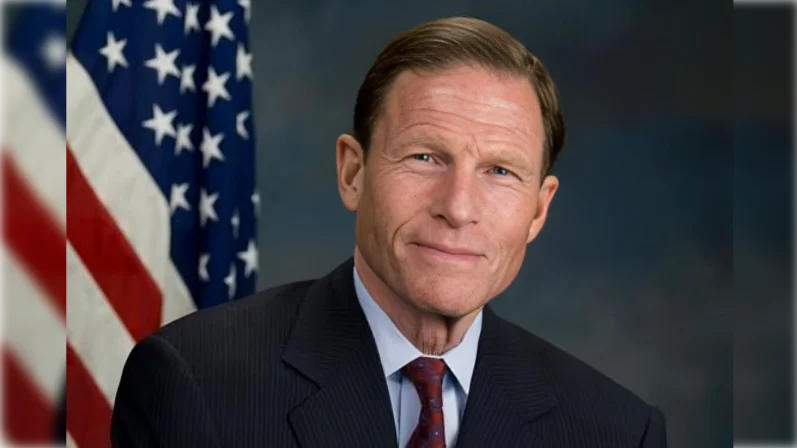
A group of 38 senators, led by Senate Veterans’ Affairs Committee Ranking Member Richard Blumenthal (D-CT), is seeking clarification from the Department of Veterans Affairs (VA) about plans to cut up to 35,000 vacant health care positions. The move follows a Washington Post report that revealed the Trump Administration's intention to eliminate tens of thousands of unfilled jobs at the VA, including roles for doctors, nurses, and support staff.
In a letter addressed to VA Secretary Collins, the senators expressed concern about these proposed cuts. “We write to express our concern following the December 13, 2025, Washington Post article ‘VA plans to abruptly eliminate tens of thousands of health care jobs,’ which spotlights the Department’s plan to cut as many as 35,000 vacant positions from its workforce rolls before the end of the calendar year,” they wrote. “Compounded by the exodus of more than 40,000 Department employees in fiscal year (FY) 2025, any unjustified cuts to existing vacancies would further disrupt a Department of Veterans Affairs (VA) workforce that is already stretched dangerously thin and under assault.”
The lawmakers challenged Secretary Collins’ assertion that eliminating these jobs would have "no impact" on VA health care services. They cited data showing that even if non-clinical and administrative roles were targeted first, significant reductions would still need to be made among essential clinical and veteran-facing positions—potentially affecting patient care.
The letter requests detailed information about which positions are being removed, who was involved in making those decisions, what evidence supported this action, and how staffing baselines were determined for each facility. The senators also asked why position counts rather than full-time equivalents were used in planning these cuts and requested updated staffing projections for fiscal year 2026.
They emphasized: “Unfilled positions are not reflective of unnecessary positions, and the length of time a position is vacant is not a suitable data point for determining need. At a time when veterans are already facing widespread cuts in their access to health care from H.R. 1, skyrocketing health insurance premiums from expiring enhanced premium tax credits, and forced closures of rural hospitals, VA needs to be expanding its capacity and staffing levels, not reducing them. Veterans deserve a VA staffed according to their needs and a Secretary who works to fill needed positions, not abolish them.”
The context for this inquiry includes recent workforce reductions at the VA; over 40,000 employees left between January and September due primarily to hiring freezes and other restrictive policies implemented during President Trump’s administration. As of March 31st this year there were at least 42,000 vacancies across various departments within VA—a figure believed by some lawmakers to have increased since then.
According to data mandated by Section 505 of Public Law 115-182 (the VA MISSION Act), as recently as quarter two FY2025 there were more than 24,500 open clinical or veteran-facing roles among those vacancies—including nurses (7,560), schedulers (4,400), physicians (2,800), social workers (1,900), nursing assistants (1,650), practical nurses (1,630), pharmacists/pharmacy technicians (1,230), health technicians (1,080), veterans claims examiners (860), police officers (760) and psychologists (710).
The planned job eliminations could bring overall staffing back down near pre-PACT Act levels—even though over one million new veterans have enrolled in VA healthcare since eligibility expanded under that law.
Blumenthal’s letter was co-signed by Senators Angela Alsobrooks (D-MD), Tammy Baldwin (D-WI), Michael Bennet (D-CO), Lisa Blunt Rochester (D-DE), Cory Booker (D-NJ), Catherine Cortez Masto (D-NV) and others representing both Democratic members and independents.
The senators' concerns also come amid broader federal efforts by Republicans targeting healthcare funding nationwide; Democratic attempts to extend Affordable Care Act premium tax credits—which help hundreds of thousands afford coverage—have failed so far in Congress. Medicare/Medicaid changes expected next year may result in higher premiums for millions including veterans.
The full text of the lawmakers’ letter can be found online.