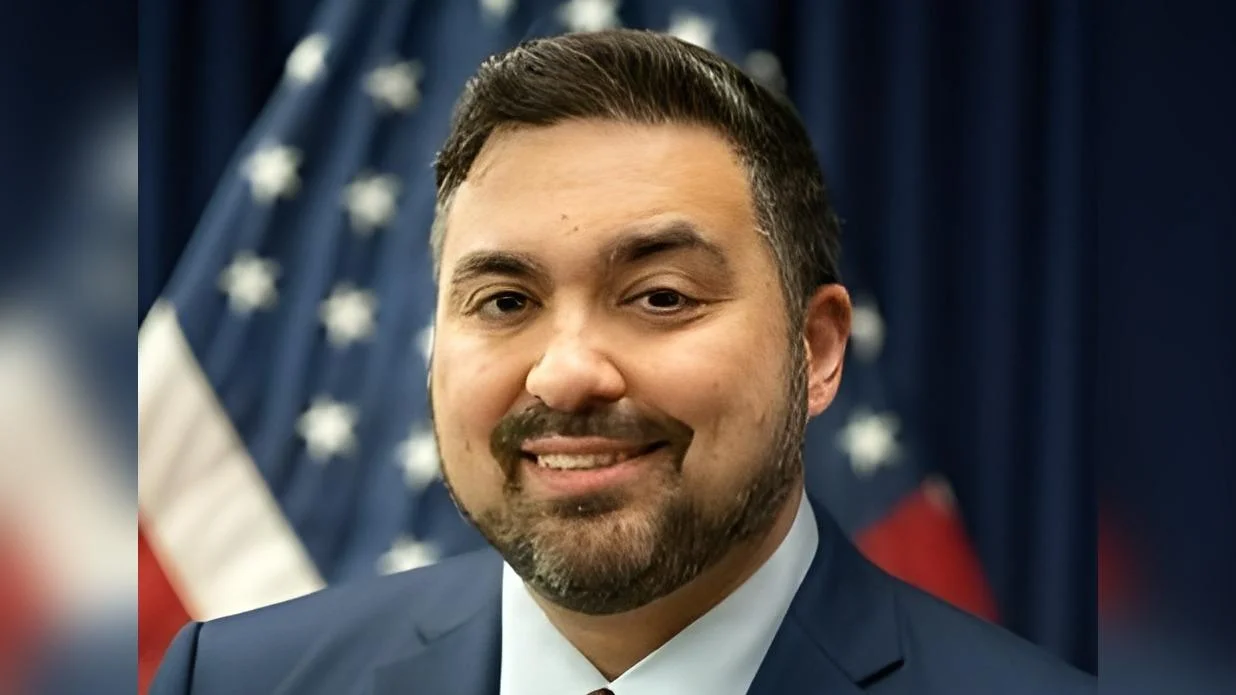
A total of 275 cases have been filed related to immigration and border security from December 12 to 18, according to U.S. Attorney Nicholas J. Ganjei for the Southern District of Texas.
Of those charged, 79 people face allegations of illegal entry, while 171 face felony reentry charges after removal. Many defendants have prior felony convictions involving narcotics, violent crime, or previous immigration offenses. There are also 23 individuals accused of human smuggling and five others facing different immigration-related charges.
Among those charged are Diego Alan Martínez-Barajas, Pedro Gregorio-Alonzo, and Nelson Antonio Segovia-Segovia. Court documents state that authorities found all three in the McAllen area after prior removals from the United States within the last four months. Each reportedly has prior convictions including abandonment or endangerment of a child, forgery, domestic abuse, and illegal reentry.
Two Mexican nationals discovered near Rio Grande City also face new criminal charges. Complaints allege that Jose Alvarez-Ontiveros and Simon Brambila-Galvan entered the country unlawfully as part of a group that included illegal aliens and human traffickers. During this encounter, one member allegedly assaulted a Border Patrol agent, leading to a shooting that resulted in that individual’s death.
If convicted, these five men could each receive up to 20 years in prison.
Additionally, a father and son from Laredo pleaded guilty to trafficking at least 534 firearms along with magazines and thousands of rounds of ammunition. Emilio Ramirez Cortes and his son Edgar Emilio Ramirez Diaz were stopped by authorities at the Juarez-Lincoln Port of Entry on October 23. Following a K-9 alert, law enforcement found false walls inside their trailers containing approximately 534 firearms and more than 31,000 rounds of ammunition.
These cases involved support from several federal agencies such as Immigration and Customs Enforcement - Homeland Security Investigations; ICE - Enforcement and Removal Operations; Border Patrol; Drug Enforcement Administration; FBI; U.S. Marshals Service; Bureau of Alcohol, Tobacco, Firearms and Explosives; as well as state and local partners. The prosecutions fall under Operation Take Back America—a national effort by the Department of Justice targeting illegal immigration and transnational criminal organizations.
“Under current leadership, public safety and a secure border are the top priorities for this district,” said U.S. Attorney Nicholas J. Ganjei. “Enhanced enforcement both at the border and in the interior of the district have yielded aliens engaged in unlawful activity or with serious criminal histories, including convictions for human trafficking, sexual assault and violence against children.”
The Southern District of Texas is one of the busiest U.S. Attorney’s Offices in the country (official website). It covers 43 counties from Houston to the Mexican border—an area with over nine million residents (official website). With its headquarters in Houston (official website) and additional offices in Galveston, Corpus Christi, Laredo, McAllen, Brownsville (official website), Assistant U.S. Attorneys work closely with law enforcement at every level (official website).
The office is led by an appointee confirmed by the Senate (official website) and employs more than 200 attorneys focused on prosecuting federal crimes as well as handling civil matters for the government (official website). The Southern Judicial District was established in 1902 when Congress divided Texas into judicial districts (official history page).
U.S. Attorney Nicholas J. Ganjei emphasized: “The U.S. Attorney’s Office for the Southern District of Texas remains one of the busiest in the nation.” He added: “Assistant U.S. Attorneys from all seven divisions including Houston, Galveston, Victoria, Corpus Christi, Brownsville, McAllen and Laredo work directly with our law enforcement partners on the federal, state and local levels to prosecute suspected offenders.”
It was noted that indictments or complaints are formal accusations only; defendants are presumed innocent unless proven guilty through due process.