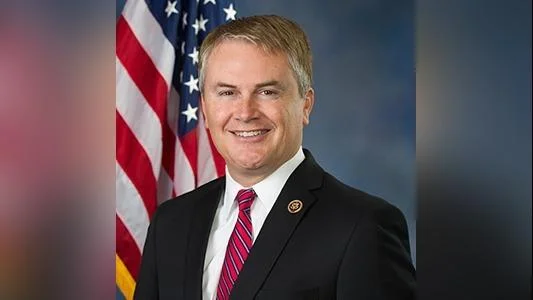
James Comer is Chairman of the House Oversight Committee. | https://oversight.house.gov/chairman-james-comer/
House Oversight Committee Chairman James Comer (R-Ky.) has released a staff report examining an alcohol intake and health study conducted by the Interagency Coordinating Committee on the Prevention of Underage Drinking (ICCPUD) under the Biden Administration. The report, titled “A Study Fraught with Bias: How the Biden Administration’s Alcohol Intake and Health Study Tried to Undermine the 2025-2030 Dietary Guidelines for Americans,” scrutinizes how this study was used to inform upcoming federal dietary guidelines, despite Congress having previously authorized a separate investigation by the National Academies of Sciences, Engineering, and Medicine (NASEM).
According to the committee’s findings, the ICCPUD study duplicated efforts already funded by Congress and did not comply with federal law. The House Oversight Committee began its investigation in April 2024 after concerns were raised about unnecessary spending and possible bias in the research process.
Chairman Comer stated, “The Biden Administration violated federal law and ignored Congress in order to push an agenda on the American people. After the House Oversight Committee uncovered evidence that the Biden Administration wasted taxpayer dollars on an unnecessary and duplicative study, the administration wasted no time obstructing the Committee’s requests and hiding evidence of the study’s obvious bias. Americans deserve transparency and accuracy from the government when it determines federal dietary guidelines. The House Oversight Committee remains committed to providing answers, rejecting biased studies, and giving Americans confidence in the scientific support underlying the Dietary Guidelines.”
The report details several issues with how information was handled during oversight efforts. For nearly two years, document requests—including those under a congressional subpoena—were not fulfilled by administration officials. Instead, only publicly available documents were provided to investigators.
The committee also found that all six members of ICCPUD’s Scientific Review Panel had affiliations with anti-alcohol advocacy organizations both in the U.S. and abroad. Internal communications indicated that researchers were selected based on their alignment with a predetermined outcome similar to Canada’s model recommending zero safe alcohol consumption.
Additionally, some documents related to potential bias within ICCPUD were classified as “pre-decisional and deliberative,” limiting access for both Freedom of Information Act requestors and congressional investigators.
Congress had previously allocated $1.3 million for NASEM to independently examine links between alcohol use and health outcomes such as cancer, diabetes, obesity, and heart disease as input for dietary guidelines. Recent legislation reaffirmed that NASEM should be solely responsible for conducting studies influencing these guidelines.
Based on its review, the committee recommended that findings from ICCPUD's draft report not be included in formulating federal dietary guidance for 2025-2030.
A full version of Chairman Comer's report is available online.