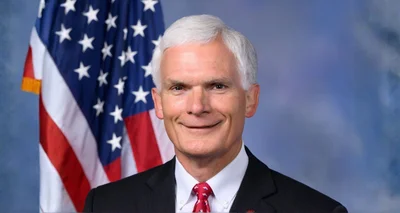
The House of Representatives has passed funding legislation that includes several national security measures aimed at addressing concerns related to China. The legislation provides funding for the Departments of Commerce, Justice, and Interior, as well as agencies such as NASA, the Army Corps of Engineers, and the Environmental Protection Agency. These measures were supported by Select Committee Chairman John Moolenaar, who is also a member of the House Appropriations Committee.
According to Moolenaar, “China has spent decades exploiting American openness to advance its authoritarian ambitions. This legislation commits more resources to enforcing export controls and cracking down on Chinese trade abuses, while also protecting taxpayer dollars, technology, and energy resources from being used to benefit our greatest strategic adversary.”
Among the provisions in the bill is a $44 million increase in funding for the Bureau of Industry and Security. This brings total funding for the bureau to $235 million and is intended to improve enforcement of export controls designed to keep sensitive U.S. technologies out of reach from China.
The legislation allocates $16.4 million specifically for anti-dumping and countervailing duty enforcement related to China. This aims to strengthen protections for American workers and manufacturers against unfair trade practices.
Federal agencies such as Commerce, DOJ, NASA, and NSF are now prohibited from purchasing IT systems without first completing supply-chain and cybersecurity risk reviews. These reviews must include assessments regarding foreign adversary involvement with an emphasis on China.
The bill also prohibits NASA and the Office of Science and Technology Policy from entering into bilateral cooperation or agreements with China or companies owned by China unless Congress gives explicit authorization.
In addition, Commerce, NASA, and NSF are required to submit quarterly reports to Congress detailing any official employee travel to China along with the purpose of those trips.
Further measures in the bill prohibit sales of crude oil from the Strategic Petroleum Reserve to China’s government. It also bars citizens from China or Russia from accessing U.S. nuclear weapons production facilities and prevents the Department of Energy from providing financial assistance to foreign entities considered a concern by U.S. authorities.