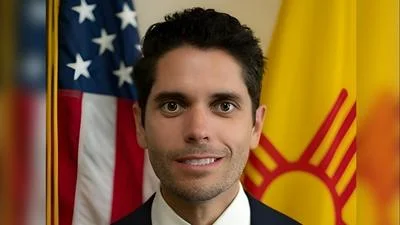
A Maryland technology executive has been indicted by a federal grand jury for his alleged involvement in a scheme to defraud the U.S. government. Victor Marquez, 53, owner of two information technology companies, faces charges including conspiracy to commit wire fraud, four counts of wire fraud, and major fraud.
According to the indictment announced by Kelly O. Hayes, U.S. Attorney for the District of Maryland, Marquez and his co-conspirators are accused of using access to sensitive procurement information to manipulate bids for large federal IT contracts. The indictment states that Marquez concealed his role in the scheme and received kickbacks—referred to as the “Vic tax”—for steering contracts toward his associates. Authorities allege that this activity resulted in more than $3.8 million being added to government purchase prices.
Two individuals connected to the case have already pleaded guilty: James Briar, 47, an IT sales representative from Manassas, Virginia, and Robert Fay, 59, an IT sales executive from Stevensville, Maryland. Briar admitted guilt on August 11 to conspiracy to pay illegal kickbacks; Fay pleaded guilty on October 1 to similar charges and violating the Anti-Kickback Act.
“These bad actors attempted to enrich themselves by using privileged inside access to defraud the federal government,” Hayes said. “This kind of corruption distorts the competitive process, wastes taxpayer dollars, and undermines public trust in government contracting. This office, along with our law-enforcement partners, will continue to pursue and prosecute corruption while holding those accountable who dare to try to steal from our government.”
“As the superseding indictment shows, defendant Victor Marquez and his co-conspirators broke trust with our military and stole millions of dollars from an agency that defends our homeland,” Omeed A. Assefi, Deputy Assistant Attorney General for the Justice Department’s Antitrust Division said. “Two of the defendant’s co-conspirators have already pled guilty, and the Antitrust Division will not rest until Marquez is imprisoned.”
Christopher Dillard of the Defense Criminal Investigative Service (DCIS) emphasized accountability: “The charges announced today should stand as a reminder that those who defraud the Department of Defense will be held accountable for their actions,” he said. “The Defense Criminal Investigative Service is committed to protecting the integrity of the DoD procurement process and will pursue all available remedies to root out fraud.”
Jimmy Paul from FBI’s Baltimore Field Office commented on how personal relationships were exploited: “The defendants leveraged personal relationships to make corrupt, under the table deals that enriched themselves at the taxpayers' expense,” he said. “The FBI and our partners will follow every investigative lead to ensure all those cheating the system are brought to justice.”
Kevin Gerrity of NSA-OIG also noted efforts by law enforcement: “Ensuring the integrity of federal contracting is critical for an efficient and effective government,” he said. “I commend our team, our law enforcement partners, and the Justice Department for their dedication and collaboration.”
If convicted on all counts, Marquez could face up to 20 years in prison per conspiracy or wire fraud charge and up to 10 years for major fraud. Sentencing decisions will be made by a federal judge based on guidelines.
Briar could receive up to five years in prison; Fay faces a possible ten-year sentence.
U.S. Attorney Hayes credited DCIS, FBI Baltimore Field Office, NSA-OIG investigators as well as prosecutors Sean R. Delaney and Darren S. Gardner (Assistant U.S Attorneys), Elizabeth French, Anna Wang, and Ron Fiorillo (Trial Attorneys with DOJ Antitrust Division).
The Justice Department established its Procurement Collusion Strike Force (PCSF) in November 2019 as a coordinated effort against antitrust crimes affecting public spending at all levels—federal through local governments (https://www.justice.gov/procurement-collusion-strike-force). Whistleblowers providing original information about antitrust offenses leading to significant recoveries may qualify for rewards (https://www.justice.gov/atr/whistleblower-rewards).
More details about reporting fraud or learning about office priorities can be found at justice.gov/usao-md or justice.gov/usao-md/community-outreach.