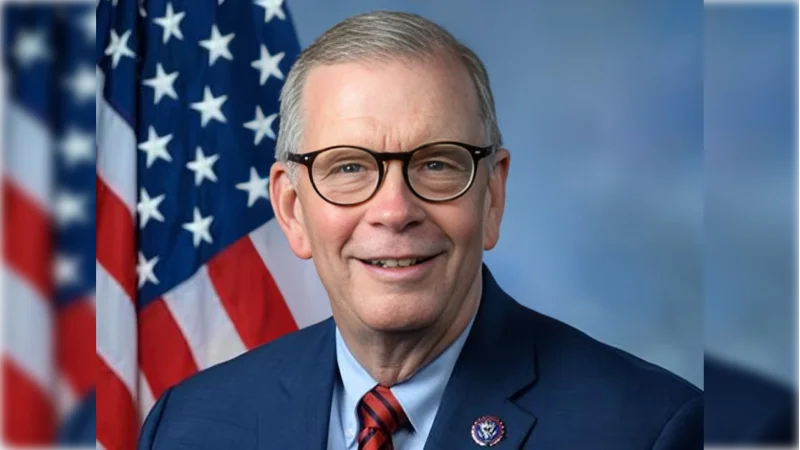
At the first hearing in a new series on artificial intelligence, House Education and Workforce Committee Chairman Tim Walberg (R-MI) addressed the rapid growth of AI and its impact on education and the workforce. The hearing, titled "Building an AI-Ready America," focused on how AI is influencing learning environments, workforce development, and future job markets.
Walberg highlighted that while artificial intelligence is often seen as a disruptive force, many of its foundational technologies have been in place for decades. He noted that recent advancements have made these tools more accessible, allowing them to reach classrooms, training programs, and workplaces nationwide.
"Artificial intelligence is scaling rapidly, and as a result, it is increasingly shaping how we learn, how we work, and how we prepare for the future. Today’s hearing examines AI and its growing role in education, workforce development, and the future of work," Walberg said.
He outlined several benefits of AI in both education and employment settings. According to Walberg: "AI tools are already helping teachers reduce administrative burdens, better personalize learning, and free up more time to engage directly with students. For workers, AI can help build new skills, increase efficiency, and accelerate on-the-job learning. As a result, employers can expect productivity gains that contribute to economic growth. An estimated 40 percent of GDP could be significantly affected by generative AI, which could mean a permanent increase in economic activity."
However, Walberg also acknowledged challenges associated with increased use of AI. He pointed out concerns about academic integrity in schools due to potential mistakes made by AI models. In the workplace context: "early evidence suggests AI may change how tasks are performed, particularly for entry-level roles," he said. This underscores the importance of strong pathways into the labor market as well as robust skills development programs.
Walberg also discussed regulatory issues related to independent work in an evolving technological landscape: "With the rapid pace of technological change, workers are seeking greater freedom and flexibility in how they work. This highlights the need for clearer standards for independent work and more flexible benefit models that better serve a modern, mobile workforce." He noted that over 70 million Americans currently operate as self-employed independent contractors but often lack statutory clarity from federal authorities.
He emphasized caution regarding policy changes: "As this Committee considers AI, we must recognize that many existing education and workforce policies were designed for a different era. The goal should not be to rush into sweeping new rules and regulations but to ensure schools, employers, and training providers can keep pace with innovation while maintaining trust and prioritizing safety and privacy."
Finally addressing national priorities around technology leadership: "U.S. leadership in AI is pivotal to the nation’s economic success and security. The Trump administration understands that this leadership requires an AI-ready workforce supported by strong classroom instruction and on-the-job learning that make the most of cutting-edge technology."
The committee aims to use these hearings to understand current uses of artificial intelligence within educational institutions and workforce systems—identifying areas where value is being delivered as well as ongoing challenges.