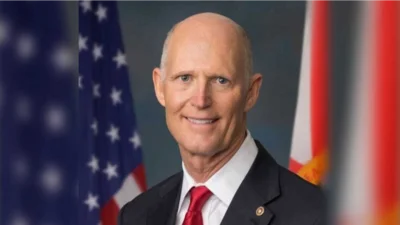
Subcommittee Chairman Scott Perry (R-PA) delivered opening remarks at a hearing focused on reforming economic development programs. The hearing, titled “Smarter Spending, Stronger Results: Reducing Duplication and Ensuring Effectiveness Through Economic Development Reforms,” examined the role of the Economic Development Administration (EDA) and several regional commissions in supporting distressed regions.
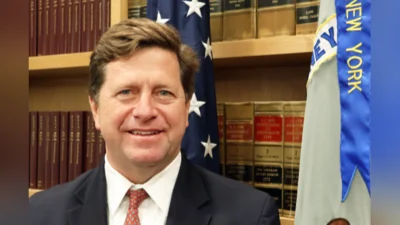
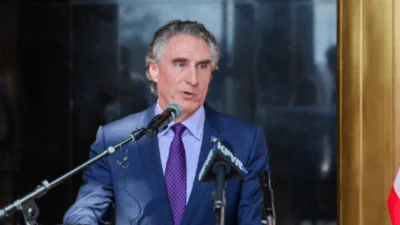
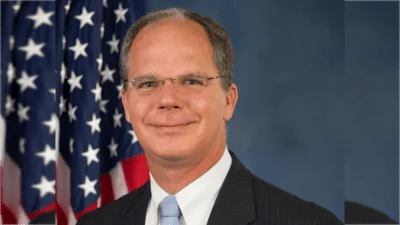
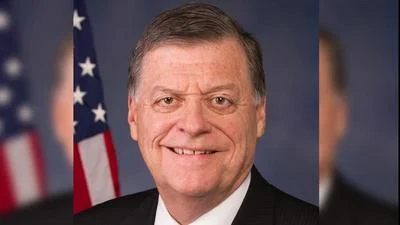
Perry highlighted the presence of witnesses from the EDA and six regional commissions: the Appalachian Regional Commission, Delta Regional Authority, Northern Border Regional Commission, Southeast Crescent Regional Commission, Southwest Border Regional Commission, and Denali Commission. He noted that the EDA is the only federal agency created specifically to support economic development in distressed communities across the country.
He explained that regional commissions operate independently but partner with member state governments to achieve similar objectives within their regions. Perry also pointed out that other federal agencies—such as the Department of Agriculture (USDA), Department of Housing and Urban Development (HUD), and Small Business Administration (SBA)—are involved in economic development efforts.
“If this seems like a lot of cooks in the kitchen, it is. And the list doesn’t stop there. There are newly established commissions for Southern New England, the Mid-Atlantic region, and the Great Lakes states,” Perry said.
Perry referenced a previous 2023 hearing where he predicted an increase in regional commissions. He expressed concern about federal involvement in determining which communities benefit from these programs. “It is not the role of the federal government to pick which communities win and lose. America’s private enterprise has historically driven economic development. It is the responsibility of state and local governments to facilitate a business-friendly environment for its constituents,” he stated.
He emphasized that states have tools to promote business by reducing regulations and costs but observed that more federal programs have been added since two years ago.
“Now, I am not blaming the witnesses here today for this. But it does mean that, at the very least, we need to make sure your activities and funding are not duplicative. It is also critical to ensure accountability and that clear performance metrics are in place,” Perry said.
Perry underscored that job creation in distressed communities remains a core goal for these programs. He stressed that funding should be directed toward creating jobs rather than supplementing state budgets.
“That is why in the reforms passed last Congress, there are clear mandates for EDA to report performance data, including job creation numbers. There are mandates for all the witnesses here today to coordinate and communicate with one another and with other federal agencies involved in economic development,” he added.
He mentioned that recent legislation—the Thomas R. Carper Water Resources Development Act of 2024—reauthorized many regional commissions along with EDA for the first time in two decades.
“The American people want to know each of your game plans,” Perry said.
He concluded by requesting details on each commission’s goals, methods for collecting and reporting performance data, and coordination efforts among themselves as well as with other relevant federal agencies such as USDA, HUD, and SBA.
Further information from today’s hearing—including video footage and witness testimony—is available online through the House Transportation & Infrastructure Committee website.