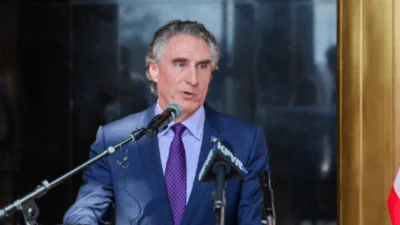
Subcommittee on Economic Growth, Energy Policy, and Regulatory Affairs Chairman Eric Burlison (R-Mo.) addressed the issue of housing affordability during a hearing titled “Housing Affordability: Saving the American Dream.” In his remarks, Burlison highlighted rising housing costs and pointed to public policy as a factor making homeownership less attainable for many Americans.
“A young American can work full-time, do everything right, and still have no realistic path to owning a home,” Burlison stated. He emphasized that this situation is not due to personal failings but because “public policy has made ownership more expensive and further out of reach than it has been in decades.”
Burlison cited recent data indicating that only 25 percent of Americans are confident they can afford to buy a home, while more than half express little or no confidence. He described current housing affordability as being at its lowest point in forty years.
He also addressed concerns about illegal immigration’s impact on the housing market. “Across the country, people who entered the United States illegally are living in housing that many working Americans cannot afford. That is not a talking point. It is a policy outcome,” he said.
The chairman criticized government programs that increase demand for housing and subsidize certain populations, arguing that these measures drive prices higher for others. “That is not fairness. That is displacement,” he added.
Burlison noted that nearly one-quarter of homeowners and almost half of renters spend at least thirty percent of their income on housing, turning what should be a foundation for stability into “a financial choke point.”
Tracing the origins of the crisis, Burlison discussed Federal Reserve actions during the COVID-19 pandemic—including low interest rates and economic stimulus—which led to increased demand and higher home prices amid limited supply. When interest rates rose again, Americans faced high prices along with greater borrowing costs.
He attributed ongoing inflation partly to federal spending under the Biden administration, saying it eroded purchasing power while raising housing costs.
On supply issues, Burlison said the United States currently faces a shortage estimated between 3.8 million and 8.2 million homes—a gap projected to approach 10 million by 2035. He argued that federal policies have prioritized increasing demand rather than addressing supply constraints and blamed mass illegal immigration for adding pressure on already strained markets.
He also pointed out that federal regulations—such as those governing building codes and energy standards—have increased construction costs by tens of thousands of dollars per home. Proposals like nationwide rent control were criticized for discouraging new construction.
“The result is a system that squeezes working Americans from every direction,” Burlison concluded.
In response to these challenges, he outlined actions taken by President Trump’s administration and Congressional Republicans aimed at increasing supply and reducing regulatory burdens. According to Burlison: “On day one, the President directed his Cabinet to deliver emergency price relief by expanding housing supply and eliminating regulations that raise costs.” He added that departments such as Housing and Urban Development are working to make federal land available for development.
Congressional action was also noted: “Congress passed H.R. 1, the One Big Beautiful Bill, which delivered historic tax relief for working families and removed barriers that make it harder to build new homes.”
Burlison concluded by calling for efforts focused on expanding building capacity, cutting regulations, enforcing immigration laws through deportations, and centering national policy around American families: “It will be restored by unleashing American builders, dismantling the regulatory cartel, mass deportations, and putting HARD-WORKING American families back at the center of national policy—where they belong.”