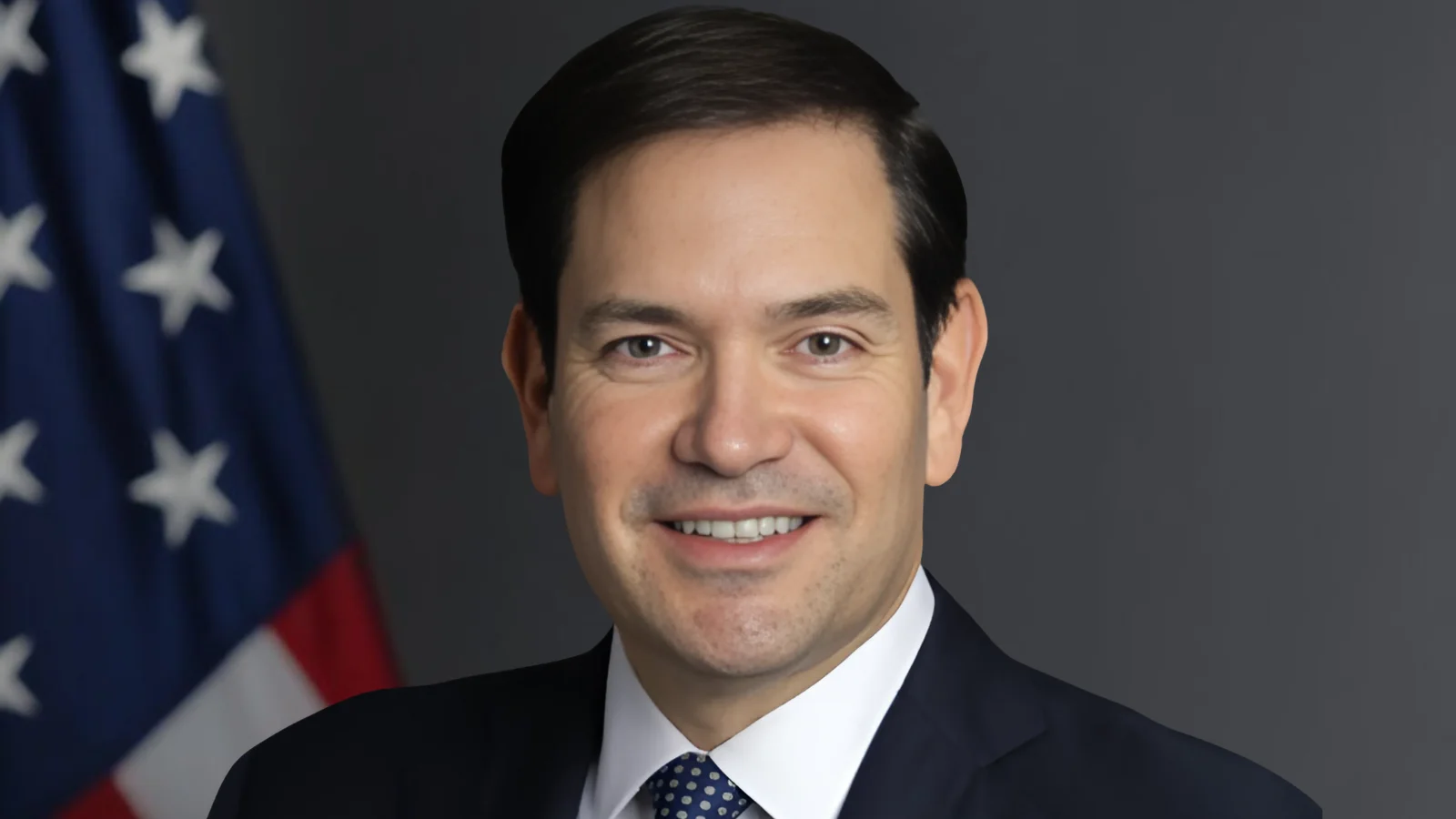
Secretary of State Marco Rubio appeared before the Senate Committee on Foreign Relations to discuss U.S. policy toward Venezuela. In his remarks, Rubio focused on the current situation and future plans following the removal of Nicolás Maduro from power.
Rubio outlined the challenges posed by Venezuela's previous regime, stating: "We had, in our hemisphere, a regime operated by an indicted narcotrafficker that became a base of operation for virtually every competitor, adversary, and enemy in the world. It was – for Iran, their primary spot of operation in the Western Hemisphere was Venezuela. For Russia their primary base of operation in the Western Hemisphere, along Cuba and Nicaragua, was Venezuela. In the case of China, China was receiving oil at a huge – about $20 a barrel – discount, and they weren’t even paying money for it. It was being used to pay down debt that they were owed. This is the oil of the people of Venezuela, and it was being given to the Chinese as barter at a 20 percent – at a $20 discount per barrel in some cases."
He emphasized that these activities made Venezuela a significant strategic risk not just for the United States but also for neighboring countries such as Colombia and others in the Caribbean Basin.
Rubio stated that after Maduro's removal, stability became the first objective: "In the aftermath of the removal of Maduro, the concern was what happens in Venezuela. Is there civil war? Do the different factions start going at each other? Are a million people crossing the border into Colombia? All of that has been avoided." He credited direct conversations with those now controlling elements within Venezuela for helping maintain order.
Addressing economic issues tied to U.S. sanctions on Venezuelan oil exports, Rubio explained: "On the oil that is sanctioned and quarantined, we will allow you to move it to market. We will allow you to move it to market at market prices – not at the discount China was getting. In return, the funds from that will be deposited into an account that we will have oversight over, and you will spend that money for the benefit of the Venezuelan people."
He described this arrangement as a short-term mechanism designed both to stabilize government operations and ensure proceeds are used directly for public benefit rather than supporting former corrupt systems.
Looking ahead, Rubio spoke about transitioning toward normalizing Venezuela’s oil industry through legal reforms: "They have passed a new hydrocarbon law that basically eradicates many of the Chavez era restrictions on private investment in the oil industry. It probably doesn’t go far enough to attract sufficient investment, but it’s a big step from where they were three weeks ago."
Another focus area is political openness: "Part of that is release of political prisoners... They are releasing them probably slower than I would like them to... you’re starting to see some...beginning to speak out and participate in political life in country."
Rubio concluded by acknowledging ongoing challenges but expressed optimism about progress so far: "I am not here to claim to you this is going to be easy or simple...in three and a half almost four weeks we are much further along on this project than we thought we would be...we are certainly better off today in Venezuela than we were four week ago."