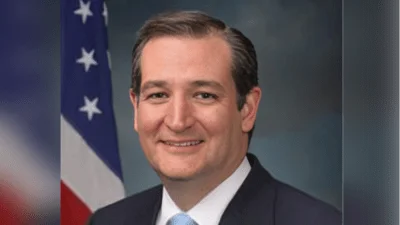
John Moolenaar, chairman of the Select Committee on the Chinese Communist Party (CCP), said in a letter that Ford’s plan to repurpose U.S. facilities using technology from a Chinese military-linked company raises questions about updates to licensing agreements, management of critical infrastructure risks, and eligibility for federal incentives.
"China poses a serious threat to our supply chain independence and economic security," said John Robert Moolenaar. "This effort would leverage technical know-how licensed from Contemporary Amperex Technology Co., Limited (CATL) Ford's apparent changes follow enactment of the One Big Beautiful Bill Act, which placed new restrictions on eligibility for clean energy tax credits. I am concerned about Chinese companies' exploitation of key industries and ensuring associated implementation of the law."
The letter was addressed to Ford CEO Jim Farley and outlined issues related to battery arrangements with Chinese firms following new legislation that limits tax credits for foreign-involved licensing. It posed five specific questions concerning original terms, post-enactment changes, cybersecurity measures, credit claims, and additional partnerships. Moolenaar sought clarity on the implications for U.S. manufacturing and adherence to the law.
According to Federal Newswire, Ford has redirected its Michigan battery manufacturing facilities from electric vehicle production to energy storage systems using licensed technology from Contemporary Amperex Technology Co., Limited (CATL). This move comes amid growing concerns over national security and supply chain vulnerabilities linked to Chinese entities. The $3.5 billion plant in Marshall faced bipartisan scrutiny and local opposition due to CATL's designation as a Chinese military company by the U.S. Department of Defense. This shift follows new restrictions on tax credits for arrangements with foreign entities of concern, aiming to bolster U.S. independence in critical technologies.
China processes over 90% of global graphite and holds more than two-thirds of the world's cobalt and lithium refining capacity. It produces 85% of battery anodes, 82% of electrolytes, and 70% of cathodes, dominating interregional trade in battery minerals. This control extends to 74% of battery pack exports, creating vulnerabilities in U.S. access to materials for vehicles and energy storage.
Moolenaar has represented Michigan's Second Congressional District since 2015 and serves on the House Appropriations Committee, where he works on fiscal responsibility for Michigan families. He chairs the House Select Committee on the Strategic Competition Between the United States and the CCP to address economic and security threats posed by China. Moolenaar earned a bachelor's degree in chemistry from Hope College and a master's degree in public administration from Harvard University. He began his career as a chemist before holding roles in Michigan's House (2003-2008) and Senate (2011-2014).