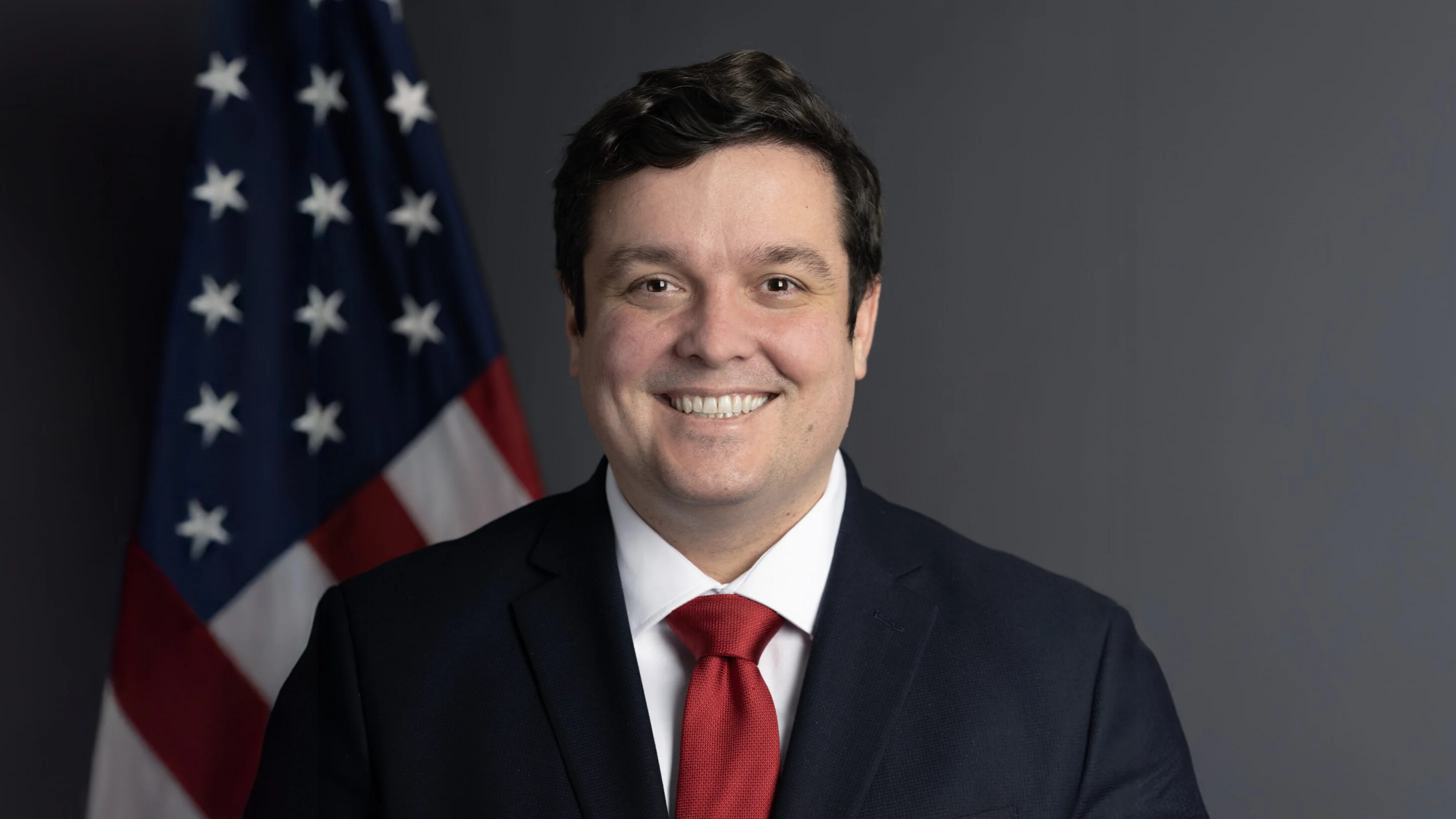
Secretary of State Marco Rubio met with South Korean Foreign Minister Cho Hyun to discuss the U.S.-South Korea alliance and ongoing cooperation between the two countries. According to Principal Deputy Spokesperson Tommy Pigott, both officials emphasized the strength of the partnership.
Rubio thanked South Korea for its leadership in developing secure and diversified supply chains for critical minerals. The meeting also covered future areas of collaboration, referencing past summits between President Trump and South Korean President Lee Jae Myung held in Washington and Gyeongju.
Both sides agreed to continue working together on civil nuclear power, nuclear-powered submarines, shipbuilding, and expanding South Korean investments aimed at revitalizing key U.S. industries.
The officials reaffirmed their shared commitment to achieving complete denuclearization of North Korea. They also highlighted the importance of trilateral cooperation among the United States, Japan, and South Korea for regional stability and maintaining a free and open Indo-Pacific.
"This is attributable to Principal Deputy Spokesperson Tommy Pigott: Secretary of State Marco Rubio met today with the Republic of Korea (ROK) Foreign Minister Cho Hyun. The Secretary and Foreign Minister highlighted the enduring strength of the U.S.-ROK Alliance. The Secretary expressed his gratitude for the important leadership role that the ROK has played in building secure, resilient, and diversified critical minerals supply chains.
Secretary Rubio and Foreign Minister Cho discussed ways to advance the U.S.-ROK Alliance, centered on a forward-looking agenda in the spirit of President Trump and ROK President Lee Jae Myung’s summits in Washington and Gyeongju. The two leaders agreed to continue to work closely on civil nuclear power, nuclear-powered submarines, shipbuilding, and increasing ROK investments to rebuild critical U.S. industries.
The Secretary and the Foreign Minister reaffirmed their commitment to the complete denuclearization of the DPRK. They also reinforced the critical importance of U.S.-Japan-ROK trilateral cooperation in maintaining regional stability and a free and open Indo-Pacific."