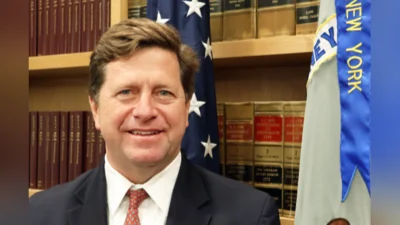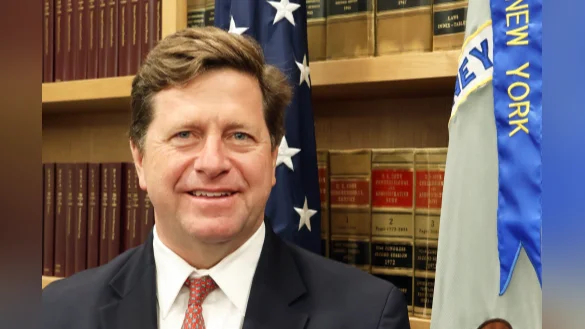
Jay Clayton, U.S. Attorney for the Southern District of New York | Department of Justice
Rui-Siang Lin, the owner and operator of Incognito Market, an online narcotics marketplace, has been sentenced to 30 years in prison for his role in distributing illegal drugs, money laundering, and selling adulterated and misbranded medication. The sentence was handed down by U.S. District Judge Colleen McMahon after Lin pleaded guilty on December 16, 2024.
“Rui-Siang Lin was one of the world’s most prolific drug traffickers, using the internet to sell more than $105 million of illegal drugs throughout this country and across the globe,” said U.S. Attorney Jay Clayton. “While Lin made millions, his offenses had devastating consequences. He is responsible for at least one tragic death, and he exacerbated the opioid crisis and caused misery for more than 470,000 narcotics users and their families. Today’s sentence puts traffickers on notice: you cannot hide in the shadows of the Internet. And our larger message is simple: the internet, ‘decentralization,’ ‘blockchain’—any technology—is not a license to operate a narcotics distribution business.”
Incognito Market operated on the dark web from October 2020 until its closure in March 2024. During that period, it facilitated sales of over $105 million worth of narcotics—including more than 1,000 kilograms each of cocaine and methamphetamines—and hundreds of kilograms of other drugs such as heroin, LSD, MDMA, ketamine, alprazolam, and counterfeit oxycodone pills laced with fentanyl.
Lin used the pseudonym “Pharaoh” while managing all aspects of Incognito Market’s operations from locations including St. Lucia. The site functioned similarly to legitimate e-commerce platforms by offering branding, advertising, customer service features, and a graphic interface accessible through Tor browser on the dark web.
Vendors wishing to sell on Incognito Market paid an admission fee and were charged a five percent commission on each sale. The platform featured its own internal bank system allowing users to deposit cryptocurrency into site accounts; these funds were then transferred between buyers and sellers while maintaining anonymity.
At its peak, Incognito Market had over 400,000 buyer accounts served by more than 1,800 vendors. In total, it enabled more than 640,000 individual transactions.
In January 2022, Lin implemented a policy explicitly permitting opiate sales on the site. Law enforcement investigations revealed that some drugs sold as prescription medications were counterfeit or contained dangerous substances such as fentanyl. One undercover operation found that tablets purchased as “oxycodone” actually contained fentanyl; a fatal overdose linked to these counterfeit pills occurred in Arkansas in September 2022.
When closing Incognito Market in March 2024, Lin stole at least $1 million held by users in the platform’s bank system and attempted to extort both buyers and vendors by threatening to release their user histories unless they paid him additional sums.
Judge McMahon described Incognito Market as “a business that made [him] a drug kingpin," adding that it was "the most serious drug crime I have ever been confronted with in 27.5 years.”
Alongside his prison term, Lin—aged 24 from Taiwan—was ordered to serve five years of supervised release and forfeit over $105 million.
U.S. Attorney Jay Clayton commended investigative efforts by multiple agencies including the FBI; New York City Police Department; Homeland Security Investigations; Drug Enforcement Administration; Food and Drug Administration Office of Criminal Investigations; and U.S. Customs and Border Protection.
The prosecution is part of an initiative led by the Homeland Security Task Force (HSTF), which aims to combat criminal organizations operating within or targeting the United States under Executive Order 14159.
The case was prosecuted by Assistant U.S. Attorneys Ryan B. Finkel and Nicholas Chiuchiolo from the Complex Frauds and Cybercrime Unit.