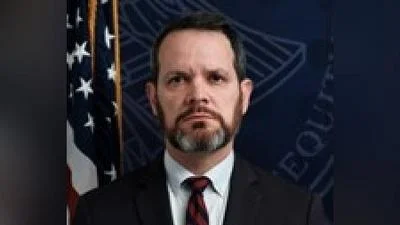
The House Committee on Veterans’ Affairs Subcommittees on Technology Modernization and Economic Opportunity held a joint oversight hearing to review the Department of Veterans Affairs’ (VA) Digital G.I. Bill (DGIB) program. The session focused on how the VA plans to address past issues such as system failures, schedule delays, and cost overruns, and to assess the impact of DGIB implementation on schools and student veterans.
Rep. Tom Barrett (R-Mich.), Chairman of the Subcommittee on Technology Modernization, opened the hearing by emphasizing the importance of the G.I. Bill for veterans transitioning to civilian life. He stated, "For millions of veterans and families, the G.I. Bill is not just a benefit. It is the bridge from military service to civilian life." Barrett highlighted that while the DGIB was intended to modernize education benefits delivery by replacing outdated systems and reducing paperwork, it has instead faced significant challenges including delays, confusion, and rising costs.
Barrett criticized management of the DGIB program: "This system was meant to modernize how education benefits are delivered. It was supposed to replace outdated systems, reduce paperwork, and make payments faster. Instead, what we have seen are delays, confusion, and multimillion dollar rising costs." He pointed out that unclear requirements and lack of project management discipline contributed to these problems since the contract’s award in 2021.
According to Barrett, "The Digital G.I. Bill contract was awarded five years ago in 2021. It was expected to cost hundreds of millions of dollars. Today, that cost has more than doubled, with the full life-cycle price now reaching into the billions." He noted that these issues have led to missed housing payments for veterans and insufficient guidance for schools.
Barrett stressed accountability: "A benefits system should never become a barrier to benefits... They should not have to re-earn it by waiting in call queues, navigating backlogs, or praying the system works this time." He also called for acquisition reform within VA technology programs.
Rep. Derrick Van Orden (R-Wis.), Chairman of the Subcommittee on Economic Opportunity, echoed these concerns: "I want to thank everyone for being here today to discuss the Digital G.I. Bill program... The ultimate goal of this hearing is to get down to brass tacks and figure out how VA can continue its efforts to keep the DGIB program on track and learn from past mistakes."
Van Orden outlined that DGIB aimed at streamlining education claims processing by consolidating legacy IT systems but has continued facing payment delays affecting student veterans. He referenced a previous subcommittee hearing in December 2025 which examined payment failures within DGIB systems.
Van Orden said, "The purpose of this hearing is to focus on the solicitation and contract administration of DGIB. Specifically, how contracting decisions made in the early stages of the program have impacted delivery of the platform that has only ballooned the cost of the contract to over $2 billion dollars." Citing an estimate from MITRE Corporation, he noted current projected costs stand at $2.7 billion—over a billion dollars higher than initial estimates provided in 2021.
He concluded with a quote from General Omar Bradley: “We are dealing with [veterans], not procedures; with their problems, not ours.” Van Orden emphasized focusing efforts on improving outcomes for student veterans rather than administrative processes.
Witnesses at the hearing included representatives from Veterans Benefit Administration, Office of Information and Technology, and Office of Business Integration who were expected to address accountability measures going forward.