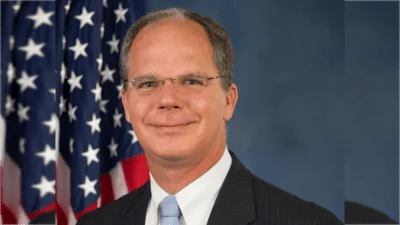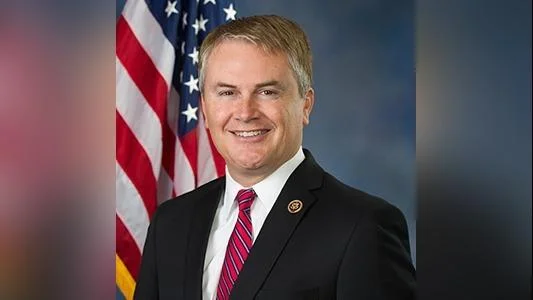
James Comer is Chairman of the House Oversight Committee. | https://oversight.house.gov/chairman-james-comer/
The House Committee on Oversight and Government Reform has advanced nine bipartisan bills aimed at modernizing federal technology, streamlining procurement processes, addressing national security risks in procurement and technology supply chains, reducing waste, incentivizing savings, and encouraging more responsible government spending.
Chairman James Comer (R-Ky.) said, “The American people deserve a federal government that is efficient, secure, and accountable to taxpayers. By advancing a series of bills today, the House Oversight Committee is taking meaningful legislative action to modernize federal technology and procurement, strengthen federal supply chains, and ensure agencies deliver real results. The Committee remains committed to making federal government operations more transparent, effective, and efficient for all Americans.”
One key measure is H.R. 7274, the Federal Acquisition Security Council (FASC) Improvement Act of 2026. Introduced by Representatives William Timmons (R-S.C.) and Suhas Subramanyam (D-Va.), this bill moves the FASC into the Executive Office of the President and increases membership requirements. It also expands FASC’s responsibilities to broader acquisition security issues and allows Congress to designate sources for investigation regarding national security concerns.
Chairman Comer commented on this legislation: “Foreign adversaries like the Chinese Communist Party have been using information technology and telecommunications equipment to infiltrate and exploit Federal agency systems. Congress has worked to address this threat by passing legislation to prohibit federal agencies from purchasing or using technology from sources of concern. The FASC Improvement Act builds on seven years of legislation addressing national security procurement risks by reforming established processes and expanding authorities. H.R. 7274 strengthens the governing structure of the FASC by moving it into the Executive Office of the President and elevating the FASC’s agency membership requirements. This bipartisan bill provides the FASC with the teeth and resources it needs to protect the Federal supply chain. I want to thank Representative Timmons and Representative Subramanyam for leading this critical legislation which was crafted in close coordination with the Select Committee on the Chinese Communist Party.”
Rep. Timmons added: “My bill, the Federal Acquisition Security Council Improvement Act, enhances the authorities and operational support to ensure that it can achieve its mission. This bill requires establishment of a program office within the executive office of the president to provide operational legal and policy support. We must investigate new threats by creating a streamlined process for Congress to designate sources of concern and requiring investigation of these congressionally designated sources. My hope is to continue this bipartisan work to enable the executive branch to promptly act to protect the federal supply chain and agency information systems from foreign adversaries.”
Another significant proposal is H.R. 2985—the Modernizing Government Technology (MGT) Reform Act—introduced by Representatives Nancy Mace (R-S.C.) and Shontel Brown (D-Ohio). This measure reauthorizes funding for IT modernization efforts through 2032 while adding new oversight requirements such as inventories for legacy IT systems at each agency.
Chairman Comer stated: “I support H.R. 2985, the Modernizing Government Technology Reform Act. Funding these projects is important because delayed legacy IT modernization efforts create cyber risks, inefficiencies in government operations, and lead to more wasteful spending. I believe the bill before us is a smart reform.” Rep. Mace said: “It is time to bring the federal government into the 21st century...This would also make crucial reforms to ensure technology modernization efforts are being done in a responsible manner.”
Other bills approved include:
- H.R. 4123—the FIT Procurement Act—to simplify how agencies buy commercial tech products.
- H.R. 7256—the Federal Workforce Early Separation Incentives Act—which increases voluntary separation incentives for downsizing agencies.
- H.R. 7283—the Ensuring Federal Purchasing Efficiency Act—adjusts inflation calculations for acquisition thresholds every three years instead of five.
- H.R. 1118—the Value Over Cost Act—updates contracting rules so that best value can be prioritized over lowest cost alternatives.
- H.R. 5438—the Incentivize Savings Act—which changes how unused funds are managed; under this plan almost half could be carried over while another portion would help reduce national debt.
- H.R. 5000—the Cybersecurity Hiring Modernization Act—which limits education requirements in cybersecurity hiring unless legally necessary.
- H.R. 7265—the Vote By Mail Tracking Act—mandates unique barcodes on mail-in ballots so voters can track their ballots through postal delivery.
These legislative efforts reflect ongoing attempts within Congress to improve efficiency in how federal agencies operate.