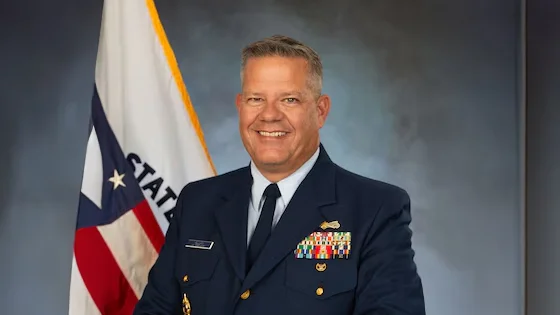
Thomas G. Allan Jr, Vice Commandant, U.S. Coast Guard | Official Website
The U.S. Coast Guard is conducting extensive icebreaking operations in response to severe winter conditions caused by Winter Storm Fern, which has led to significant ice buildup across the Eastern United States and the Great Lakes. These efforts are aimed at maintaining open waterways for maritime shipping and commerce, ensuring that essential goods continue to reach affected regions.
Department of Homeland Security Secretary Kristi Noem praised the Coast Guard’s work, stating: “Freezing temperatures across the country cannot slow down the United States Coast Guard. With some parts of the US dealing the most ice they’ve seen in a decade, Coast Guard icebreaker crews are hard at work on missions in the Great Lakes, Northeast, and Mid-Atlantic waterways to keep commerce moving and ensure American life continues without interruption. These missions will keep commercial goods like food and fuel flowing throughout the country and keep America going. From lifesaving evacuations to high-seas interdictions—and now interior icebreaking operations—these heroes more than live up to the Coast Guard motto: Semper Paratus, Always Ready.”
Coast Guard crews have prioritized support for critical infrastructure such as petroleum products, heating oil, road salt, and other essential commodities. As of now, 20 cutters have provided 3,245 hours of domestic icebreaking assistance for 142 vessel transits while keeping over 98% of key waterways operational.
In the Great Lakes region, two main groups lead icebreaking activities: Operation Coal Shovel (Sector Detroit) and Operation Taconite (Sector Northern Great Lakes). Operation Taconite is recognized as the largest domestic icebreaking effort in the nation and is crucial for transporting iron ore from northern mines to steel mills along Lake Erie and Lake Michigan.
Operation Coal Shovel covers southern Lake Huron through connecting rivers into Lake Erie and Lake Ontario via the St. Lawrence Seaway. U.S. and Canadian teams collaborate on these routes during harsh winters to maintain navigation channels for commerce as well as provide search-and-rescue services or access for emergency supplies.
Along the Northeast corridor from Maine to New Jersey, Operation Reliable Energy for Northeast Winters (RENEW) focuses on keeping shipping lanes clear for deliveries of home heating oil and petroleum products—critical given that most heating oil used in this region arrives by sea.
Under RENEW, cutters break up port ice so that vital goods can be delivered where needed; resources are allocated based on ongoing assessments of regional needs to protect vulnerable communities.
In areas of the Mid-Atlantic not usually affected by heavy icing, recent weather has prompted targeted interventions by Coast Guard crews who work with local partners to monitor hazards and maintain navigable routes for ferries, barges, and commercial traffic.
The Coast Guard continues close coordination with port authorities and advises mariners to follow updated forecasts while planning travel or seeking assistance.