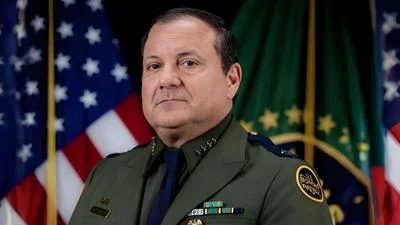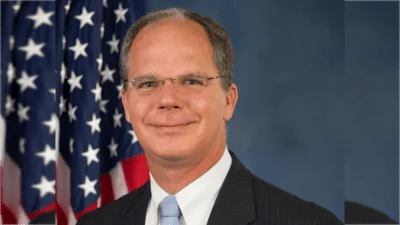
Senator Ted Cruz and Representative Bob Onder have called for the House of Representatives to pass the Rotorcraft Operations Transparency and Oversight Reform (ROTOR) Act, a bipartisan bill aimed at improving airspace safety. The legislation follows last year’s fatal midair collision at Ronald Reagan Washington National Airport.
In an op-ed published in RealClearPolicy, Cruz and Onder highlighted that the ROTOR Act would require all aircraft operating in congested airspace to use Automatic Dependent Surveillance-Broadcast (ADS-B) technology. This recommendation was first made by the National Transportation Safety Board (NTSB) over twenty years ago. The Senate approved the bill unanimously in December.
“Last week, the National Transportation Safety Board (NTSB) marked the one-year anniversary of the fatal midair collision at Ronald Reagan Washington National Airport by announcing the crash’s probable causes and contributing factors. Among the findings, the NTSB made one unmistakable point: this crash was avoidable. Had the aviation sector heeded a longstanding NTSB recommendation that all aircraft in a congested airspace integrate ADS-B — a faster and more accurate location technology than traditional radar — 67 lives could have been saved.
“There are two ways ADS-B works: ADS-B “Out” broadcasts an aircraft’s location and ADS-B “In” enables a pilot to see those “Out” signals. Since 2020, aircraft have been required to broadcast ADS-B “Out” to help air traffic control, but on January 29th, 2025, the U.S. Army helicopter flying into DC airspace was not sharing its location even though all other aircraft near busy airports are required to do so. Moreover, neither the helicopter nor the cockpit of the American Airlines flight landing at DCA had integrated ADS-B In. Had the helicopter and airplane had ADS-B on board, they would have been able to spot the impending collision nearly a minute before impact.
“To close the military aircraft loophole and make flying safer, we’ve introduced the Rotorcraft Operations Transparency and Oversight Reform (ROTOR) Act. This bipartisan bill would fulfill and codify NTSB’s recommendation by requiring all aircraft in congested airspace to receive and transmit ADS-B signals. It would make the military follow the same aviation safety rules as everyone else and evaluate the airspace design around commercial airports for safety.
“While there are other factors that contributed to an unsafe environment at DCA on January 29th, the fact that the helicopter operated under its own set of rules also makes clear that safety standards must apply to everyone. Any aircraft — military or civilian — that’s flying into a busy airport must use the same broadcast location technology. The ROTOR Act doesn’t apply new safety standards to a crop duster in rural Arkansas, but if that crop duster (or more likely, a private jet) wants to land at DCA or DFW or O’Hare, it should have to follow the same rules as everyone else.
“The ROTOR Act will save lives. And it can become law very quickly.
“In December, all 100 senators agreed to advance the ROTOR Act after garnering support from Department of War, Department of Transportation, and NTSB Chairwoman Jennifer Homendy. All that’s needed is for House to pass it.
“Over past year President Trump and Secretary Duffy have made huge strides for aviation safety – permanently closing certain helicopter routes near DCA, upgrading air traffic control system, and investing to modernize system. Congressional Republicans put $12.5 billion in Working Families Tax Cut Act for air traffic modernization. Secretary Duffy has with these funds made quick progress already replacing one-third of FAA’s antiquated telecommunications system with 21st century fiber satellite and wireless coverage.
“But by enacting ROTOR Act Congress will have done much more to protect passengers flying through congested airspace around country. NTSB estimated that in just three years leading up to 2025 collision there were 15,000 near miss events at National Airport alone There have been reports of similar issues at other major metropolitan airports too Pentagon data show military aviation accidents rose by more than 50 percent between 2020 and 2024 Last year’s crash was not an isolated incident – it was fatal result of years of unheeded warnings
“When tragedy struck at DCA last year NTSB had recommended mandating ADS B technology 17 times For decades this recommendation was ignored We hope House quickly passes ROTOR Act to make skies safer for over 140 million Americans who fly each year
“The families of victims of American Airlines Flight 5342 have been vital partners in advocating for these reforms committed ensuring no other families lose loved ones in preventable accidents Safety experts aviation groups airlines Trump administration all support ROTOR Act This legislation presents clear necessary path forward keep America’s skies safest world
“The failures led last year’s crash now known – NTSB has affirmed preventable We owe those lost—and every passenger who flies through our skies act The ROTOR Act rises above party lines turns tragedy into action We are calling on our colleagues do their part send ROTOR Act President Trump be signed into law.”
The Senate Commerce, Science, and Transportation Committee is responsible for reviewing legislation related to commerce—including transportation—during congressional sessions according to its official website. The committee includes senators from both parties; it operates within Congress from its main office located in Washington D.C.’s Russell Senate Office Building here.
The committee focuses on developing policy related not only to transportation but also science issues impacting interstate commerce here.