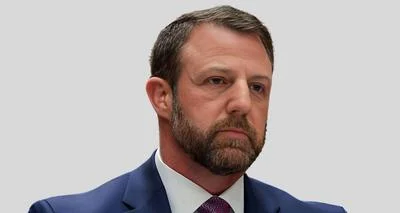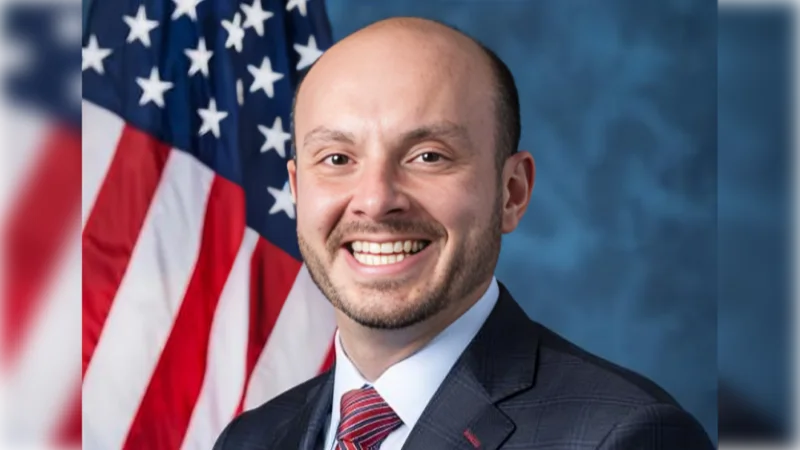
House Committee on Homeland Security Chairman Andrew R. Garbarino (R-NY) appeared on the Washington Times’ “Threat Status” podcast to discuss security challenges facing the United States, particularly in light of upcoming international events such as the 2026 FIFA World Cup and the 2028 Los Angeles Olympics.
Garbarino highlighted the need for local, state, and federal law enforcement agencies to have proper authority to address drone threats at major public gatherings. He noted that new powers granted through this year’s National Defense Authorization Act (NDAA) will help counter potential risks at large-scale events.
“We delegated money for counter-UAS for the border. We delegated for these special events. And these special events, and it’s not just the Super Bowl or the Olympics or America 250 or FIFA, I’m worried about any regular NFL or major league baseball game… Anybody that has a major team that plays, whether a stadium or arena, in their jurisdiction, they should have the ability to do counter-UAS actions… The fact that we were able to get these new authorities in the NDAA this year to address FIFA, to address America 250––I’m very excited to have been one of the lead negotiators in that,” Garbarino said.
He also raised concerns about drones containing Chinese-made components: “We need to stop using drones that have Chinese equipment in it… It might not be a full Chinese drone, but there are drones up there that have equipment that’s made from or parts in it that are made in China.”
Addressing cybersecurity issues, Garbarino spoke about increasing attacks on U.S. critical infrastructure by both individuals and nation-state actors such as China, Russia, North Korea, and Iran. He emphasized the importance of maintaining strong cyber defenses but pointed out vulnerabilities related to individual user practices.
“Our adversaries run the gamut. They run the gamut from somebody in their mother’s basement who’s just trying to hack in, all the way up to nation-state actors like China and Russia and North Korea and Iran… We have some unbelievable defensive technology when it comes to cyber. I’ve met with a bunch of different companies that have clients in the critical infrastructure sectors, but also, the government is a client of theirs. So, we have great tools, but we are only as strong as our weakest link. And a lot of the time, it comes down to the cyber hygiene of an individual user in the network,” he stated.
Garbarino further warned about advancements in artificial intelligence being used for cyberattacks: “We just have to remain vigilant. And now with the new use of AI in cyberattacks––Anthropic came and talked about [how] there was the one AI attack that had very little human involvement.This is just getting more and more.It’s getting scarier by the day.”
The House Committee on Homeland Security has recently held hearings focused on oversight of agencies such as DHS's Cybersecurity and Infrastructure Security Agency (CISA), Transportation Security Administration (TSA), and Science and Technology Directorate (S&T). In December 2025, lawmakers examined risks linked with emerging technologies including artificial intelligence and quantum computing during testimony from representatives of Anthropic, Google, and Quantum Xchange.
The committee has also updated its assessments regarding terror threats facing both domestic targets and allies abroad while continuing efforts aimed at strengthening defenses against malicious drone activity through additional funding measures.
Last year during Cybersecurity Awareness Month and Critical Infrastructure Security and Resilience Month, an updated report outlined increased threats from hostile states targeting U.S. networks since 2024.