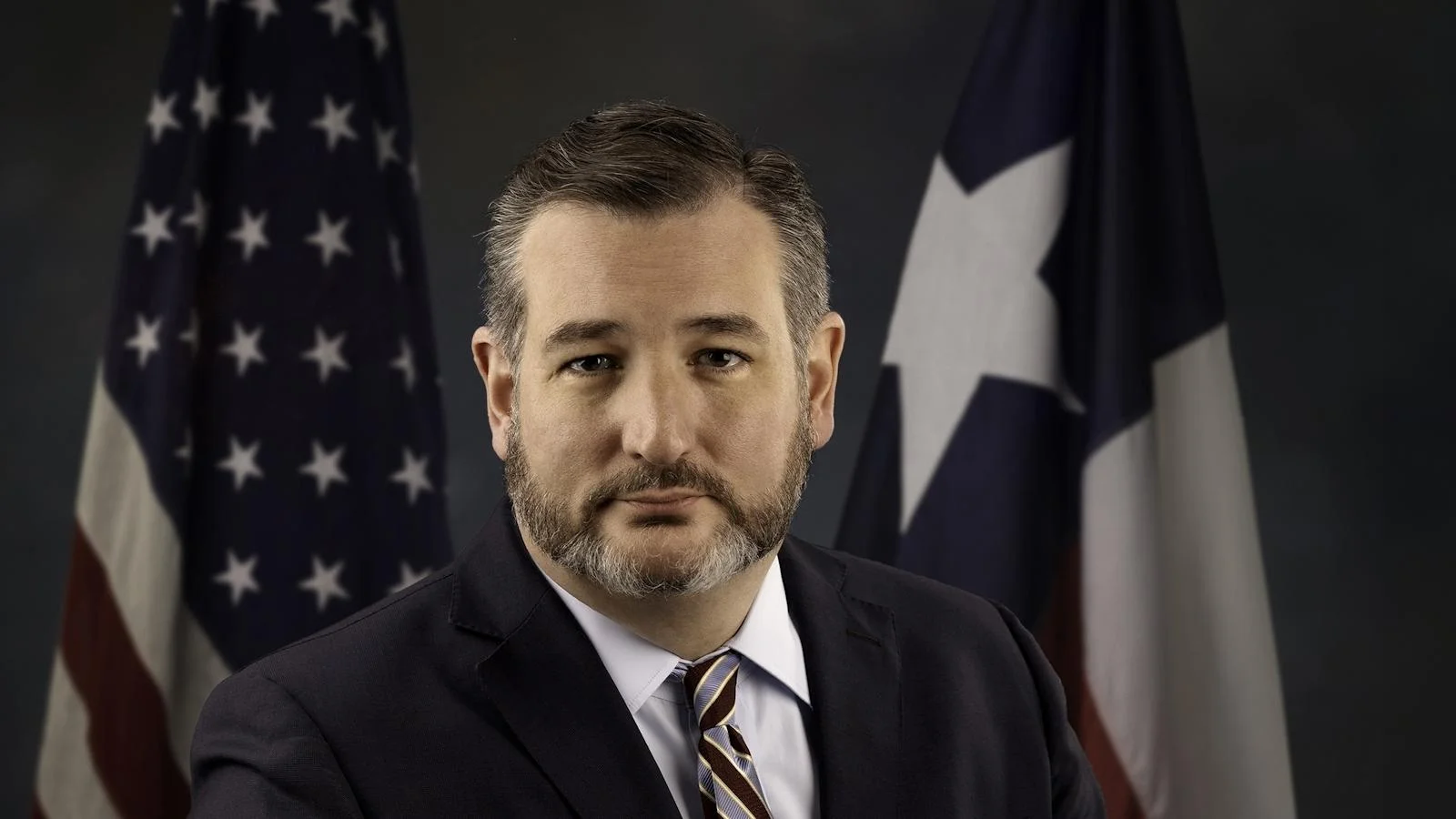
At a Senate Commerce, Science, and Transportation Committee hearing titled “We Interrupt This Program: Media Ownership in the Digital Age,” Chairman Ted Cruz (R-Texas) questioned whether current broadcast media ownership rules are suitable for today’s digital environment.
Broadcast owners face restrictions on how many households and markets they can reach, with a cap preventing any single station owner from reaching more than 39 percent of U.S. television households. Proponents of this rule say it protects viewpoint diversity. The hearing considered if lawmakers should revisit these statutes and whether the Federal Communications Commission (FCC) has the right authority to address changes in the media industry.
Chairman Cruz began his remarks by stating, “Good morning. We interrupt this program for a Senate Commerce Committee hearing on media ownership in the digital age.”
He highlighted broadcasting’s historic role in American life: “For over a century, broadcast media stood at the epicenter of American historical and cultural life. It brought the nation classics like I Love Lucy and shaped the music landscape with Elvis on The Ed Sullivan Show. It showed Americans the realities of war, the wonder of the Apollo 11 moon landing, and the defining political moments of their time, from the Nixon-JFK debate to Reagan’s call to ‘tear down this wall.’ Through these shared viewing experiences, broadcasters helped to embed iconic moments in the collective American consciousness.”
Cruz noted that Congress placed limits on broadcast ownership to prevent monopolies over programming and viewpoints. He said that during much of last century, holding a broadcast license was lucrative due to limited competition.
“But that era has passed,” Cruz stated. “Cable and satellite ushered in 24/7 news, while the internet and mobile technologies unleashed a wave of streaming services, news and entertainment sites, and social media, flooding American screens with endless content and fragmenting what were previously universal audiences.”
He raised concerns about whether old rules still make sense: “Today, broadcasters are fighting to stay competitive against media and tech companies with national, and often global, reach. This raises an important question: are long-standing broadcast media ownership rules still relevant in the digital age, and, if so, to what extent? In recent years, some of these rules have been rolled back or eliminated. Whether more reform is needed or if today’s status quo remains sound policy is what we will explore today.”
Cruz referenced legislative history: “In the Telecommunications Act of 1996, Congress anticipated the rise of today’s competitive market by directing the FCC to periodically review its broadcast ownership rules with an eye towards deregulation. Every four years, the FCC was to decide whether to repeal or modify any regulation that no longer served the public interest.”
He pointed out that one rule has not changed since 2004: “One rule, however, was deliberately set apart: the national TV audience reach cap. In 2004, Congress specifically directed the FCC to set this cap at 39 percent of U.S. television households, and it has remained at that same level for 22 years. Now, as several major mergers loom, the FCC is considering lifting or eliminating this cap.”
The chairman outlined opposing arguments regarding changing this limit: “Some argue lifting the cap will allow broadcasters to scale, invest more in local news outlets across the country, and better compete with deep-pocketed tech companies. Others say lifting the cap will consolidate viewpoints and hand control over to newsrooms in New York and Hollywood, choking out local views.”
Cruz added that legal constraints may also play a role: “But more fundamental than the optimal policy is the law. It may be the case that the FCC cannot modify the 39 percent cap because Congress set that number in statute. I look forward to hearing these perspectives and more today.”
He concluded by noting how much technology has changed since existing rules were written but said questions about market concentration remain important.
“If there’s one thing that’s clear,” he said,“it’s this: current media ownership rules were written in a vastly different technological age. The days when broadcasters built a uniform global village across America’s living rooms is over… Yet even in this fragmented landscape,the media’s ability to shape national discourse remains powerful,making questions about market concentration as important as ever.”
“This hearing is to inform Congress in answering those questions.Should Congress revisit underlying statutesand does FCC have appropriate authorityor flexibilityto address today’sevolving medialandscape?I am gratefulto our witnessesfor being here todayto help usinthis effort.”
The Senate Commerce, Science,and Transportation Committee reviews legislation involving commerce science,and transportation issues during congressional sessions.It operates under leadership including both parties,and serves as oneof thestanding committeesoftheU.S.Senate.Its main officeis located inthe Russell Senate Office Buildingin Washington,D.C.The committee addresses policies relatedto interstate commerce science,and transportation within legislative branch responsibilities.