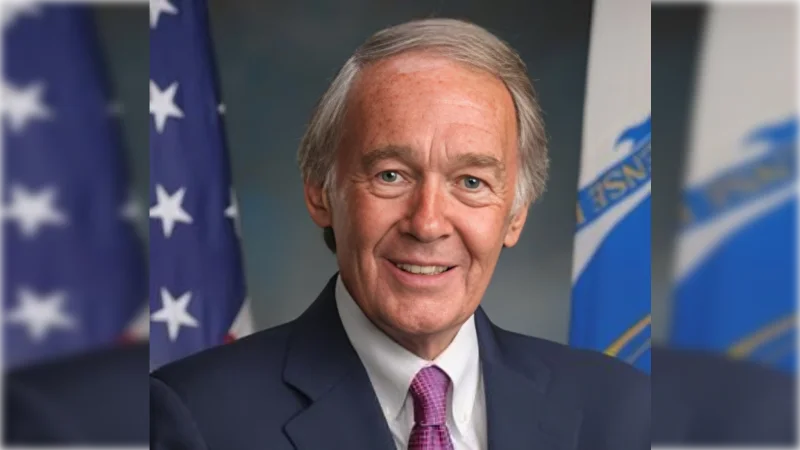
Ranking Member Edward J. Markey (D-Mass.) has introduced the Strengthening Place-based Access, Resources, and Knowledge (SPARK) Act in Congress. The bill, co-sponsored by Senators Mazie Hirono (D-Hawaii), Cory Booker (D-NJ), and Representative Ayanna Pressley (MA-7), aims to increase access to capital and resources for underserved entrepreneurs across the United States.
The proposed SPARK Act would establish two new federal initiatives: the SPARK Program, which would provide grants to community organizations supporting small business accelerators and incubators; and the SPARK Financing Program, which would offer grants and low-cost loans directly to underserved small businesses.
“In Massachusetts, Black and Latino-owned businesses report issues accessing capital at twice the rate of white-owned businesses. This gap is not an accident—it’s the predictable consequence of intentional, unjust policies that have excluded entire communities from the opportunity to accumulate wealth,” said Ranking Member Markey. “Structural problems require long-term, whole-of-community solutions. My SPARK Act would supercharge existing infrastructure and create a new program that provides direct grants to underserved entrepreneurs. I’m proud of being on a team with Jaylen to help uplift the next generation of underinvested entrepreneurs.”
Rep. Ayanna Pressley added: “Our Black, Latino, and women-owned businesses are pillars of our communities, but they are too often targeted for disinvestment with no meaningful opportunities to build wealth. In order to build wealth across our communities, we must confront the structural inequities that have long been embedded in our economic infrastructure and entrepreneurship opportunity. The SPARK Act would do exactly that—ensuring that the small businesses and business owners we know and love not only have the resources to stay in our city, but to grow. I’m grateful to introduce this legislation with Senator Markey and community partners to ensure our economy reflects the dreams and needs of the people who carry it.”
Senator Hirono commented: “Hawaii is the most diverse state in the nation, and our economy depends on small businesses and entrepreneurs from all backgrounds. As the Trump Regime continues to attack programs that support diverse businesses, it’s critical that we reaffirm our commitment to supporting these businesses and the communities they serve. By creating a new program that directs grants to underserved entrepreneurs, the SPARK Act will help to foster and strengthen minority-owned businesses in Hawaii and across the country. I’m proud to join Ranking Member Markey in introducing legislation that recognizes the importance of diversity and invests in our future.”
Senator Booker stated: “Our nation’s economy is strongest when opportunity reaches everyone, not just the wealthiest few. Since its inception, the Small Business Administration has been the voice of entrepreneurs and small business owners who can’t access the capital and resources they need to thrive, because they are passed over by big banks, are from a small town, or simply aren’t well-connected. The high costs of Trump’s economy and his attacks on SBA programs have now made it harder than ever to find a quality job and start or grow a small business. This legislation would reverse course, expand access to financing and mentorship, benefiting more Americans by helping women, veteran, and minority-owned businesses grow so their local communities can thrive.”
Community leaders also voiced their support for expanding opportunities for minority entrepreneurship through this legislation.
Jaylen Brown of Boston Xchange said: “Real economic power comes from ownership... When communities have resources... that's when you create generational wealth... Senator Markey’s SPARK Act invests in institutions that help people go from employees to owners... That shift doesn’t just build wealth; it builds belonging.”
Jrue & Lauren Holiday from JLH Social Impact Fund remarked: “Community isn't transactional; it's transformational... You invest in people... Senator Markey’s SPARK Act resources ecosystem builders who show up... not for a program cycle but ...to build systems that last... strengthening families...for generations.”
Renee King from We Are The Funders noted: "It takes a village ...but villages need infrastructure… We're leaving entire communities un-resourced while asking them ...to build at scale… The SPARK Act invests in ecosystem builders who already know how mobilize all communities into ownership."
Keith Mahoney at The Boston Foundation commented: "Years of research ...have proven repeatedly Massachusetts communities thrive when all business owners succeed… Success requires access ...capital ...networks ...systems..."
Nicole Obi at BECMA said: "The SPARK Act is exactly kind bold place-based federal investment … For too long,... expected overcome barriers without sustained infrastructure… By investing incubators,… pairing technical assistance flexible financing,… addresses real gaps limit growth…"
Karim Hill at BDC Community Capital Corporation added support based on focus on collaboration between SBA programs serving low-income groups.
Dr. Jonathan K. Jefferson at Roxbury Community College highlighted how strengthening accelerator/incubator programs at community colleges could drive inclusive growth.
Eneida Román at We Are ALX referenced data showing strong entrepreneurial spirit among Hispanic/Latino populations but persistent equity gaps remain.
Steve Grossman at ICIC said: "The SPARK Act builds stronger ecosystem by investing proven research-informed community-based programs..."
A number of national organizations endorse this bill including Urban League; U.S Black Chambers; Small Business Majority; Women Impacting Public Policy; National ACE; NSBA; US Hispanic Business Council; Invest Appalachia; Center for Entrepreneurial Opportunity; Association for Enterprise Opportunity among others.
Markey has taken other actions related improving conditions for underserved entrepreneurs—such as field hearings on closing racial wealth gap in Massachusetts earlier this month—and worked through Senate committees such as the Senate Small Business and Entrepreneurship Committee, which supports informed decision-making on fiscal priorities (link) while providing policy options regarding federal budget components (link). He has sent letters opposing changes seen as undermining protections against discriminatory lending practices or eliminating key development programs like 8(a). He has also advocated maintaining agencies like MBDA despite attempts by current administration officials otherwise.
The Senate Small Business & Entrepreneurship Committee plays an important role by contributing analysis during congressional budget processes (link) since its establishment under Congressional Budget Control Act 1974 (link), offering nonpartisan oversight via Congressional Budget Office (link).