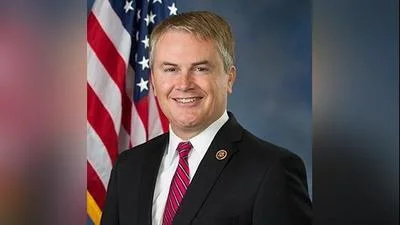
U.S. Senate Democratic Whip Dick Durbin, who serves as Ranking Member of the Senate Judiciary Committee and is the author of the Durbin Amendment, has filed an amicus brief with the U.S. Court of Appeals for the Eighth Circuit. The brief supports a previous ruling by the U.S. District Court for the District of North Dakota in Corner Post, Inc. v. Board of Governors of the Federal Reserve System.
In August 2025, the District Court found that Regulation II (Reg II), which determines whether debit card interchange fees are “reasonable and proportional” under the Durbin Amendment, improperly included “third category” costs not intended by Congress. As a result, these additional costs led to higher fee caps than what was envisioned in the original legislation.
The amicus brief states: “Congress enacted the Durbin Amendment because American consumers and businesses deserve a debit system that is efficient, subject to competitive market forces, and free from excessively high network-established interchange fees. The Amendment was carefully crafted to promote these goals while avoiding possible negative impacts on consumers, small issuers, fraud prevention, and the overall viability of the debit system.”
It continues: “However, the Board’s impermissible inclusion of third category costs in its Final Rule has countermanded the Durbin Amendment’s goal of reducing the burden of excessively high interchange fees for businesses and consumers. By incorporating fixed costs, fraud losses, and other ‘third category’ costs into its Final Rule, the Board ended up allowing Visa and Mastercard to fix debit interchange fee rates at 22 to 24 cents per transaction—far in excess of the 4.1 cents per transaction that regulated issuers currently incur in incremental ACS costs. If the Board’s improper inclusion of ‘third category’ costs is not corrected, not only will businesses and consumers continue to bear the burden of excessively high debit interchange fees, but fraud prevention will continue to be undermined.”
The brief concludes: “This Court should affirm the decision of the court below to give proper effect to the text and purpose of the Durbin Amendment by correcting the Board’s Final Rule, which will aid in the efficient operation of the debit system for the benefit of consumers and our nation.”
Durbin’s amicus brief can be read in full online.
Since passing Congress as part of Dodd-Frank Act in 2010—which included provisions authored by Durbin aimed at lowering excessive debit card fees—Durbin has continued efforts focused on consumer protection. In May 2024 he urged further reductions in base components for debit interchange fees due to declining processing costs among issuers. He has also submitted briefs supporting state-level regulation such as Illinois’ Interchange Fee Prohibition Act (IFPA), arguing that federal law sets a ceiling rather than a uniform standard for such rates.
To address competition concerns around credit card networks dominated by Visa and Mastercard—which together control about 85 percent of this market—Durbin introduced bipartisan legislation called Credit Card Competition Act alongside Senator Roger Marshall. The bill would require large banks issuing credit cards to offer at least two processing networks per transaction; former President Trump has endorsed this measure.
The Senate Judiciary Committee plays a significant role over constitutional protections and public safety through its legislative work and oversight responsibilities (official website). It reviews laws affecting civil rights nationwide (official website), oversees federal law enforcement agencies (official website), evaluates judicial nominations (official website), and influences judicial matters across all states (official website). The committee consists of senators from both major parties under leadership from its chairperson (official website) as one standing committee within Congress responsible for legal issues nationwide (official website).