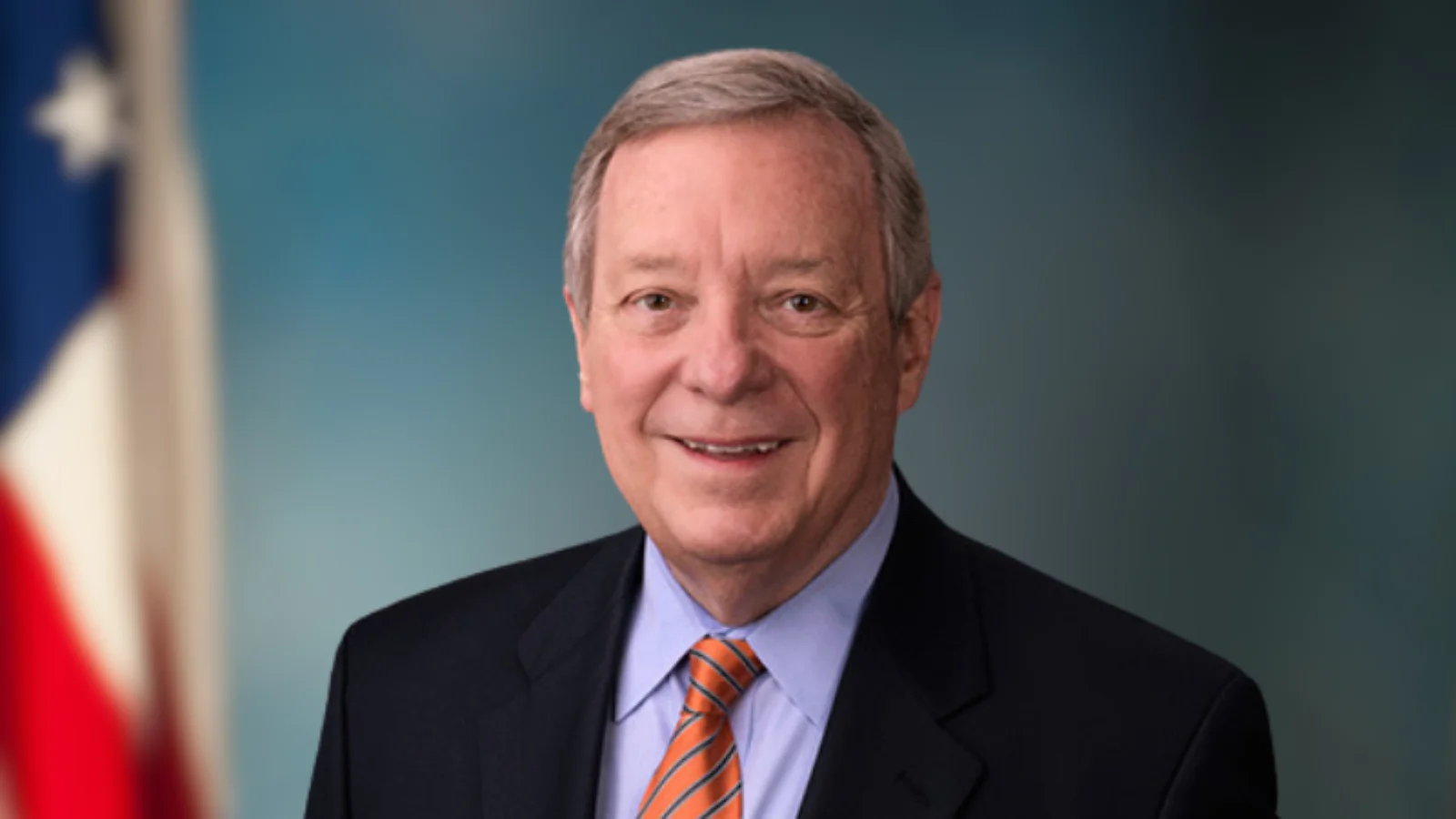
During a Senate Judiciary Committee oversight hearing, U.S. Senate Democratic Whip Dick Durbin questioned Department of Homeland Security (DHS) Secretary Kristi Noem on several issues related to immigration enforcement and agency accountability.
Durbin first addressed Secretary Noem’s previous statements labeling Renee Good, Alex Pretti, and Marimar Martinez as “domestic terrorists.” Both Good and Pretti were killed by federal immigration agents in Minneapolis, while Martinez was shot five times by a Border Patrol agent in Chicago. Durbin stated, “We have ample video evidence and eyewitness testimony proving you were wrong. Your statements caused immeasurable pain to these families. Let me give you an opportunity to do the right thing. Do you retract these statements identifying these individuals as ‘domestic terrorists?’” Secretary Noem refused to retract her statement.
Durbin pressed further: “Where did you get that information? In a recent hearing before the HSGAC [the U.S. Senate Committee on Homeland Security and Government Affairs] Committee, CBP and ICE officials testified under oath that their agencies did not inform you that Pretti was a ‘domestic terrorist.’” Secretary Noem responded she was getting information “on the ground,” describing the situation in Minneapolis as chaotic.
Durbin continued, questioning whether calling victims “domestic terrorists” would calm the scene. He noted DHS actions had contributed to chaos by arresting people indiscriminately and using violent force against American citizens. When asked again about branding them as domestic terrorists, Secretary Noem did not answer directly.
Durbin asked if it was difficult for her to admit mistakes publicly. Secretary Noem replied “absolutely,” but did not acknowledge any error regarding her previous statements.
The discussion then shifted to deaths in ICE detention facilities. Durbin referenced Geraldo Luna Campos’s death, which DHS reported as suicide but an independent examiner found was homicide; witnesses claimed guards strangled Campos. Instead of investigating, DHS tried to deport witnesses until a judge intervened. Durbin asked who ordered the deportations; Secretary Noem said she could not speak to those details but would look into it after being pressed further.
Durbin also raised concerns about DHS compliance with federal court orders in immigration cases. He cited over 200 violations identified by a chief federal judge in Minnesota within two months and more than 50 violations acknowledged by the Trump Justice Department in New Jersey recently. Durbin asked if DHS is required to follow court orders; despite evidence of violations, Secretary Noem insisted they do follow orders but would not say judges were wrong.
On Deferred Action for Childhood Arrivals (DACA), Durbin confirmed with Secretary Noem that DACA recipients undergo criminal background checks before approval. He highlighted that last year ICE arrested 261 DACA holders and deported 86—including one woman deported at her green card appointment after decades living in the country—despite being eligible for protection from removal under current regulations and court orders. When asked why these individuals were deported, Secretary Noem stated they follow all laws applicable to DHS but could not provide case details.
Durbin questioned why less than 14 percent of nearly 400,000 immigrants arrested during President Trump’s first year back in office had violent criminal charges or convictions: “It turns out that 85 percent of the people you’ve gone after have no [violent] criminal history… how do you explain that?” While unable to dispute this figure, Secretary Noem suggested it might exclude offenses like DUIs; public reporting indicates otherwise.
Finally, Durbin mentioned Ruben Torres Maldonado—a man without a criminal record detained while his daughter fought cancer—and asked if such detention was necessary given he was not considered among the most dangerous offenders. Secretary Noem declined to address specifics about his case.
The Senate Judiciary Committee plays a significant role overseeing federal law enforcement agencies like DHS through its legislative duties and hearings involving both major political parties’ senators. The committee influences constitutional protections, civil rights, public safety, judicial nominations, federal law, and other legal matters nationwide. It is based in Washington D.C. and serves as a standing committee of the U.S. Senate with broad authority over judicial issues.
Video footage of Senator Durbin’s questions during the hearing is available online.