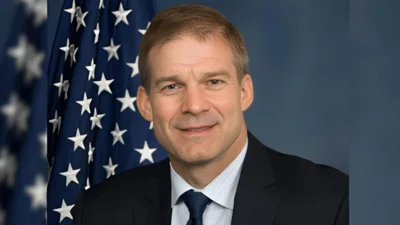
U.S. Senator Maria Cantwell, the Ranking Member of the Senate Commerce, Science and Transportation Committee, delivered an opening statement as the committee prepared to approve two bipartisan bills: the NASA Authorization Act of 2026 (S. 933) and the Weather Research and Forecasting Innovation Reauthorization Act of 2026 (S. 3923).
The Senate Commerce, Science, and Transportation Committee reviews legislation related to commerce, science, and transportation during congressional sessions. The committee is directed by a chairman and includes senators from both parties. Its main office is located in the Russell Senate Office Building in Washington, D.C., where it serves as a standing committee addressing issues on interstate commerce, science, and transportation within the legislative branch. More information about its work can be found on its official website.
Senator Cantwell began her remarks by thanking committee members and staff for their efforts on these bipartisan priorities. She said, “Thank you, Mr. Chairman, and thank you for today's markup on two very important pieces of legislation. I too would like to thank the hard-working minority and majority staff for working on these bipartisan priorities for literally years.”
On the NASA Authorization Act of 2026, Cantwell noted its goal to advance U.S. leadership in technology and innovation related to space exploration: “First, we will consider the NASA Reauthorization Act. And I want to say that both of these pieces of legislation represent, I believe, critical green lights that use science to basically move the United States forward on technology and innovation so the United States can lead in both space and weather.”
She highlighted Washington State’s significant role in aerospace: “The State of Washington -- I know the state of Texas as well -- plays a leading role in the nation's aerospace economy. Aerospace is a $71 billion industry in my state, and supports more than 250,000 jobs…”
Cantwell also addressed concerns about returning astronauts to the Moon before China does: “At a hearing in September…we also learned that NASA's plan…was not going to get us there before China. This legislation supports a path forward for our safe return to the Moon that will get us there as soon as possible.” The bill would establish a program for developing a permanent moon base.
She outlined provisions extending International Space Station operations by two years while requiring evaluations of crew rescue capabilities from orbit or lunar missions. Additional elements support research into hydrogen-powered aircraft and composite manufacturing technologies.
Regarding funding levels for NASA under this bill she stated: “And finally, our bill authorizes funding levels for NASA that far exceed what the President's request was…We refuse to accept cuts.”
Cantwell credited other committee members’ contributions such as implementing debris remediation projects consistent with prior acts.
She referenced Administrator Isaacman’s perspective: “Administrator Isaacman likes to say that NASA should take on challenges that are nearly impossible…”
Turning attention to weather-related legislation Cantwell said: “Next…the Weather Act…has a short title -- but we should not underestimate how important this is…” She described recent severe weather events affecting Washington State including floods caused by atmospheric rivers which resulted in major disruptions.
Cantwell explained how extreme weather disasters cost billions annually across America: “In 2025 alone, weather disasters cost the United States $115 billion.”
The Weather Act establishes programs aimed at improving forecasting infrastructure—including atmospheric river forecasts—modernizing alerts systems and supporting rural farmers with drought planning tools.
She recognized several colleagues whose proposals were included within this legislation covering areas such as tornadoes or harmful algal blooms.
Finally Cantwell requested entering into record correspondence concerning Coast Guard nominee Jesse Millard due to whistleblower allegations involving retaliation—citing broader concerns raised by previous incidents within military commands.
“I want to enter into the record a letter we received from a whistleblower about how…Commander Millard retaliated against this individual…and I'd like to enter that into the record...we need to take these issues very seriously…”
For more details about ongoing legislative activities related to commerce science or transportation visit the committee’s official site.