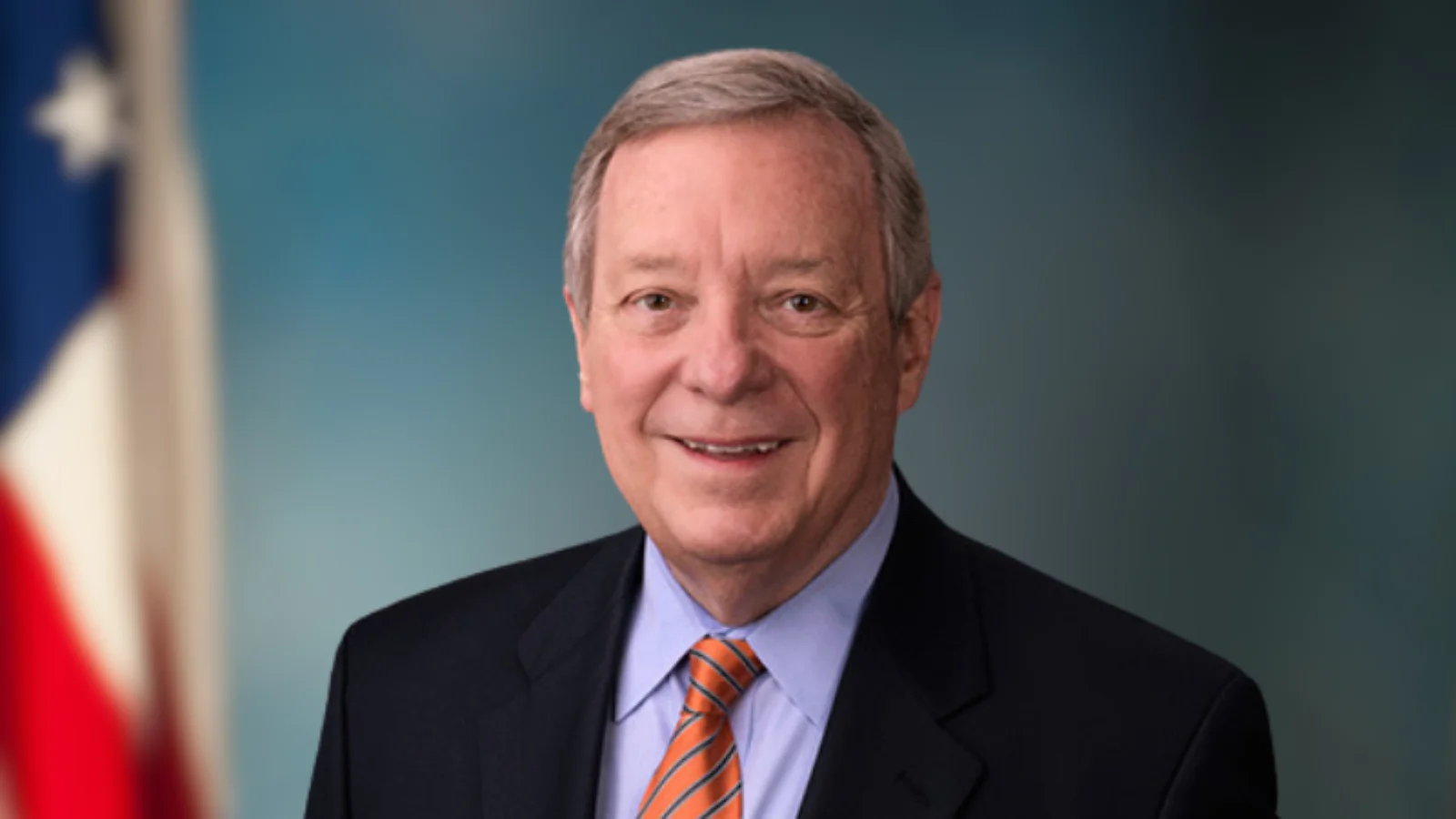
U.S. Senate Democratic Whip Dick Durbin, Ranking Member of the Senate Judiciary Committee and a member of the Senate Appropriations Committee, criticized Senate Republicans on Mar. 11 for blocking a bill that would fund most agencies within the Department of Homeland Security while negotiations continue over immigration enforcement policies.
The issue is significant because the blocked legislation would have provided funding for agencies such as the Cybersecurity and Infrastructure Security Agency, Transportation Security Administration (TSA), and Federal Emergency Management Agency (FEMA), but excluded Immigration and Customs Enforcement (ICE), Customs and Border Patrol (CBP), and the Office of the Secretary. The impasse leaves critical homeland security functions without assured funding as discussions about reforms to federal immigration agents persist.
“This is not the first time we made this offer to the Republicans,” Durbin said. “Last week, Senator Murray said let’s narrow this down to the items of debate and contention—the future of ICE and the future of the Border Patrol. But let’s fund everything else in that agency, so there’s no question that the men and women who work with TSA at the airports are going to be paid on time, the Coast Guard will be paid on time, and the other agencies that are separate and apart will be paid on time.”
Durbin referenced recent events in Minneapolis involving protests against ICE activities, stating: “Its been nearly a month since the shutdown started. Already it’s the third shutdown of President Trump’s second term—the third time. Why? Because the White House and my Republican colleagues refuse to consider reforms to ICE. Did you see the videos of what happened in Minneapolis with your own eyes? You don’t need my interpretation. You saw what happened to people there, protesting the activities of ICE, who ended up being shot and killed on the streets of Minneapolis. Is that something that we signed up for when we started this deportation effort?”
He also pointed out data from CBS News showing that less than 14 percent of nearly 400,000 immigrants arrested by ICE agents in President Trump’s first year back in office had charges or convictions for violent criminal offenses.
Senate Democrats have proposed several measures as part of their negotiations to reform ICE and CBP. These include ending roving patrols and indiscriminate arrests; requiring judicial warrants for home entries; establishing a unified use-of-force policy similar to those used by local police; and improving accountability through clear identification requirements.
“These are fundamental questions that relate to the Constitution, to the Bill of Rights, and to the laws of this land. We want to make sure that they’re followed, and that’s why we’re negotiating the future of ICE and Border Patrol,” Durbin said.
Durbin concluded his remarks by saying: “The men and women of TSA should not be held hostage to our negotiation. Let’s get serious and get all the negotiating done. But in the meantime, let’s fund the agencies that are critical in this Department.”
The Senate Judiciary Committee plays an important role in shaping constitutional protections and public safety nationwide through its legislative oversight duties according to its official website. The committee reviews legislation related to law enforcement practices like those under discussion here according to its official website. It is led by a chairperson overseeing meetings attended by senators from both major parties according to its official website. Based in Washington D.C., it influences federal law across all states according to its official website, including matters affecting civil rights according to its official website. As a standing committee with authority over judicial matters according to its official website, it remains central as Congress debates these issues.